

China’s Low-Altitude Economy Set to Double in 10 Years
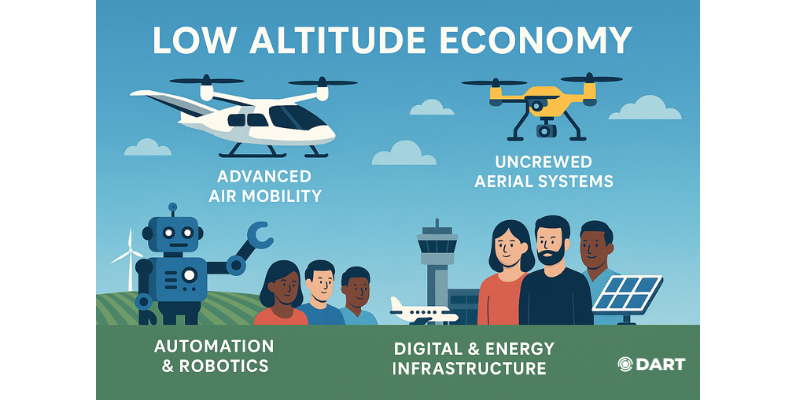
The landscape of urban transportation in China is poised for a significant shift as the government moves to formalize and accelerate the growth of the “low-altitude economy.” This sector, which encompasses aircraft operating below the clouds, is now receiving dedicated institutional support to scale its operations.
Strategic Government Intervention
In a move to bolster the development of drones and flying cars, the Chinese government has established a new agency. This body is specifically designed to provide the necessary support for vehicles operating within the low-altitude airspace.
This institutional framework arrives as the aviation administration predicts that the low-altitude economy could double in size over the next 10 years. Such growth suggests a systemic push toward integrating aerial mobility into the broader economic infrastructure.
The Role of Private Innovation
The emergence of licensed commercial operators like EHang indicates that the technology is moving from the conceptual phase to operational reality. By securing an operating license, EHang has set a precedent for how flying taxis may be integrated into the national transport network.
Potential Market Trajectory
Given the current trajectory, the industry may see an increase in licensed operators following EHang’s lead. The establishment of the new agency could lead to more streamlined approvals for drone-based services and aerial commuting.
As the aviation administration’s 10-year prediction unfolds, we may see a gradual expansion of “below the cloud” infrastructure. This could potentially redefine urban logistics and passenger transport in major hubs like Guangzhou.
Frequently Asked Questions
What is the “low-altitude economy”?
It refers to the economic activity generated by drones and flying cars that operate below the clouds.
What is the growth forecast for this sector?
The aviation administration predicts that the low-altitude economy will double in 10 years.
Which company was the first to get a flying taxi license in China?
The drone startup EHang became the first company in China to obtain an operating license for its flying taxi.
How do you think the integration of flying taxis will change the way we view city commutes?