
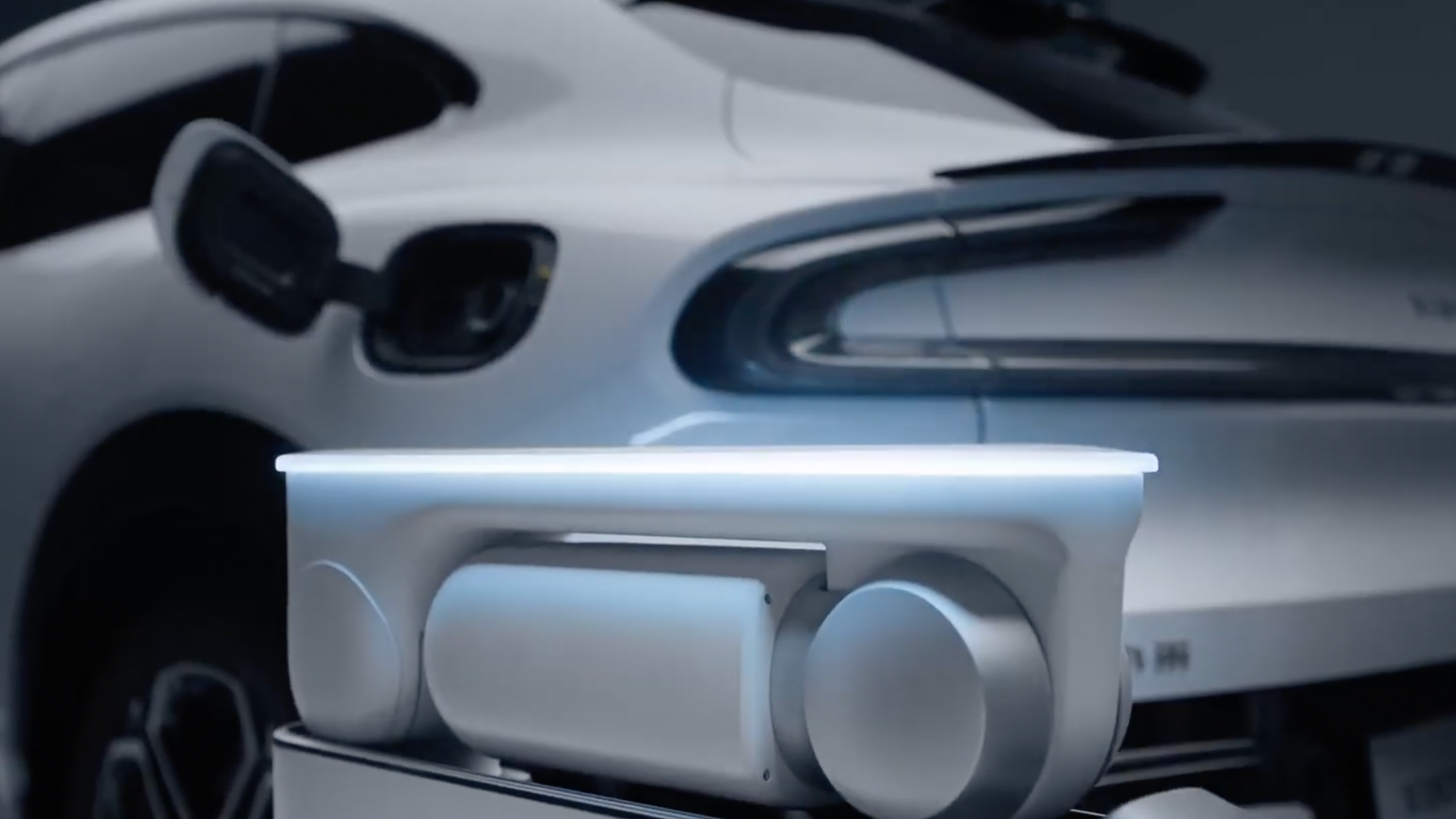
China’s Xiaomi unveils a robotic arm for automated home EV charging
Xiaomi plans to launch a commercial robotic arm for home electric vehicle (EV) charging in the fourth quarter of 2026, according to company announcements. The system automates the connection and disconnection process, allowing vehicles to charge without manual intervention by integrating with smart parking technology.
How does robotic EV charging work?
The system relies on a robotic arm that identifies a parked vehicle’s charging port, inserts the cable, and initiates the power flow autonomously. According to CarNewsChina, the technology is designed to eliminate the need for drivers to handle heavy, dirty cables. Once the battery hits a pre-set limit or reaches full capacity, the arm disconnects itself. Users can also trigger the process remotely via a smartphone app, provided the vehicle is within the arm’s operating range.
Did you know?
Current automated charging concepts aim to reduce the time spent at home stations to a "coffee break" duration, typically taking only a few minutes to initiate once the vehicle is positioned.
Why is the industry shifting toward automation?
Automakers are racing to remove "friction" from EV ownership to compete with the convenience of traditional refueling. Xiaomi’s push into robotics mirrors a broader industry trend toward integrated "smart ecosystems."
Li Auto CEO Li Xiang previously confirmed that his company is testing similar robotic charging solutions to pair with their all-electric SUV models. This follows a demonstration by the Harmony Intelligent Mobility Alliance (HIMA) last August, which showed an Aito M8 maneuvering into a bay before a robotic arm handled the connection. While Xiaomi is targeting a 2026 commercial release, these concurrent developments suggest a standardized move toward hands-free energy management across the Chinese EV market.
How do these systems compare?
| Company | Technology Focus | Development Status |
|---|---|---|
| Xiaomi | Robotic arm for home charging | Scheduled for Q4 2026 |
| Li Auto | Integrated charging robot | Under active testing |
| HIMA | Automated bay parking & charging | Demonstrated in 2023 |
Source: Company announcements and industry reporting.
What are the practical benefits for EV owners?
The primary advantage of these systems is the total removal of the "plug-in" chore. By combining autonomous parking with robotic charging, the car manages its own power needs after the driver walks away. This is particularly useful in private garages where space or cable reach might otherwise be inconvenient.
Pro Tip: If you are planning for a future EV purchase, ensure your home garage infrastructure is "smart-ready." Even if you don’t have a robot yet, future-proofing your electrical panel for high-speed, app-controlled chargers is a proactive step.
Frequently Asked Questions
Will robotic charging work with all EV models?
Current demonstrations, such as those from HIMA and Xiaomi, are often tied to specific proprietary ecosystems. Compatibility with third-party vehicles remains a technical hurdle the industry has yet to standardize.
Can I use a smartphone to control the process?
Yes. According to Xiaomi and HIMA, smartphone app integration is a core component, allowing users to start, stop, and monitor charging sessions remotely.
When will this technology be available?
Xiaomi has publicly scheduled its commercial release for the fourth quarter of 2026. Other manufacturers are currently in the testing or demonstration phase.
Is this only for indoor garages?
Most current prototypes are designed for controlled environments like private home garages or specific smart-parking bays where the robotic arm can be mounted and calibrated.
What do you think about the future of autonomous charging? Does the convenience of a robotic arm outweigh the cost of installing such hardware? Join the conversation in the comments below or subscribe to our newsletter for more updates on EV infrastructure.