
Chinese astronomers uncover clues to formation of star clusters in Andromeda Galaxy’s halo
Decoding the Cosmic Past: How Galactic Archaeology is Rewriting Our Origins
For centuries, humanity has gazed at the Andromeda Galaxy—our nearest massive neighbor—as a static pinprick of light. But beneath that serene exterior lies a violent, complex history. Recent breakthroughs in galactic archaeology are turning these ancient star clusters into “time capsules,” allowing astronomers to reconstruct how galaxies grow, merge, and evolve over billions of years.
By studying the chemical composition and ages of globular clusters, researchers are proving that galaxies aren’t born; they are built. Just as an archaeologist digs through layers of soil to understand an ancient civilization, astronomers are now sifting through the “fossil record” of space to understand the life cycle of the universe.
The “Immigrant” Stars: Understanding Galactic Mergers
One of the most profound revelations in modern astrophysics is the realization that large galaxies, like the Milky Way and Andromeda, are essentially cosmic cannibals. They grow by consuming smaller satellite galaxies.
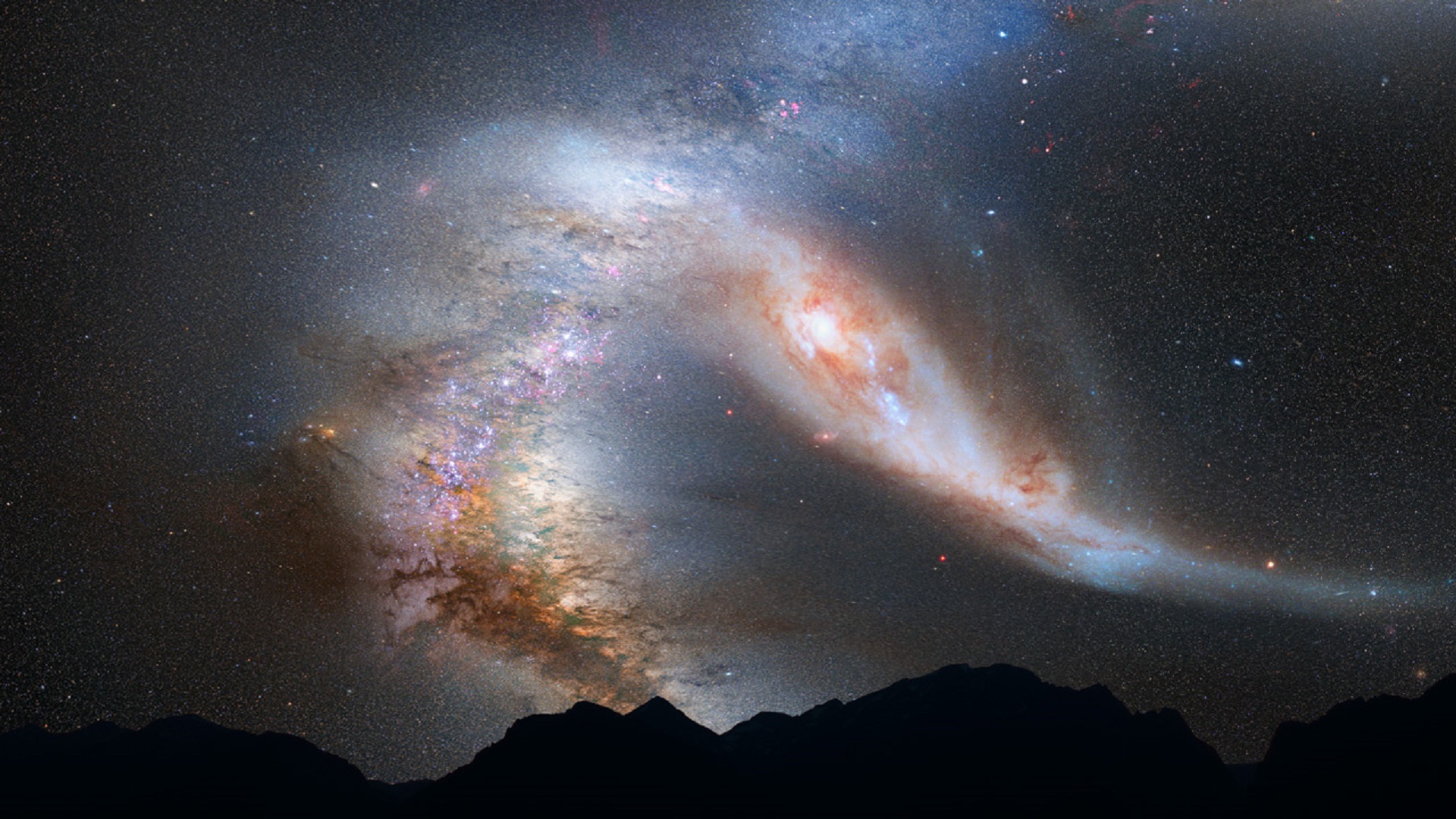
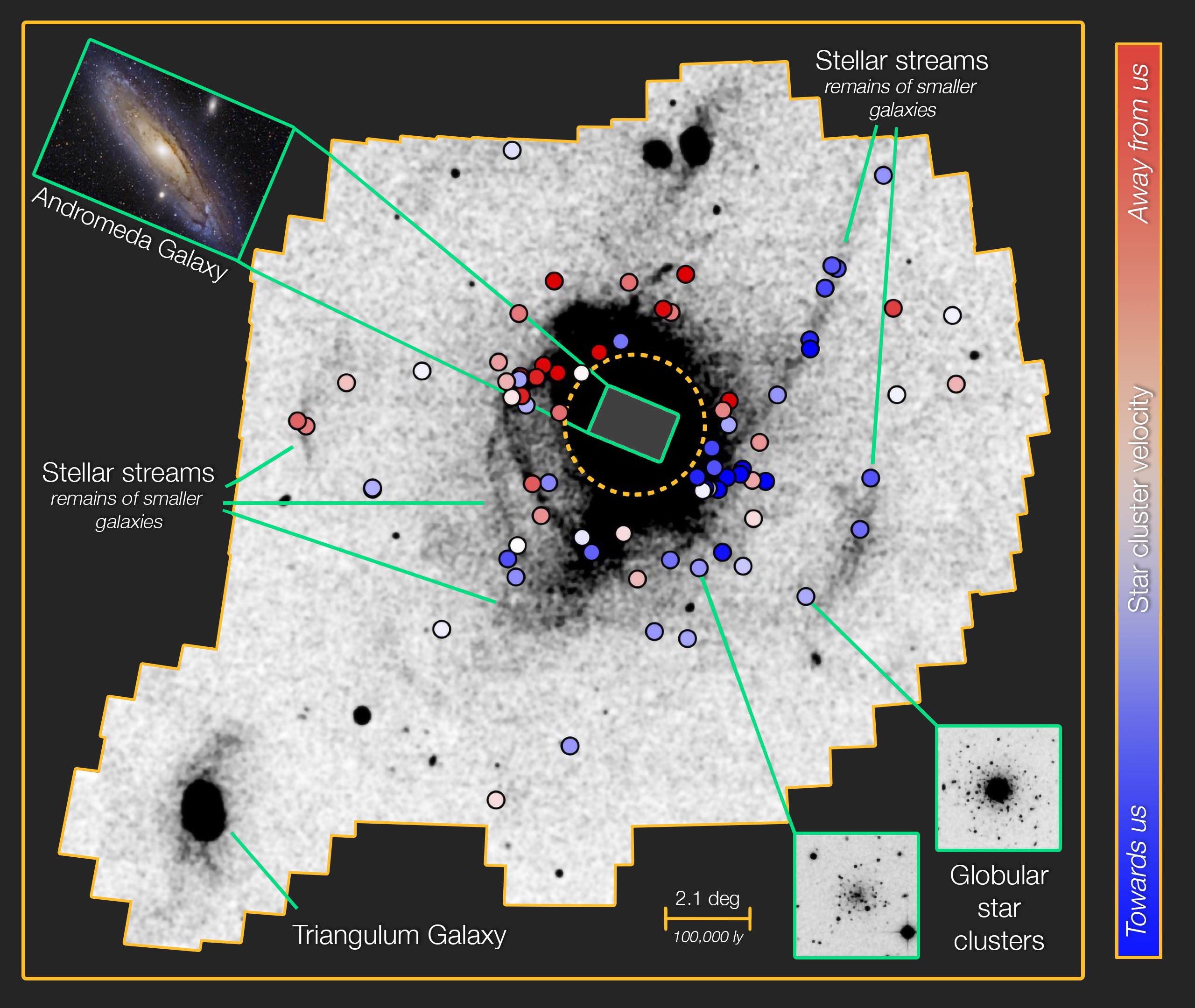
Recent studies of star clusters in the outer halo of Andromeda have revealed that many of these stellar families are not “natives.” Instead, their chemical signatures—specifically their metallicity, or the abundance of elements heavier than hydrogen and helium—suggest they originated in smaller, independent galaxies that were eventually absorbed by Andromeda’s gravitational pull.
Why Chemical Composition Matters
Think of chemical composition as a galactic DNA profile. Stars born in small, isolated environments possess a different “fingerprint” than those born in the dense, high-pressure environments of a massive galaxy’s core. By using spectroscopic analysis, scientists can now distinguish between these “local” stars and those that were “accreted” from elsewhere, essentially mapping out the migration history of the cosmos.
The Future of Deep Space Exploration: The Next Frontier
The tools of the trade are evolving rapidly. While ground-based telescopes like the 2.16-meter instrument at the Xinglong Observatory have provided foundational data, the future of galactic archaeology lies in space-based observation.
The upcoming deployment of high-resolution, near-ultraviolet space telescopes will allow astronomers to peer through cosmic dust with unprecedented clarity. These instruments will provide the data density needed to move beyond observing individual clusters to creating a comprehensive “growth diary” of entire galactic neighborhoods.
Frequently Asked Questions (FAQ)
- What is galactic archaeology? It is the study of the history of galaxies by analyzing the chemical and physical properties of their individual stars and clusters.
- How do we know if a star cluster is an “immigrant”? Astronomers look at the cluster’s age and metallicity. If the chemical signature doesn’t match the expected evolution of the host galaxy, it likely came from an outside source.
- Why is Andromeda important to the Milky Way? Andromeda is the largest galaxy in our local group and is on a collision course with the Milky Way. Understanding its history helps us predict our own future.
- Can I see these star clusters? While Andromeda itself is visible to the naked eye in dark-sky locations, the individual star clusters within its halo require professional-grade telescopes to resolve.
Join the Conversation
The story of the universe is still being written, and every new star cluster we analyze adds a new chapter to our understanding of existence. What part of space history fascinates you the most? Are we destined to merge with Andromeda, or is there more to the story?
Share your thoughts in the comments below, or subscribe to our newsletter for the latest updates on space exploration and the mysteries of the cosmos.