
Chinese medical practitioners used extremely toxic plant as a topical anesthetic 600 years ago, study finds
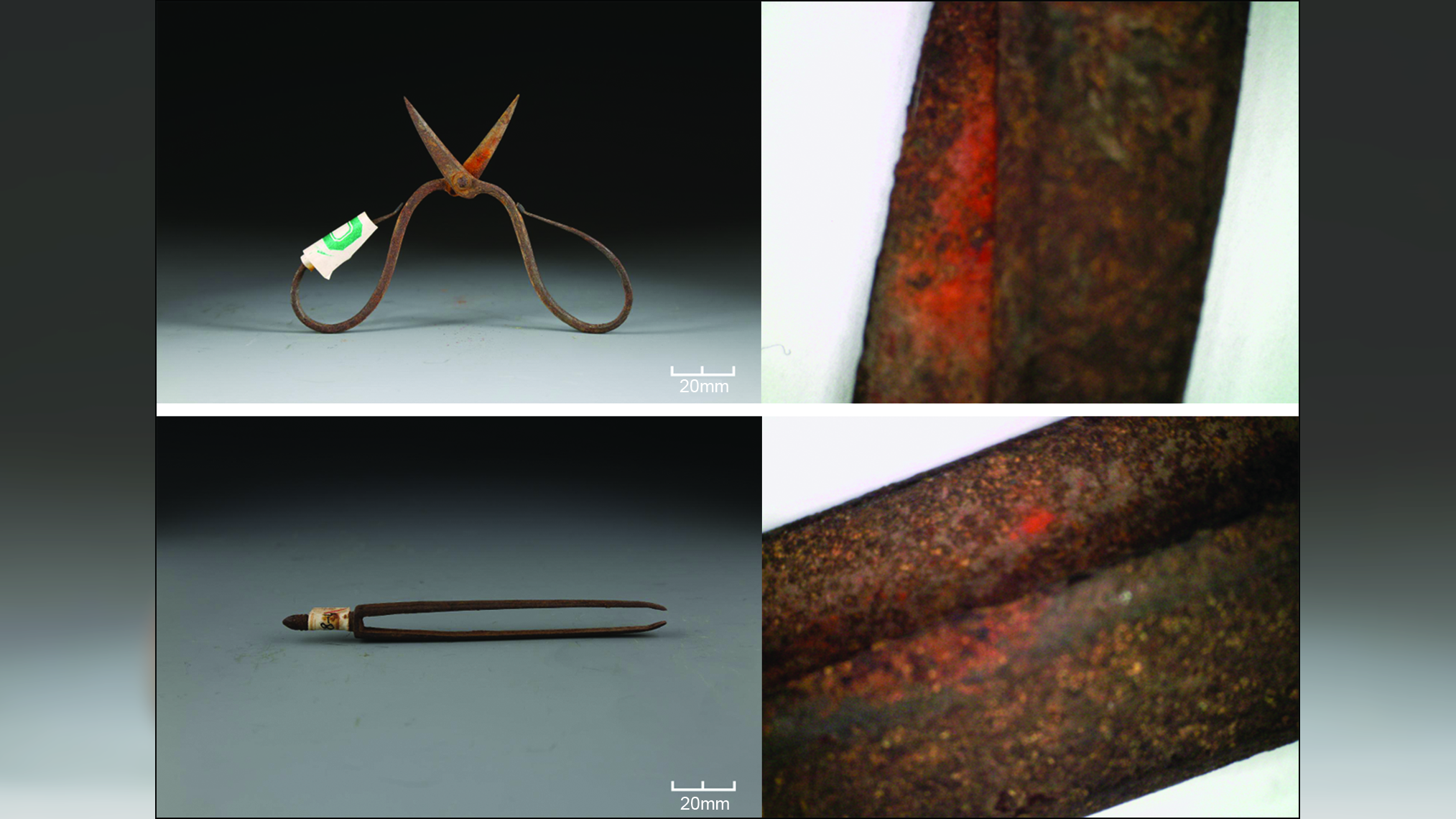
Researchers have uncovered the world’s first direct chemical evidence of a topical anesthetic on 600-year-old surgical tools. The iron instruments, consisting of a pair of scissors and tweezers, were discovered in the Ming Dynasty tomb of Xia Quan in Jiangyin, China.
The analysis reveals that ancient surgeons used a substance derived from Chinese wolfsbane to numb the skin during medical procedures. This discovery provides a physical link to medical practices described in historical texts from the Ming Dynasty.
The Science of Discovery
To identify the composition of the tools, researchers first used X-ray fluorescence analysis. This non-destructive technique confirmed that both the scissors and tweezers were crafted from iron.
The team then used micro-Raman spectroscopy to examine three tiny particles of rust-colored residue. By beaming a laser at the samples, they analyzed the scattering of photons to create a structural fingerprint of the molecules.
The analysis detected the cyano functional group, commonly found in hydrogen cyanide, along with oils and fats. These results point to the presence of aconitine, an alkaloid toxin found in plants of the Aconitum genus.
Ancient Surgical Application
The evidence suggests these iron implements were used for minor surgical operations. Researchers believe the practitioner first applied the numbing agent to the skin before using the tweezers to hold the area and the scissors to trim the outer layer.
The anesthetic residue was concentrated in the functional areas of the tools. It is likely the medicine was in liquid form and splashed onto the instruments, where it escaped cleaning and eventually caused the metal to corrode.
Historical Significance
This study, published in the journal Antiquity, confirms that Aconitum was employed as a topical anesthetic. It validates records found in Ming Dynasty medical texts regarding the safe and precise application of such substances.

According to study co-author Congcang Zhao, the use of these instruments shows a practical ability to balance drug potency with patient safety through compound prescriptions and strict controls.
Future Implications
This breakthrough could lead to further chemical analyses of other artifacts from the Ming Dynasty to identify other forgotten medicinal compounds. Researchers may look for similar residues on other tools to expand the known pharmacopeia of the era.
Future studies might also explore how these ancient detoxification methods compare to modern chemical processes. This could potentially provide new insights into the evolution of analgesic medicine.
For more detailed scientific data, the full study can be found at https://doi.org/10.15184/aqy.2026.10347.
Frequently Asked Questions
What materials were the ancient surgical tools made of?
The scissors and tweezers were both made from iron, as determined by X-ray fluorescence analysis.
What plant was used to create the anesthetic?
The anesthetic was derived from the Aconitum genus, also known as wolfsbane, monkshood, or aconite.
How did Ming Dynasty physicians make the toxic plant safe for patients?
They used acidic substances—including vinegar, mung beans, or the urine of young boys—to detoxify the aconite into a liquid or powder.
How do you think ancient medical discoveries change our understanding of modern healthcare?