
Climate-Fueled Cyclone Kills 7% of World’s Rarest Great Apes
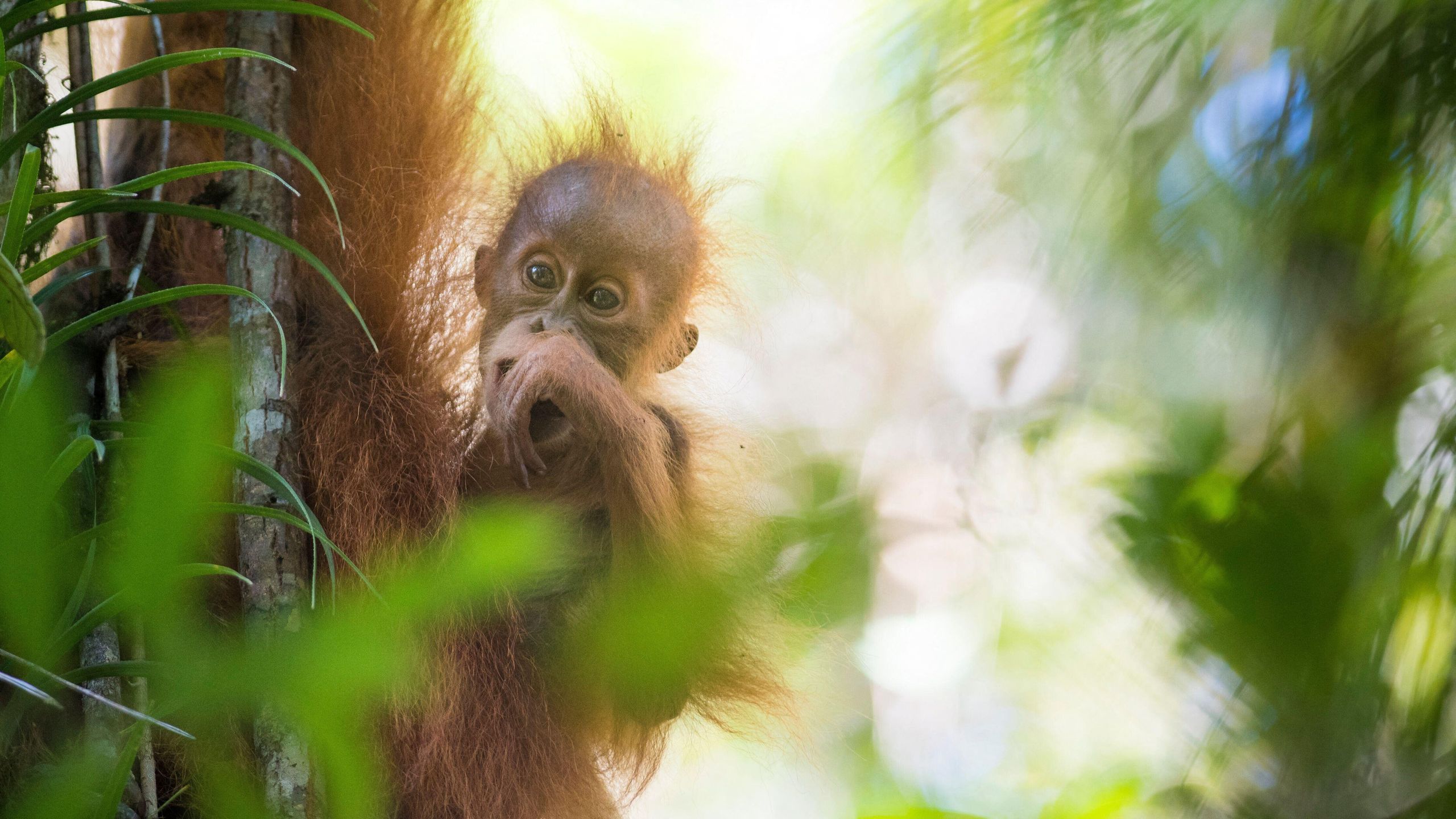
Cyclone Senyar killed approximately 58 Tapanuli orangutans in November 2025, eliminating 7% of the world’s rarest great ape species in four days. According to a study published June 10 in the journal Current Biology, extreme rainfall and landslides in Indonesia’s Batang Toru forest caused these deaths via drowning, suffocation, and impacts from collapsing trees.
Why did Cyclone Senyar kill so many Tapanuli orangutans?
The cyclone dropped 21.8 inches (556 millimeters) of rain over four days, triggering landslides across 20,517 acres of habitat. Researchers identified over 50,000 “scars” from landslide-induced destruction in the forest landscape, according to the Current Biology study.
This event hit the forest’s west block particularly hard. In 2019, the entire species consisted of 767 individuals, with 581 living in the west block. The loss of 58 apes represents 11% of the west block population.
How does climate change affect the Tapanuli orangutan’s survival?
World Weather Attribution found that human-induced climate change, La Niña, and a negative Indian Ocean Dipole intensified Cyclone Senyar. The researchers stated that “climate change-driven weather poses an immediate, catastrophic threat” to the species.
Biological factors increase the risk. Orangutans depend heavily on tree cover and have slow reproductive cycles, with gaps of six to nine years between births. Serge Wich, a professor of primate biology at Liverpool John Moores University, told The Guardian that these losses are “extremely worrying for the future of this ape.”
What happens next for the Batang Toru forest?
The remaining orangutans may face food shortages due to topsoil destruction. The study authors wrote that topsoil contains dense networks of plant-feeding fungi, and it will take time for the leaves and fruit the apes rely on to return.

Further weather volatility is likely. NOAA officials reported in a June 11 update that the current El Niño period is forecast to rank among the largest since 1950. U.N. Secretary-General António Guterres stated in a June 2 video that El Niño conditions “will pour fuel on the fire of a warming world.”
Climate change is projected to increase the frequency and intensity of heavy rainfall in Indonesia, which could lead to more frequent canopy collapses and debris flows in the Batang Toru region.
Frequently Asked Questions
How many Tapanuli orangutans died during Cyclone Senyar?
Approximately 58 individuals died, which is roughly 7% of the total species and 11% of the population in the forest’s west block.
What caused the deaths of the orangutans?
According to the study, the apes died from drowning, suffocation under landslides, or impacts from collapsing trees.
Why is the Tapanuli orangutan more vulnerable than other species?
They are heavily dependent on tree cover and have a slow reproductive rate, typically waiting six to nine years between each baby.
For more information, see the study: https://doi.org/10.1016/j.cub.2026.05.029
How should the global community prioritize the protection of species with such slow reproductive cycles in the face of increasing extreme weather?