
Consciousness Could Exist in Bodies Nothing Like Ours, Researchers Say : ScienceAlert
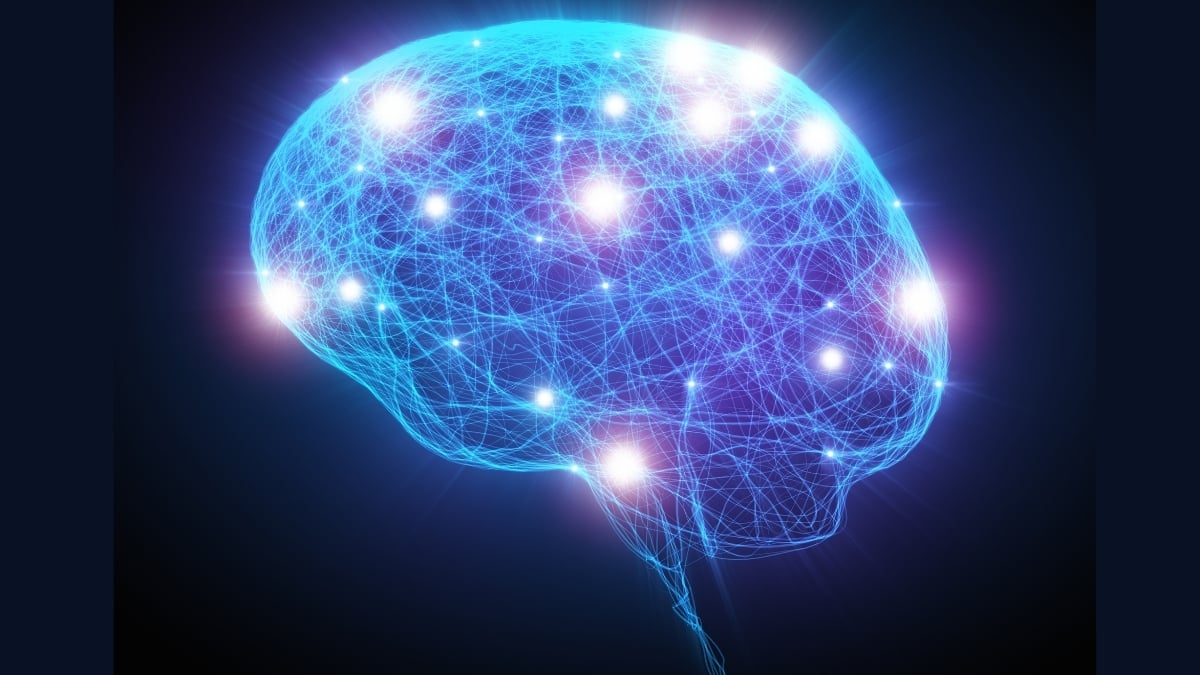
Consciousness doesn’t require biological flesh and blood, according to a working paper by Eric Schwitzgebel of the University of California, Riverside, and Jeremy Pober of the University of Lisbon. The researchers propose “substrate flexibility,” arguing that awareness can arise from various physical materials, potentially including silicon or exotic alien chemistries, across the trillion galaxies in the observable universe.
Why is consciousness considered “substrate-flexible”?
Substrate flexibility is the idea that a specific property can be achieved using different materials. According to Schwitzgebel and Pober, consciousness functions like a cup or a music recording. A cup holds water whether it’s made of glass or plastic; music plays whether it’s on a vinyl record or a digital disc. The material—the substrate—doesn’t change the fundamental function.
The authors argue that consciousness is a phenomenon that can be realized in more than one kind of physical machinery. They point to the octopus as a real-world example of an “alien-seeming” intelligence that evolved on Earth, proving that nature can build minds using different biological plans.
How does the Copernican principle apply to the mind?
The “Copernican principle of consciousness” suggests that humans aren’t the center of the mental universe. Just as Nicolaus Copernicus proved Earth isn’t the center of the solar system, Schwitzgebel and Pober argue that Earthly biology isn’t the only path to awareness. They call the belief that consciousness belongs only to creatures like us “terrocentrism.”

This perspective shifts the scale of the search for intelligence. The authors conservatively estimate that at least 1,000 behaviorally sophisticated civilizations have existed throughout cosmic history. Given the vast number of planets, they argue it’s unlikely every successful lineage used the exact same biochemical recipe found on Earth.
This shift in thinking has direct implications for how we view the Voyager 1 “Pale Blue Dot” perspective. If our planet is a tiny speck in a vast void, assuming our specific biology is a prerequisite for thought is, in the authors’ view, an unjustified conceit.
Could non-biological AI actually become conscious?
The paper reveals a divide between the two philosophers regarding artificial intelligence. While they agree that consciousness isn’t tied to biology, they disagree on whether current technology qualifies as a viable substrate.
Jeremy Pober warns that flexibility across some substrates doesn’t mean every substrate works. He suggests that today’s silicon chips might not be the right material to support true awareness. In contrast, Schwitzgebel argues that once the requirement for human biology is removed, it becomes much harder to defend the exclusion of silicon purely because of its chemical makeup.
Both authors agree on one critical point: the real question isn’t whether a machine can mimic a human brain, but what kinds of systems are capable of “waking up” at all.
What happens to the search for extraterrestrial intelligence?
If substrate flexibility is a reality, the search for extraterrestrial intelligence (SETI) must expand. Most current searches look for “biosignatures”—chemical markers like oxygen or methane that suggest carbon-based life. However, this paper suggests that sophisticated civilizations could exist in forms we wouldn’t recognize as “alive” by Earthly standards.
This means a planet that looks chemically sterile might still host a conscious entity built from crystals or other exotic materials. The consequence is a necessary move toward searching for “technosignatures”—signs of engineered structures or energy use—rather than just biological markers.
Frequently Asked Questions
What is substrate flexibility?
It is the theory that consciousness is a functional property that can be implemented in various physical materials, not just carbon-based biological brains.
Is AI conscious according to this paper?
The authors don’t reach a consensus. Schwitzgebel is open to the possibility of silicon-based consciousness, while Pober remains skeptical that current silicon substrates are sufficient.
What is terrocentrism?
Terrocentrism is the unjustified belief that Earth’s specific biological evolution is the only way to produce consciousness or intelligence in the universe.
How many alien civilizations do the authors estimate?
They provide a conservative estimate that at least 1,000 behaviorally sophisticated civilizations have existed in the history of the cosmos.
What do you think? Could a machine or a non-biological entity truly “feel” or be aware, or is there something about organic chemistry that can’t be replicated? Share your thoughts in the comments below or subscribe to our newsletter for more deep dives into the intersection of philosophy and science.