
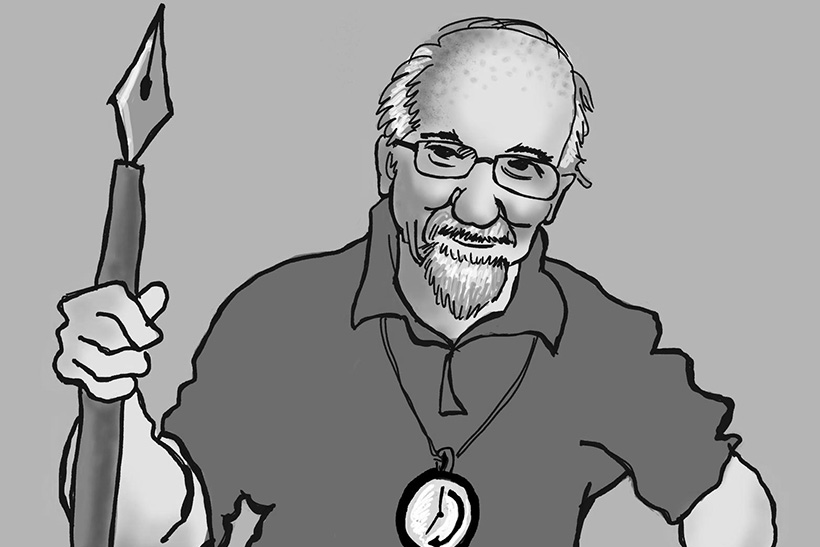
Corax: The Life and Legacy of Serbia’s Iconic Political Caricaturist
The world of political satire has lost one of its most piercing voices with the passing of Predrag Koraksić, known globally as Corax. The renowned Serbian caricaturist died on May 16, 2026, in Belgrade at the age of 92, publishing his final cartoon on the very day of his death.
His final work, appearing in the critical daily Danas, depicted President Aleksandar Vučić pushing back the hands of a clock. This poignant image served as a final commentary on a political trajectory Corax viewed as a regression toward the era of Slobodan Milošević.
A Vision Shaped by Adversity
Born on June 15, 1933, in rural Gornja Gorevnica, Koraksić’s perspective was literally and figuratively shaped by hardship. At age four, complications from varicela left him with a severe lack of vision in his left eye.
Some theorists suggest this loss of stereoscopic vision influenced his unique graphic style. They argue that the lack of 3D perception led him to consciously construct lines and angles, resulting in the direct, expressive and synthesized style that defined his career.
The brutality of war also left an indelible mark on his youth. In 1941, during the Nazi invasion of Yugoslavia, his partisan father was killed by chetniks, forcing the family to flee to Zemun under the assumed identity of Franjo Božić.
The Architecture of Satire
Although he initially studied architecture, Koraksić abandoned the degree to pursue drawing full-time. He began publishing in the satirical magazine Jež around 1950 at the age of 17.
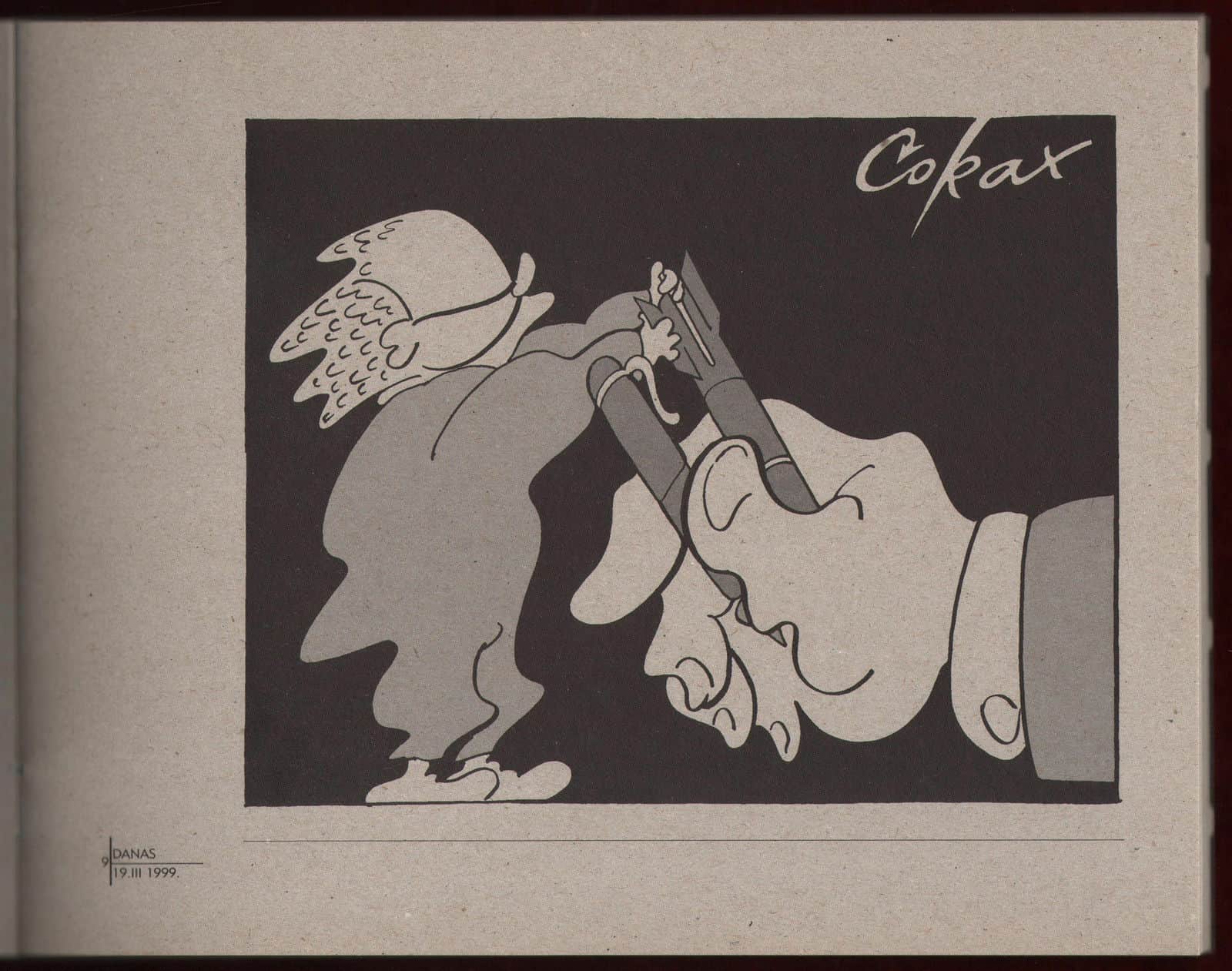
His work became a primary tool of resistance during the “miloševism” of the 1990s. Corax used his pen to attack the clientelism, corruption, and nationalism of the Slobodan Milošević regime, often depicting leaders as eyeless or blind.
This “blind leader” motif was inspired by Radoje Domanović’s 1901 allegory Vođa. The metaphor represented an incompetent or authoritarian power guiding a blind population toward disaster.
Battles with Censorship and the Law
Koraksić’s uncompromising style frequently put him in the crosshairs of the state. He was expelled from Večernje novosti in 1993 for “political unsuitability” during a period of intense press repression.
He even faced legal action in Novi Sad over a caricature depicting leaders like Milošević, Radovan Karadžić, and Vojislav Šešelj playing a game called trula kobila (rotting mare). While the prosecution labelled the drawing “pornographic,” the court eventually dismissed the case, recognizing it as political critique.
His commitment to press freedom was mirrored in his collaboration with outlets like Borba and Danas. He witnessed the 1994 government intervention of Borba, which served as a catalyst for journalists to seek more independent platforms.
The Legacy of the Blind Clock
In his later years, Corax viewed the presidency of Aleksandar Vučić as a refined version of the previous authoritarian era. He believed the current leadership had learned how to concentrate power while maintaining a facade of cooperation with the European Union.
His work suggests that while the faces of power change, the structural weaknesses of the state remain. He viewed the transition from the reformist periods of Zoran Đinđić and Boris Tadić as a failed parenthesis.
What May Happen Next
Analysts suggest that Corax’s archives may serve as essential historical documents for future evaluations of Serbian governance. Should Serbia eventually enter the European Union, the political systems he critiqued could face severe institutional examination.
The “School of Caricature of Zemun” and its museum may continue to preserve his influence, potentially inspiring a new generation of artists to challenge the concentration of power through visual satire.
Frequently Asked Questions
When did Predrag Koraksić (Corax) pass away?
He died on May 16, 2026, in Belgrade at the age of 92.
What was the significance of the “blind leader” in his drawings?
Drawing from Radoje Domanović’s work, the eyeless leader symbolized authoritarian, incompetent, or corrupt power leading a blind and unquestioning public.
Which educational institution did Corax attend?
He attended the Zemunska gimnazija in Zemun, one of the oldest and most prestigious secondary schools in Serbia.
Do you believe political satire remains an effective tool against modern authoritarianism?