
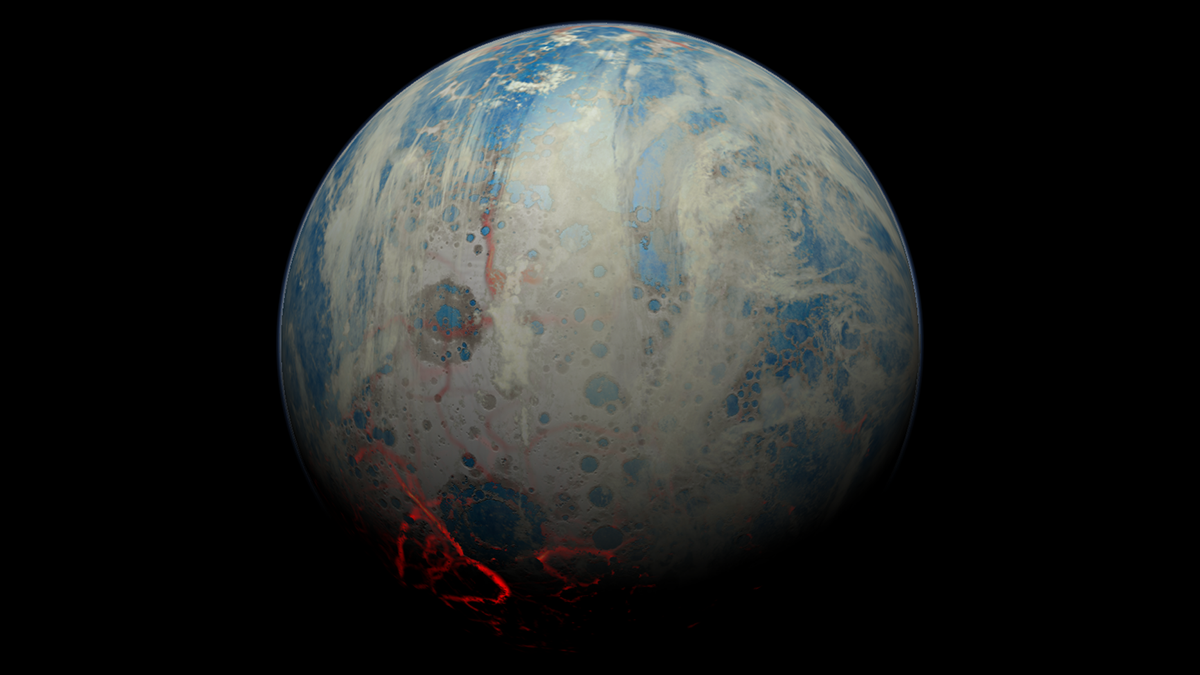
Cosmic Bombardment Created Potential for Prebiotic Chemistry
The Cosmic Cradle: How Asteroid Impacts May Have Sparked Life on Earth
For decades, the image of early Earth has been one of a hellish, desolate landscape. We often picture a planet scarred by constant fire, where the atmosphere was thick with volcanic ash and the surface was a graveyard of molten rock. But what if those violent, world-shattering collisions weren’t just destructive—what if they were the architects of life itself?
New research published in AGU Advances suggests that the relentless bombardment of asteroids and planetesimals between 4.6 and 3.5 billion years ago acted as a planetary plumbing system. By fracturing the crust, these impacts created the perfect “nursery” for the first biological molecules to take hold.
Cracking the Crust: A Blueprint for Biology
Before the arrival of complex life, Earth’s crust was primarily basalt—a dense, relatively impermeable rock. Under normal conditions, water and essential gases would have struggled to circulate through this solid foundation. However, the energy released by massive asteroid impacts changed the physics of the planet’s surface.
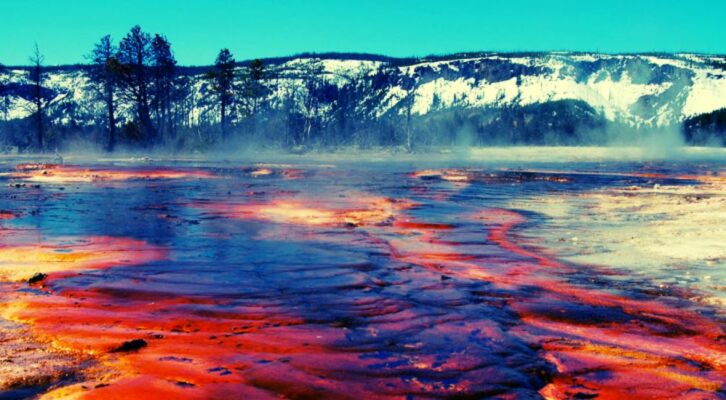
Using advanced simulations like the iSALE shock physics code, scientists have modeled how these collisions shattered the top 8 kilometers of the crust. This fragmentation didn’t just create craters; it created porosity. By cracking the bedrock, these impacts allowed hydrothermal fluids to move freely, creating a vast, planet-wide network of subterranean “geysers” similar to what we see in Yellowstone National Park today.
Why This Matters for Astrobiology
If asteroid impacts were the catalyst for life on Earth, the implications for our search for extraterrestrial life are profound. We are no longer just looking for “Earth-like” planets with temperate climates; we are looking for worlds that have experienced the right kind of geological trauma.
Researchers are now applying these findings to other bodies in our solar system. For instance, the icy moons of Jupiter and Saturn—like Europa and Enceladus—have cratered surfaces that may host similar internal hydrothermal activity. By studying the “impact-induced permeability” on early Earth, we are essentially building a diagnostic tool to predict where life might be hiding elsewhere in the universe.
The Future of Prebiotic Research
The next frontier in this field involves integrating deep-crustal modeling with synthetic biology. Scientists are beginning to simulate “prebiotic soup” conditions within these fractured rock domains to see if simple amino acids can spontaneously organise into complex chains.
Pro Tip: If you are interested in how modern geology informs the search for ancient life, keep an eye on developments in “impact cratering theory.” Researchers are increasingly using AI to analyze satellite imagery of cratered surfaces on Mars to identify sites that may have once hosted long-lived, life-sustaining hydrothermal systems.
Frequently Asked Questions
Q: Did asteroids destroy life on early Earth?
A: While massive impacts could sterilize a surface, this research suggests they also created protected, porous environments deep underground where life could survive and thrive, shielded from the chaos above.
Q: How do we know what happened 4 billion years ago?
A: Because Earth’s own rocks from that era have been largely recycled by plate tectonics, we use the Moon’s cratered surface as a “time capsule” to estimate the frequency and intensity of the bombardment Earth experienced.
Q: Could these findings change how we search for life on Mars?
A: Absolutely. By understanding that impact-fractured crusts create habitable zones, mission planners can better target landing sites near ancient impact craters that show evidence of past water circulation.
Join the Conversation
The story of how life began is far from settled and every new simulation brings us closer to understanding our cosmic origins. Do you believe life is a natural byproduct of planetary evolution, or does it require a “perfect storm” of cosmic events? Share your thoughts in the comments section below, or subscribe to our newsletter for the latest updates in space science and geology.