
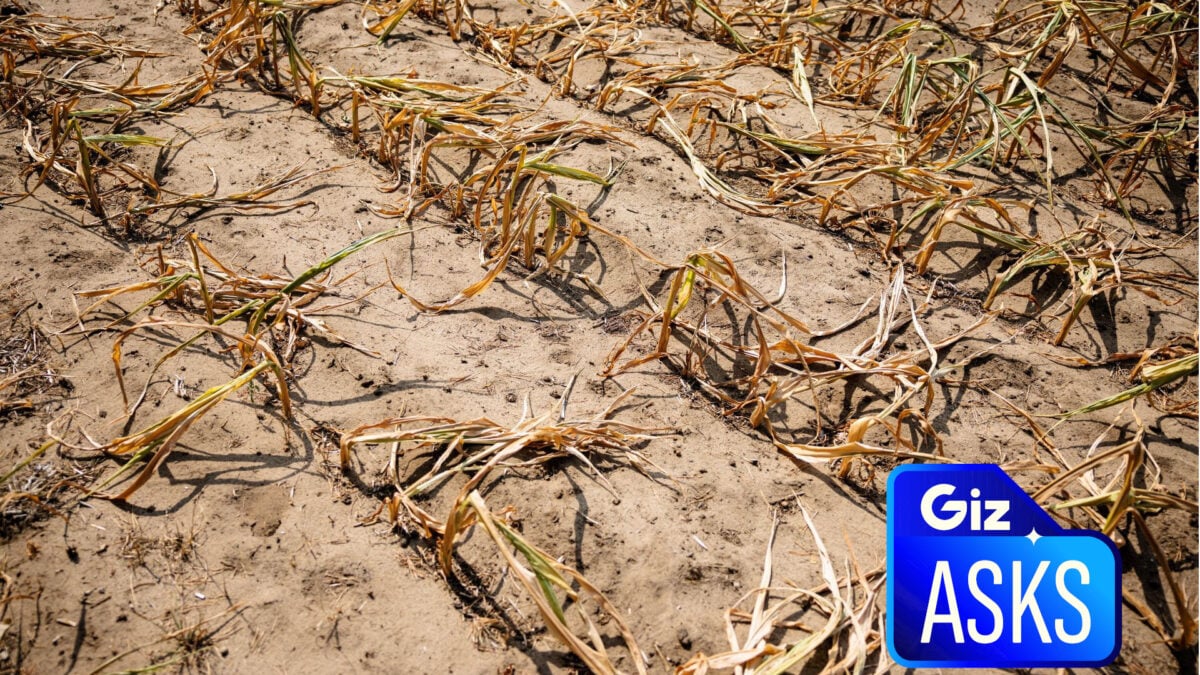
Could This Super El Niño Trigger a Global Food Crisis?
A strengthening El Niño event is raising global concerns about food security, though climate experts and economists emphasize that modern famine is primarily a political and social failure rather than a purely meteorological one. While historical data links the 1877-1878 El Niño to mass mortality, current global supply chains and institutional safety nets provide buffers that were absent in the 19th century, according to researchers at Stanford University and the University of Hawaii.
Can El Niño Trigger a Global Famine?
A global famine caused by El Niño alone is considered unlikely by many experts, as modern food markets are largely driven by production in the United States and Brazil, regions that are not typically devastated by the phenomenon, according to Michael Roberts, a professor of economics at the University of Hawaii. While El Niño disrupts rainfall in the Western Pacific, southern Africa, and parts of South America, the global food system relies on trade and inventory adjustments to absorb localized weather shocks.
The 1877-1878 El Niño is often cited by historians like Mike Davis as a “Late Victorian Holocaust,” where colonial policies—rather than just drought—systematically impoverished rural populations, turning climatic stress into mass mortality.
Why Political Choices Dictate Food Security
Famines are “produced socially,” according to Benjamin Selwyn, a professor of international relations at the University of Sussex. He notes that starvation is rarely the result of an absolute decline in food availability but rather a failure of “entitlement,” where populations lose the means to command food through markets or state support. When governments respond to weather shocks with export bans or hoarding, they often convert a manageable shortfall into a crisis, a sentiment echoed by Michael Roberts, who identifies panic-driven policy as a greater risk than the weather itself.
The Growing Risk to Fragile Regions
While global markets may remain stable, specific regions already facing conflict and debt distress are at high risk, according to Jean-Martin Bauer, director of food security and nutrition analysis at the United Nations’ World Food Programme (WFP). With two famines confirmed in 2025 in Gaza and Sudan, the WFP reports that the number of people experiencing acute food insecurity has doubled over the last decade to 266 million. Jennifer Burney of Stanford University warns that the baseline food security situation is more precarious than at any point in the last 30 years, leaving little room for institutional failure.
Comparative Outlook: Weather vs. Policy
| Factor | Impact on Food Security |
|---|---|
| Weather (El Niño) | Causes regional production shortfalls and price volatility. |
| Policy Response | Determines if a shortfall becomes a famine through trade or hoarding. |
| Economic Capacity | Debt-distressed nations struggle to import food or fund safety nets. |
How Can Future Famines Be Prevented?
Preventing future crises requires prioritizing food as a human right rather than a commodity, according to Benjamin Selwyn. Experts suggest that anticipatory action is cost-effective; the WFP notes that every dollar spent on early interventions can avert seven dollars’ worth of impacts. Safeguarding data systems and maintaining international aid buffers, such as those historically provided by USAID, remain critical pillars for preventing localized shortages from escalating into catastrophes.
Monitor the Integrated Food Security Phase Classification (IPC) reports to track real-time data on food insecurity in vulnerable regions.
Frequently Asked Questions
Is the current El Niño as bad as the 1877 event?
While climate scientists are observing strengthening patterns similar to the 1877-1878 event, current global infrastructure and trade mechanisms differ significantly from those of the 19th century, according to University of Sussex research.

What regions are most vulnerable to El Niño?
According to Jennifer Burney of Stanford, the most vulnerable areas include parts of eastern Indonesia, the Philippines, southern Africa, the western Sahel, and parts of South America.
Why do food prices rise during El Niño?
Prices rise when major crop-producing regions face droughts, leading to production shortfalls that drive up global demand for traded commodities, according to Stanford University’s Doerr School of Sustainability.
What are your thoughts on how global policy should address climate-linked food insecurity? Share your views in the comments below or subscribe to our newsletter for deep dives into global environmental trends.