
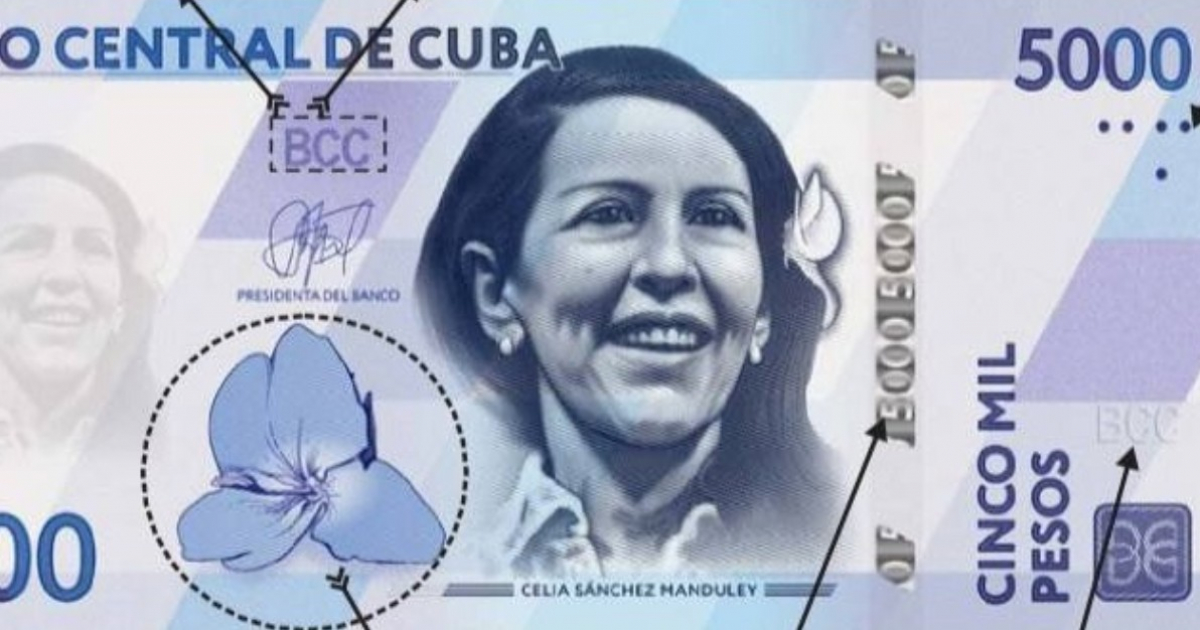
Cuba’s New 5,000 Peso Banknote: Scarcity and Economic Impact Three Months Later
Three months after the Central Bank of Cuba (BCC) introduced the 5,000-peso (CUP) banknote, the largest denomination in the nation’s history, the currency remains largely absent from daily circulation. Launched on April 1, 2026, the high-value bill was designed to simplify large cash transactions amid persistent inflation, yet limited distribution has left most citizens unable to access or utilize the new currency.
Did You Know? The 5,000 CUP note represents a historic shift in Cuban currency design as it is the first to feature a female figure, Celia Sánchez, while the 2,000 CUP note features Mariana Grajales.
Why the new currency remains elusive
For many residents, the 5,000 CUP note has become a rarity. Alicia, an educator from the Diez de Octubre municipality in Havana, stated she has only seen the bills in photographs. This scarcity has led to varied public reactions; some citizens, such as a Havana-based laborer named Roberto, report feeling anxious about holding such a large sum due to risks of theft or loss, opting to spend the bill immediately if they happen to receive one.
Conversely, others in the informal market treat the notes as a store of value. Dennis, an artist in Centro Habana, noted that when he obtains a 5,000 CUP note, he prefers to hold onto it for high-value transactions, specifically to purchase dollars. An anonymous entrepreneur confirmed that the notes are primarily utilized in the informal sector to facilitate large payments, such as acquiring gasoline outside of official channels.
Economic context and market impact
The introduction of the 5,000 CUP note coincides with a significant economic divide. While the National Assembly increased the minimum salary to 3,210 CUP on June 18, set to take effect in July with payments starting in August, this amount remains lower than the value of a single 5,000 CUP note. Meanwhile, inflation continues to influence the informal market, where the dollar reached 695 CUP and the euro hit 800 CUP as of the most recent reporting.

Expert Insight: According to economist Pavel Vidal, a former analyst for the BCC, the issuance of higher denominations is a necessary response to years of high inflation where existing notes have become insufficient. Vidal suggests that the delay in releasing the notes may have stemmed from a misguided belief that restricting the physical supply of cash could curb inflationary pressures.
What may happen next
The future utility of the 5,000 CUP note remains tied to its circulation volume. If the BCC does not increase the distribution of the bills, analysts like Pavel Vidal expect the positive effects of the measure to remain marginal. Furthermore, the current monetary environment is creating friction at the lower end of the scale, as some local businesses, such as cafeterias in Mayabeque, have begun refusing smaller denominations like five, ten, twenty, or fifty-peso notes, complicating daily commerce for residents who lack access to digital transfers.
Frequently Asked Questions
Why did the Central Bank of Cuba introduce the 5,000 CUP note?
The BCC launched the note on April 1, 2026, to assist with the management of large volumes of cash and to adapt to the persistent increase in prices.

Are the new banknotes being widely used by the public?
No, distribution has been limited. Many citizens report they have not seen the notes in person, and those who do receive them often choose to either spend them immediately or hoard them for specific informal market transactions.
Does the new banknote signify a change in inflation?
According to economist Pavel Vidal, the emission of these notes is a necessary measure that does not solve the inflationary problem, but it also does not aggravate it.
How do you think the introduction of higher denomination currency affects your daily shopping habits?