

Dali Vega All-In-One Wireless Music System: First Impressions
High-end audio is shifting toward adaptive, all-in-one systems like the Dali Vega, which uses internal accelerometers to adjust sound profiles based on its physical orientation. According to Trusted Reviews, this “Adaptive Orientation Adjustment” allows the system to maintain its sonic character whether it’s placed on furniture or mounted vertically on a wall.
Why is speaker orientation becoming a software problem?
Traditional hi-fi relies on static placement. You put speakers in a specific spot to optimize the “sweet spot.” The Dali Vega changes this by treating physical position as a variable. It uses a built-in accelerometer to detect its angle and reconfigures stereo channel mapping on the fly.
This signals a broader trend where hardware is no longer rigid. We’re seeing a move toward “spatial awareness” in home audio. Future systems won’t just detect if they’re vertical or horizontal; they’ll likely use LiDAR or ultrasonic sensors to map the entire room and adjust EQ in real-time based on wall reflections.
How will all-in-one systems replace the traditional soundbar?
The line between a high-fidelity music system and a home cinema soundbar is blurring. While Dali explicitly states the Vega isn’t a soundbar, the inclusion of an HDMI eARC input makes it a direct competitor to high-end TV audio solutions. Trusted Reviews noted that using the system for movie streams, such as Lord of the Rings: The Return of the King, provided a convincing immersive experience.
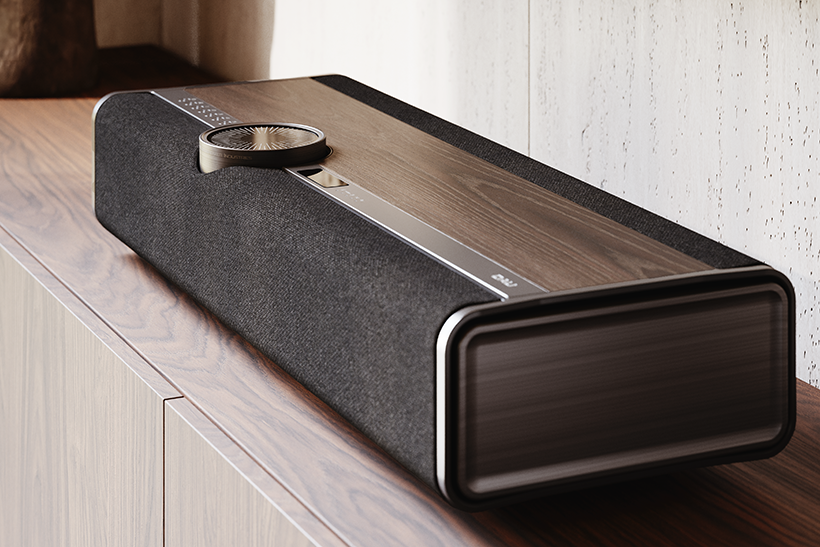
This hybrid approach solves a common consumer pain point: the “device clutter” of having separate systems for music and movies. As all-in-ones integrate more cinema-grade connectivity, the dedicated soundbar may become a budget-tier category, while the “premium” market moves toward full-range hi-fi units that happen to handle TV audio.
Comparing Audio Philosophies
| Feature | Traditional Soundbar | Adaptive All-in-One (e.g., Vega) |
|---|---|---|
| Primary Goal | Dialogue clarity & FX | Musical fidelity & Versatility |
| Placement | Fixed (below TV) | Adaptive (Wall/Shelf/Vertical) |
| Processing | Virtual Surround | Adaptive Stereo Enhancement (ASE) |
Will AI-driven upmixing become the standard for music?
The Dali Vega employs Adaptive Stereo Enhancement (ASE), which upmixes stereo inputs into five channels to analyze the signal and apply dynamic widening. This ensures a jazz trio has a similar stereo presence to a full orchestra. It’s a departure from “purist” audio, which typically avoids any processing of the original signal.
The trend is moving toward “intelligent” audio that adapts to the content. We’re likely to see more systems that can distinguish between a live recording and a studio track, automatically applying different spatial widening techniques to mimic the original environment. For the average listener, this convenience outweighs the purist’s desire for an untouched signal.
Is the £2,599 price point sustainable for all-in-ones?
At £2,599, the Vega sits in a premium bracket. This pricing reflects the cost of integrating multiple roles—amplifier, streamer, and speaker—into one chassis with proprietary tech like ASE. The value proposition here isn’t just the sound, but the reclamation of living room space.

As these technologies scale, we can expect a “trickle-down” effect. Accelerometer-based EQ and smart upmixing will likely move from £2,000+ systems into mid-range audio within a few years. The challenge for brands will be maintaining “hi-fi” prestige while automating the listening experience.
Frequently Asked Questions
What is HDMI eARC and why does it matter for music systems?
HDMI eARC (Enhanced Audio Return Channel) allows a speaker system to receive high-quality audio from a TV with a single cable, enabling the use of hi-fi systems as high-end soundbar replacements.
How does an accelerometer improve sound quality?
It doesn’t improve the raw quality, but it ensures consistency. By detecting if a speaker is vertical or horizontal, the system can apply specific EQ settings to prevent the sound from becoming muffled or unbalanced due to the change in position.
What is the difference between stereo widening and surround sound?
Surround sound uses physical speakers behind and beside the listener. Stereo widening, like Dali’s ASE, uses digital processing to make a two-channel signal feel broader and more immersive from a single source.
What do you think about the shift toward adaptive audio? Would you trade “purist” sound for a system that adjusts itself to your room? Let us know in the comments or subscribe to our newsletter for more deep dives into the future of home tech.