
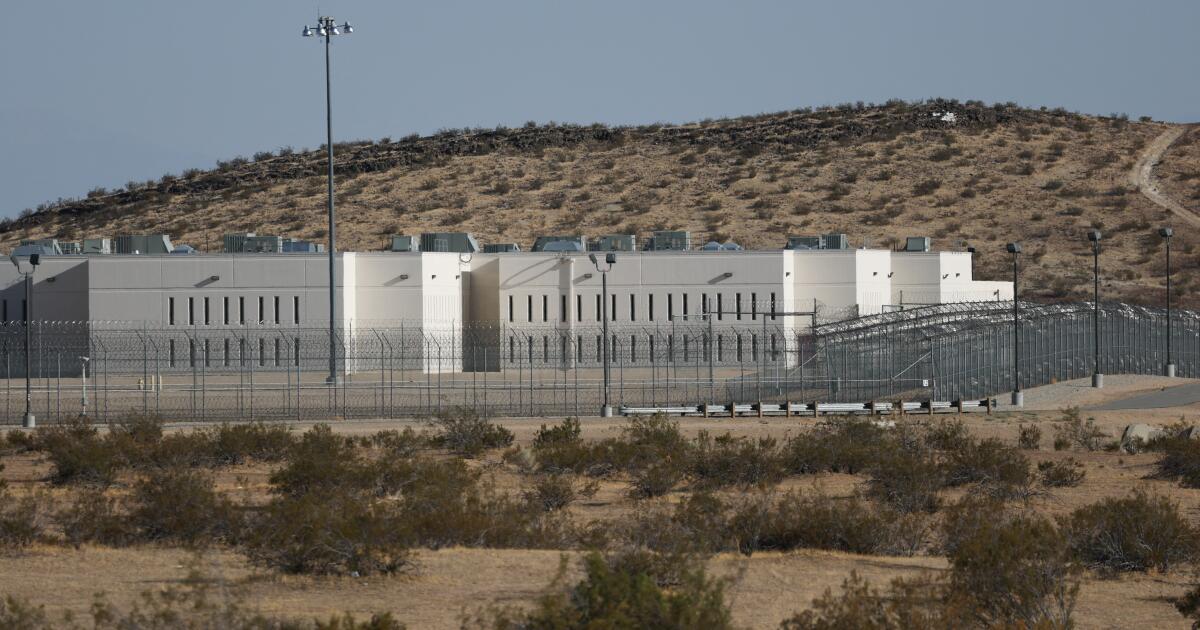
Department of Homeland Security must provide ‘constitutionally adequate healthcare’ at ICE detention center, judge rules
A federal judge has ordered Immigration and Customs Enforcement (ICE) and the Department of Homeland Security to provide healthcare meeting constitutional standards to individuals detained at the California City Detention Facility in the Mojave Desert. The ruling, issued by U.S. District Judge Maxine M. Chesney, follows a lawsuit alleging inadequate medical care and substandard living conditions at the facility.
Legal Challenge and Court Order
The case was brought in November by seven detainees who alleged medical neglect, unsanitary conditions, and abusive treatment. Judge Chesney’s Tuesday ruling mandates timely and confidential access to legal counsel for detainees. It also requires the provision of temperature-appropriate clothing and blankets, as well as at least one hour of daily access to outdoor recreation.
External Oversight
To ensure compliance, the judge has appointed an external monitor with the authority to review medical records and conduct on-site inspections and interviews with both detainees, and staff. This oversight is considered crucial given prior concerns about adherence to court orders regarding medical care.
Responses to the Ruling
CoreCivic, the private company operating the facility, stated they “work closely with our government partner to ensure we are providing all required services and meeting applicable standards.” However, a spokesperson for the Department of Homeland Security, Tricia McLaughlin, characterized the judge’s order as “unnecessary and superfluous,” asserting that existing DHS medical policy already exceeds required standards.
McLaughlin stated that all detainees receive proper meals, water, medical treatment, and opportunities to communicate with family and lawyers. She further claimed that ICE detention standards are higher than those found in most U.S. Prisons.
Previous Concerns and Actions
The lawsuit highlighted concerns raised by the city manager prior to the facility’s opening, who warned that the building’s construction compromised radio signal transmission, potentially impacting safety. Shortly after opening, in September, detainees launched a hunger strike in protest of the conditions. In December, attorneys sought a court order to compel ICE to provide potentially life-saving medical care to two detainees – one with a heart condition and another fearing prostate cancer – which ICE later agreed to provide.
What Could Happen Next
The implementation of the court order could lead to improvements in healthcare access and living conditions at the California City Detention Facility. The external monitor will identify areas where ICE and CoreCivic are falling short of constitutional standards. Continued legal challenges are also likely if the plaintiffs believe the court order is not being fully enforced. Further oversight visits, such as the one conducted by U.S. Senators Alex Padilla and Adam Schiff, could also occur. The long-term impact will depend on the thoroughness of the monitoring process and the willingness of ICE and CoreCivic to address identified deficiencies.
Frequently Asked Questions
What prompted this lawsuit?
The lawsuit was filed by seven detainees in November alleging medical neglect, unsanitary living conditions, and abusive treatment at the California City Detention Facility.
What specific relief did the judge order?
The judge ordered ICE and the Department of Homeland Security to provide “constitutionally adequate healthcare” to detainees, along with timely access to attorneys, appropriate clothing, and adequate outdoor recreation.
Who is responsible for operating the detention facility?
CoreCivic operates the California City Detention Facility in partnership with the government.
As this case unfolds, what role do you believe independent oversight plays in ensuring humane conditions within detention facilities?