
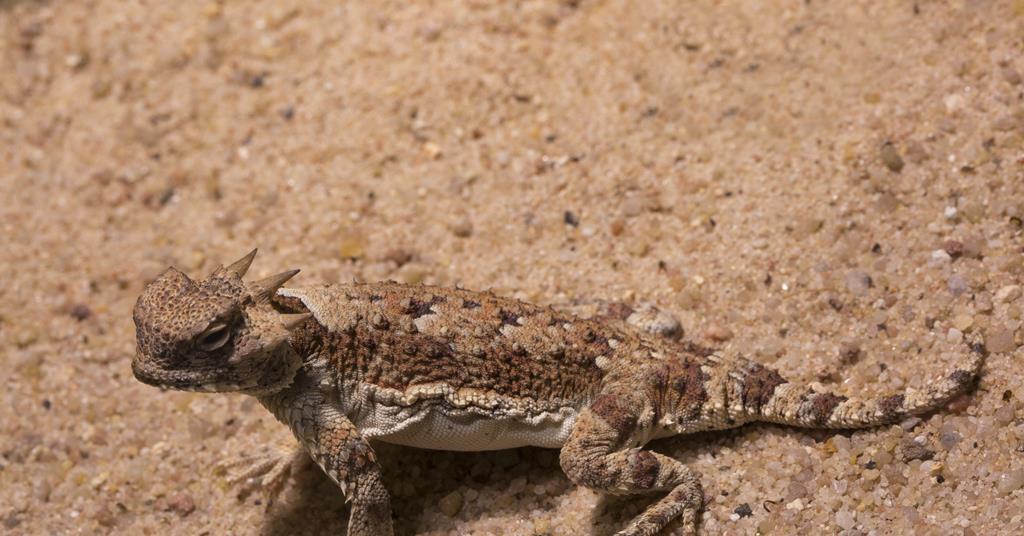
Desert horned lizards that drink captured water from their skin inspire water-harvesting system | Research
Researchers at Seoul National University and the Daegu Gyeongbuk Institute of Science and Technology have developed a water-harvesting system inspired by the desert horned lizard (Phrynosoma platyrhinos). By mimicking the lizard’s unique jaw movements and skin microchannels, the team created a low-power device capable of extracting and purifying water from damp soil, offering a sustainable alternative for arid regions where traditional infrastructure is unavailable.
How do desert horned lizards harvest water from dry soil?
The desert horned lizard survives in North American arid climates by using specialized microchannels in its skin to collect moisture from raindrops or damp soil through capillary action. According to research led by Ho-Young Kim of Seoul National University, the lizard does not rely on high-pressure systems to drink. Instead, it employs rhythmic jaw movements. As the lizard slowly opens its jaws, capillary action draws water into the corners of its mouth. Rapid closing of the jaws then causes the skin to fold inward, effectively pumping the water into the mouth.
The desert horned lizard can collect water from soil without requiring large energy inputs, a mechanism that researchers have now successfully translated into a biomimetic mechanical device.
What are the technical capabilities of the new water-harvesting device?
The artificial system replicates the biological mechanics of the horned lizard using a setup of two glass plates—one fixed and one hinged—that perform an asymmetric cyclic motion. According to the research team, this device pulls water from porous media, such as glass beads simulating soil, and utilizes the lizard-inspired pumping mechanism to transport the fluid. To ensure the collected water is safe for use, the researchers integrated a Nafion ion-exchange material. This material acts as a filter, removing heavy metals and contaminants from the damp soil. The Nafion coating can be regenerated by soaking it in an acidic solution for 30 minutes, allowing for sustained use in resource-limited settings.
Why does this matter for off-grid water solutions?
Current water infrastructure often fails to reach remote or arid communities. Ho-Young Kim notes that much of the world’s untapped water is trapped in damp, often contaminated soil rather than in surface reservoirs. Unlike large-scale desalination plants that require high energy, this bioinspired system operates with low power. Because the system can be scaled by running multiple small units in parallel, it presents a flexible template for disaster relief and off-grid water access. The ability of the device to filter complex mixtures of cations suggests it may also be effective in purifying brackish water, broadening its potential utility.
Frequently Asked Questions
Can this system work in extremely dry deserts?
The system is designed to harvest water from damp or moist soil. While it is inspired by desert-dwelling lizards, it requires a source of moisture in the soil to function via capillary action.
How is the water purified?
Purification is achieved through Nafion ion-exchange material integrated into the device’s pores, which captures heavy metals and other contaminants during the collection process.
Is the device energy-intensive?
No. According to the research team, the system is designed for low-power operation, avoiding the high-pressure inputs required by conventional water extraction technologies.
When considering sustainable water technologies, look for systems that utilize passive capillary action, as these typically require significantly less maintenance and electricity than active pumping systems.
Have you seen other nature-inspired technologies changing the way we approach resource scarcity? Share your thoughts in the comments below or subscribe to our newsletter for more updates on sustainable engineering breakthroughs.