
Digital brain twin recreates brain activity in a toddler with autism
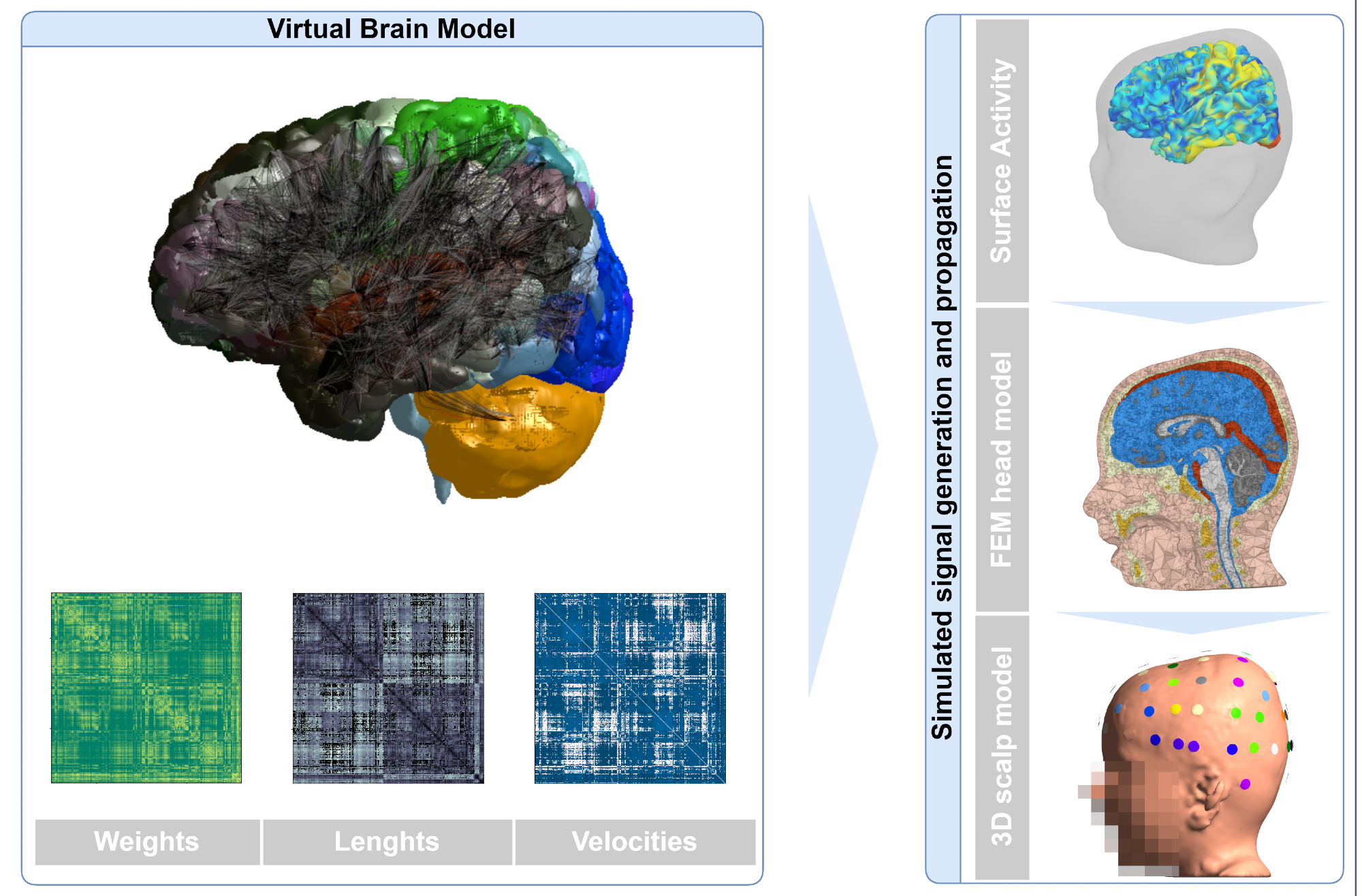
Researchers developed the high FidElity Digital brain modEl (FEDE) to create patient-specific “digital twins” that replicate brain anatomy and activity. According to a study in PLOS Digital Health, the system successfully modeled the brain of a 2.4-year-old child with autism spectrum disorder (ASD) by integrating MRI scans with EEG data.
How does the FEDE digital twin model work?
The FEDE pipeline uses the finite-element method (FEM) to merge anatomical connections from medical images with biophysical recordings of brain activity. Researchers used T1-weighted, T2-weighted, and diffusion-weighted imaging (DWI) MRI scans to build the 3D replica.
To achieve high-resolution reconstruction, the team optimized parameters on a dense cortical mesh containing 20,484 vertices. They utilized the HCPMMP1 standard atlas to divide brain regions and measured nerve fiber pathway lengths to map signal travel speeds.
The system simulates brain activity using virtual electrodes on the scalp. These simulations are then compared to actual EEG recordings from the patient to ensure the model’s reliability.
What did the model reveal about autism spectrum disorder?
In the case of the 2.4-year-old patient, the model identified possible abnormalities in brain organization. According to the researchers, these include altered communication between brain cells and changes in connections both within and between brain regions.

The study found the optimal noise level in the ASD model was about 100 times higher than standard model values. This suggests there are greater fluctuations in neural activity in ASD. Additionally, the excitatory-to-inhibitory (EI) ratio was about three times higher than in a healthy brain, indicating an imbalance in signals that increase or suppress activity.
The researchers noted these findings are hypotheses rather than generalizable markers because the study involved only one patient without a control group.
How does FEDE differ from standard brain models?
The FEDE method predicted shorter signal transmission delays than conventional models. The study indicates that standard approaches often overestimate the time signals take to travel between brain regions.
This discrepancy exists because standard models do not account for myelination. Myelination is the insulating covering around nerve fibers that allows electrical signals to move faster. By incorporating myelination and conductance properties of different tissues, FEDE provides a more accurate anatomical and functional replication.
What are the next steps for this technology?
If validated in larger studies with diverse populations of healthy and ASD patients, the FEDE pipeline could be used to create personalized digital twins for various brain diseases. Such models may support the development of individualized therapeutic strategies and the evaluation of treatments.
A possible next step involves using these models to clarify complex conditions in toddlers. Because their brain systems change rapidly, digital twins could offer a way to investigate neural dynamics without the limitations of traditional imaging. The researchers emphasized that the model cannot currently diagnose ASD or identify definitive biological abnormalities.
Frequently Asked Questions
What is a digital twin in the context of this study?
It is a patient-specific virtual brain model designed to replicate both the physical structure and the biophysical activity of a real human brain.
What types of MRI scans were used to build the model?
The researchers used T1-weighted, T2-weighted, and diffusion-weighted imaging (DWI) sequences.
Why is the EI ratio important in the ASD model?
The EI ratio measures the balance between neural signals that increase and those that suppress brain activity; in the studied patient, this ratio was three times higher than expected in a healthy brain.
Do you think personalized digital twins will eventually replace some traditional diagnostic imaging for children?