
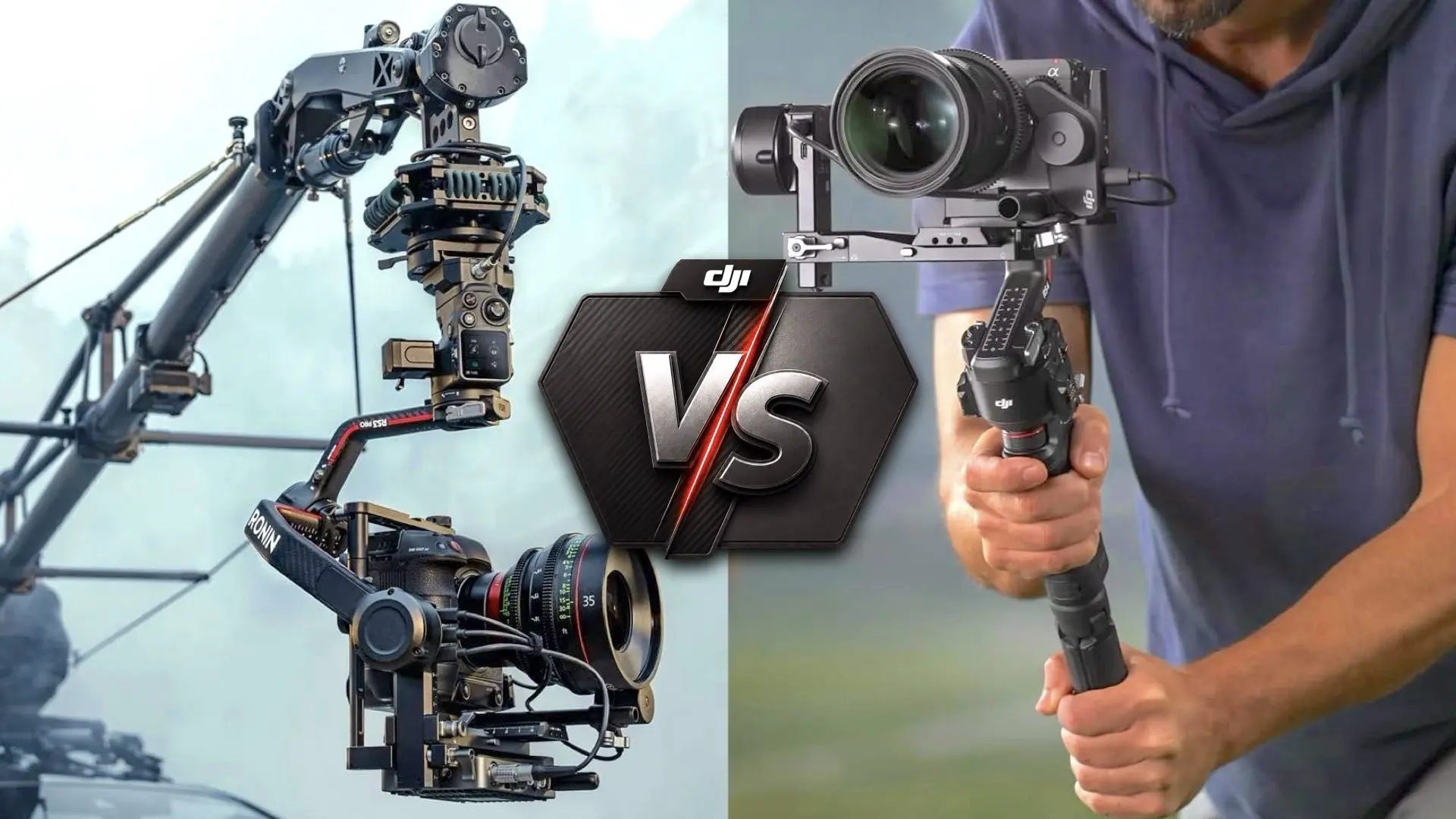
DJI RS 3 Pro vs DJI RS 4: The Older Pro Gimbal May Be the Smarter Cinema Buy
Choosing between the DJI RS 4 and the DJI RS 3 Pro depends primarily on the weight of the camera rig and the specific production requirements of the user. The DJI RS 4 is a newer, lighter, and more affordable stabilizer designed for compact mirrorless setups and vertical content creation, while the DJI RS 3 Pro offers a higher 4.5 kg payload capacity for cinema-style builds featuring cages, external monitors, and heavy lenses.
Did You Know? The DJI RS 3 Pro was designed with compatibility for professional production workflows, including the integration of Ronin 4D LiDAR focusing technology to assist with precision in handheld settings.
Payload and Practical Application
The core distinction between these two stabilizers lies in their weight-bearing capabilities. The DJI RS 3 Pro supports a payload of up to 4.5 kg (10 lbs), whereas the DJI RS 4 is limited to 3 kg (6.6 lbs), according to manufacturer specifications.
For operators using Sony a7, Canon EOS R, or Nikon Z series bodies with standard lenses, the RS 4 provides sufficient headroom. However, those utilizing cinema-style setups—such as the Sony FX3, FX6, or Blackmagic Pocket Cinema Camera rigs outfitted with matte boxes and follow-focus motors—may find the RS 3 Pro necessary to maintain balance and avoid motor stress. Operating a gimbal near its weight limit often leads to increased sensitivity and vulnerability to shifts in equipment positioning.
Expert Insight: Samantha Carter notes that the choice between these models represents a trade-off between modern efficiency and production tolerance. While the RS 4 streamlines the workflow for social and commercial creators, the RS 3 Pro functions as an insurance policy for heavier, more complex camera configurations that would otherwise require time-consuming disassembly.
Design and Workflow Advantages
The DJI RS 4 emphasizes features tailored for modern, fast-paced content production. It includes second-generation native vertical shooting capabilities, Teflon-coated axis arms for smoother balancing, and an RSA communication port for peripheral integration. These additions suggest that the RS 4 is optimized for creators who frequently transition between horizontal and vertical deliverables.
Conversely, the DJI RS 3 Pro remains the superior choice for filmmakers who prioritize keeping their cameras rigged with accessories. By selecting the Pro model, users avoid the need to strip down their setups before every gimbal shot. While the RS 4 is the more rational tool for travel, events, or real estate photography due to its lighter weight, the RS 3 Pro earns its price point by providing the necessary breathing room for narrative and documentary-style equipment packages.
What May Happen Next
As DJI continues to expand its Ronin line, market confusion regarding product hierarchy is likely to persist. Because both units are frequently discounted and carry the same brand name, buyers may continue to compare the standard RS 4 against the more robust RS 3 Pro. Moving forward, potential users might expect more distinct marketing differentiation between the standard “RS” line and the “Pro” series to help clarify which tools are suited for specific production scales.
Frequently Asked Questions
Which gimbal is better for vertical video?
The DJI RS 4 is better suited for vertical shooting as it features a second-generation native vertical shooting system designed for modern social and commercial deliverables.
Can the DJI RS 4 handle cinema-style camera rigs?
The DJI RS 4 has a 3 kg payload capacity, which is generally intended for compact mirrorless cameras. For heavier rigs involving cages, matte boxes, and focus motors, the DJI RS 3 Pro with its 4.5 kg capacity is the recommended tool.
Is the DJI RS 4 a direct successor to the RS 3 Pro?
No, the RS 4 is not a direct successor to the RS 3 Pro. The RS 4 is a refined mirrorless stabilizer, while the more direct modern comparison to the RS 3 Pro would be the RS 4 Pro.
Do you prioritize the lightweight efficiency of a modern mirrorless rig or the heavy-duty capacity required for a full cinema build?