
Dormire troppo o troppo poco, cosa succede al nostro corpo? Lo studio che supera il mito delle 8 ore
Biological aging slows most effectively when individuals sleep between 6.4 and 7.8 hours per night, according to a study published in Nature. Research involving 500,000 UK Biobank participants found that both insufficient and excessive sleep accelerate biological aging across multiple organ systems, including the brain, liver, and immune system.
The study, released in May, analyzed self-reported sleep data and compared it to the biological age of the participants. Researchers identified a “U-shaped” relationship between sleep duration and aging, where biological decay is minimized in the middle range and increases at both extremes.
How does sleep duration affect biological aging?
Sleeping between 6 hours and 24 minutes and 7 hours and 48 minutes is associated with the slowest biological aging. This effect extends to the pancreas, skin, adipose tissue, lungs, liver, and brain, according to the Nature report.

Karen Lincoln, a professor of environmental and occupational health at the Joe C. Wen Public Health at UC Irvine in California, stated that sleeping too much or too little can accelerate the biological aging process.
What happens to the body with insufficient sleep?
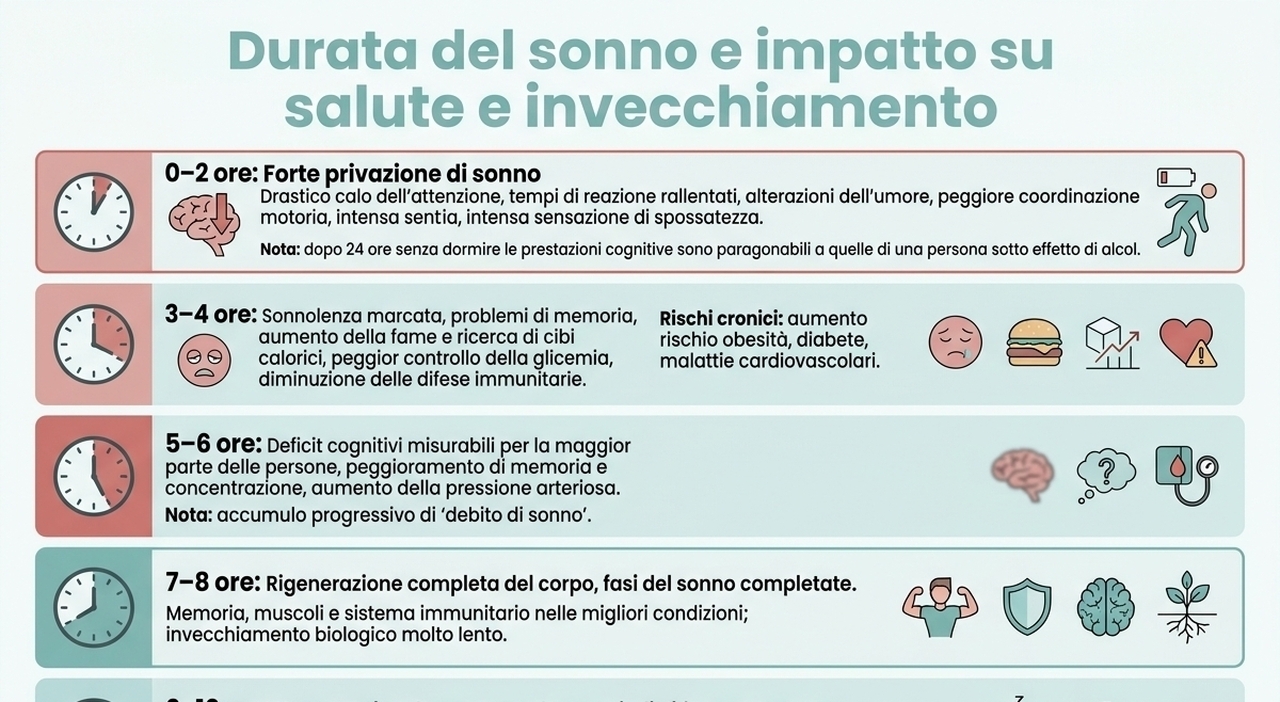
Severe sleep deprivation, defined as 0 to 2 hours of rest, prevents the body from eliminating metabolic waste. This leads to slower reaction times, mood alterations, poor motor coordination, and a sharp drop in attention.
Individuals sleeping 3 to 4 hours often experience marked sleepiness and memory problems. This duration is linked to increased hunger for high-calorie foods, poorer glucose control, and weakened immune defenses. Chronic lack of sleep in this range increases the risk of cardiovascular disease, diabetes, and obesity.
Those sleeping 5 to 6 hours may feel energetic, but research indicates most in this group have measurable cognitive deficits. Effects include impaired concentration, memory loss, and increased blood pressure due to accumulating “sleep debt.”
Why is oversleeping linked to health risks?
Habitual sleep lasting 9 to 10 hours is associated with depressive symptoms and daytime fatigue. While occasional long sleep after periods of exhaustion is not considered a problem, habitual oversleeping may lead to chronic pathologies.

Sleeping more than 10 hours, or “oversleeping,” is linked in epidemiological studies to higher general mortality, poorer metabolic indicators, and increased cardiovascular risk.
Researchers suggest that excessive sleep often serves as a signal for pre-existing psychological or medical conditions. These include sleep apnea, hypersomnia, or parasomnias, which involve abnormal movements or behaviors during the transition to or from sleep.
What may happen next for sleep guidelines?
Future health recommendations could shift away from the generic 8-hour rule toward the 6.4 to 7.8-hour window identified in the UK Biobank data. Medical screenings may increasingly view oversleeping as a primary indicator for underlying parasomnias or apnea.
Frequently Asked Questions
What is the ideal amount of sleep for slowing biological aging?
According to the study published in Nature, the ideal range is between 6.4 and 7.8 hours per night.
Which organs are impacted by sleep duration?
The research found that sleep duration affects the brain, liver, lungs, immune system, skin, adipose tissue, and pancreas.
What are the risks associated with sleeping over 10 hours?
Oversleeping is associated with an increased risk of cardiovascular issues, worse metabolic indicators, and higher general mortality.
How many hours of sleep do you average per night?