

Dwarf or standard fruit trees: Which is right for your garden? – Kem Ormond
New Zealand gardeners are increasingly choosing between dwarf and standard fruit trees based on space constraints and long-term yield goals. Horticulturalists advise that while dwarf varieties offer faster fruit production—often within two to three years—standard trees provide superior long-term resilience and higher volume for preserving. Optimal planting occurs during the dormant season, from May to July, to ensure root establishment before spring.
Why Choose Dwarf Fruit Trees for Small Spaces?
Dwarf fruit trees are the preferred choice for urban gardens, patios, and container growing because they reach maturity much faster than their full-sized counterparts. According to horticultural best practices, these trees typically bear fruit within two to three years of planting. Their compact stature eliminates the need for ladders during harvest, significantly reducing the physical labor required for maintenance and pruning.
Beyond convenience, dwarf trees require fewer water and nutrient inputs due to their restricted root systems. This makes them an efficient option for gardeners working with limited square footage who still want a diverse harvest.
When Are Standard Fruit Trees the Better Investment?
Standard or full-sized fruit trees remain the gold standard for long-term food security and landscape aesthetics. While they take longer to bear fruit—typically four to six years—they offer a significantly higher volume of produce, which is ideal for those who preserve or can their harvest.
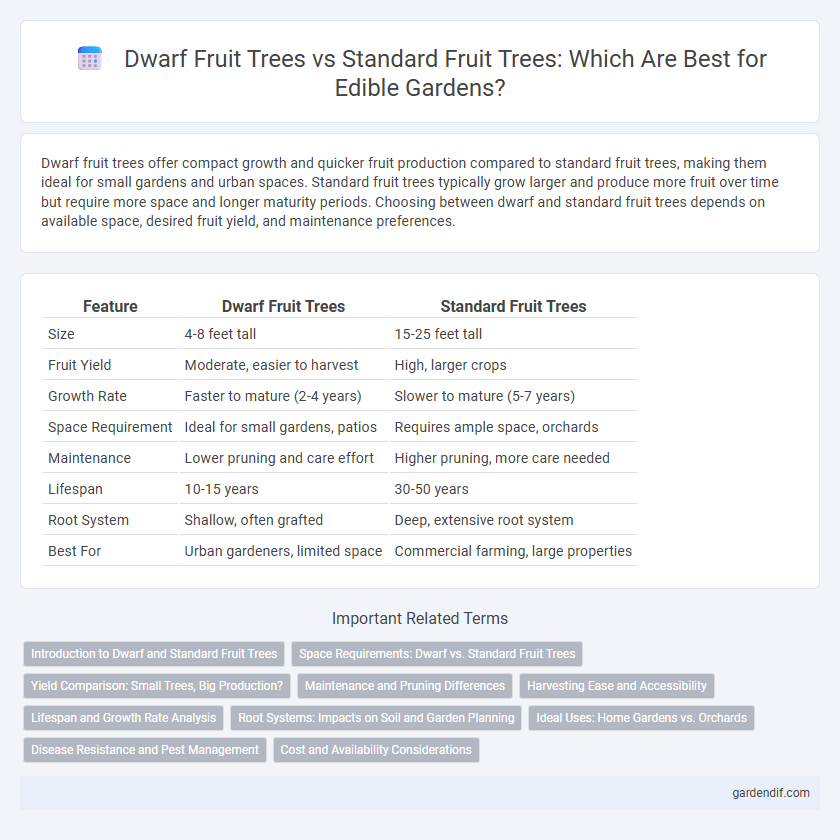
Standard trees possess more robust root systems, which allow them to better withstand drought and high wind compared to dwarf varieties. Furthermore, they generally enjoy a longer lifespan, often producing fruit for several decades. For those planning a permanent orchard, standard trees provide the shade and traditional aesthetic that smaller varieties cannot replicate.
Comparison: Dwarf vs. Standard Fruit Trees
| Feature | Dwarf Trees | Standard Trees |
|---|---|---|
| Time to Fruit | 2–3 years | 4–6+ years |
| Maintenance | Low (no ladder) | High (ladder required) |
| Resilience | Moderate | High |
How to Create a Year-Round Harvest
A self-sufficient garden relies on selecting a mix of trees with staggered ripening times. By carefully planning your planting schedule, you can ensure a continuous supply of fresh produce throughout the year. This strategy not only saves money on grocery bills but increases household autonomy.
Consider incorporating a diverse range of species such as fig, guava, crab apple, or quince to complement traditional plum or apple trees. If space permits, adding nut trees serves as a high-value, long-term investment that can yield for 20 to 40 years.
Frequently Asked Questions
What is the best time to plant fruit trees in New Zealand?
The best time to plant is during the cooler, dormant period, specifically from May to July. This allows the roots to establish before the spring growing season.
Can I grow dwarf fruit trees in pots?
Yes, dwarf varieties are excellent for container gardening, provided they have adequate drainage and consistent watering as the tree matures.
Do standard trees require more water than dwarf trees?
Yes, because standard trees have larger, more expansive root systems, they typically require more water and nutrients to reach their full potential, though they are more drought-tolerant once established.
Are you planning to plant an orchard this season? Share your favorite fruit varieties in the comments below, or subscribe to our newsletter for more seasonal gardening advice.