
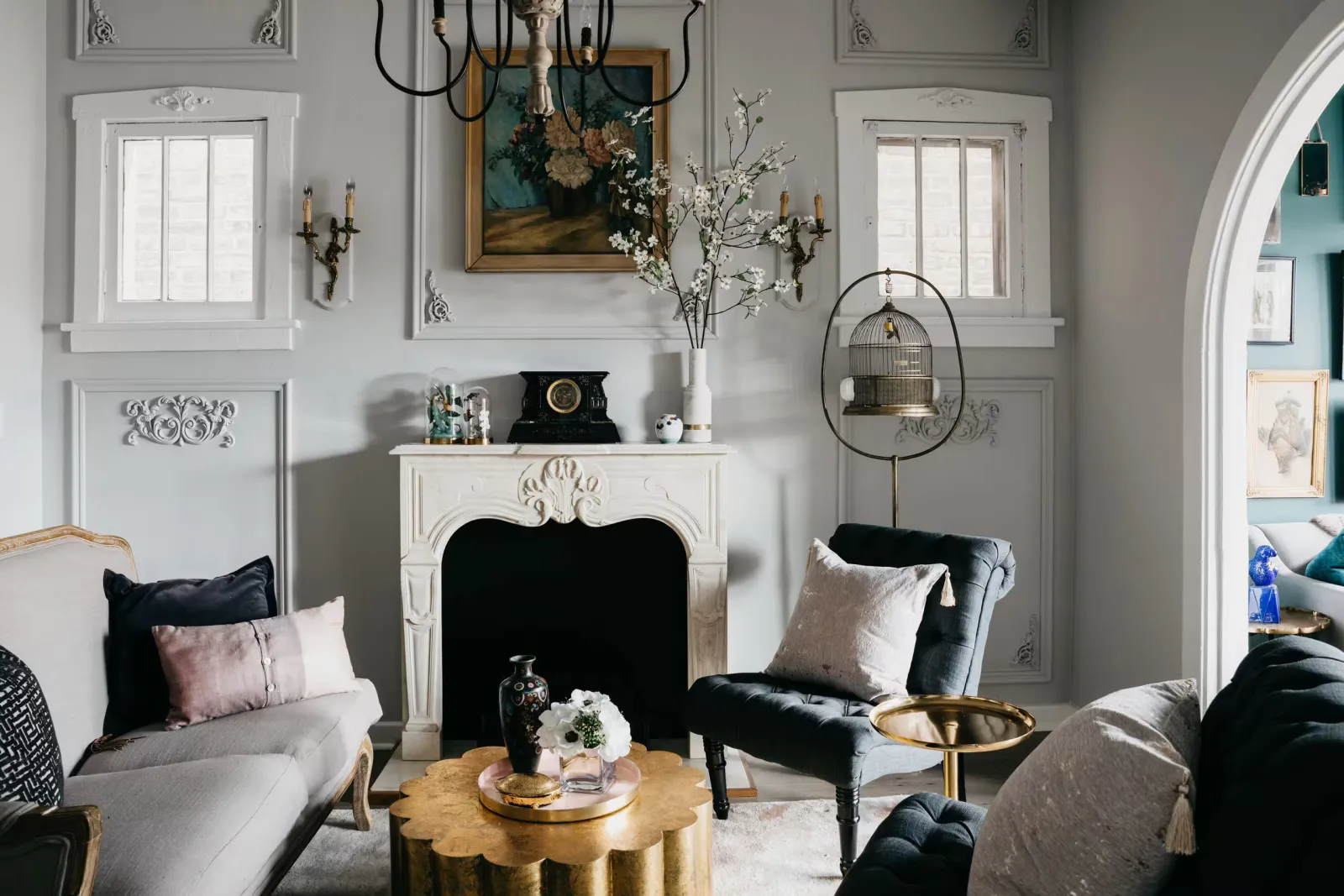
Eclectic Chicago Apartment Featuring French Vintage Treasures
Eclectic maximalism, exemplified by Corvus Design House’s project in Chicago’s Roscoe Village, blends vintage finds with bold colors like peacock blue and charcoal. According to the designers, this trend focuses on immersive storytelling through a “cabinet of curiosities” approach, integrating historical artifacts with modern functionality to create personalized living spaces.
Why is curated maximalism replacing minimalism?
Homeowners are shifting away from sterile, white-walled interiors toward “curated maximalism.” This trend isn’t about clutter; it’s about intentionality. In the Roscoe Village apartment designed by Corvus Design House, this is achieved by repeating specific materials—brass, velvet, and gold frames—to create visual unity across diverse styles.
Minimalism often prioritizes the space over the inhabitant. Curated maximalism does the opposite. It treats the home as a biography. By mixing a Louis XV-style sculpted plaster fireplace with contemporary gold flower-shaped coffee tables, designers create a tension that feels lived-in rather than staged.
How do global vintage finds influence modern home aesthetics?
The “treasure hunt” philosophy is driving a trend where homeowners source items from different continents to create a global narrative. A primary example is the inclusion of a 1924 velvet banner from the Patronage des Écoles Laïques de Tourlaville, a commune in Normandy, France, placed within a Chicago residence.
This movement moves beyond “boho” style into a more academic form of decorating. It involves sourcing specific historical textiles and artifacts that act as conversation pieces. This approach transforms a room from a functional area into a gallery of personal history.
What role do high-contrast color palettes play in eclectic design?
Future trends show a move toward “saturated depths.” Instead of neutral grays, designers are using “peacock blue” and “deep anthracite” to create mood-driven zones. Corvus Design House utilized a deep blue “boudoir” area to contrast with pearl-gray walls in the main living space.
High-contrast palettes serve a psychological purpose. Darker, saturated colors in intimate spaces—like the blue-walled gallery of botanical engravings in the Chicago apartment—create a sense of enclosure and privacy. This contrasts with the functional brightness of the kitchen, where white subway tiles reflect light to balance the deep anthracite cabinetry.
Balancing Weight with Transparency
To prevent heavy colors from shrinking a room, the trend of “visual lightening” is emerging. The use of Louis Ghost chairs (transparent acrylic) paired with a glass table in the Roscoe Village kitchen allows the floor’s floral cement tiles to remain visible. This prevents the dark cabinetry from overwhelming the space.
How does the “cabinet of curiosities” concept work in residential spaces?
The “cabinet of curiosities” (or Wunderkammer) is transitioning from museums to living rooms. This trend emphasizes the display of eclectic objects—blackened bronze clocks, porcelain vases, and botanical prints—arranged to tell a story. According to the Corvus Design House project, the goal is an “immersive experience” for the guest.
Unlike traditional decorating, which focuses on matching sets, this trend encourages “mismatched harmony.” An example is the pairing of a mustard yellow velvet armchair with a black cane-back desk. The common thread isn’t the style, but the quality of the materials and the boldness of the color choices.
Frequently Asked Questions
What is the difference between maximalism and clutter?
Maximalism is a curated choice to fill a space with meaningful objects and bold colors. Clutter is the unplanned accumulation of items. The key difference is a unifying element, such as a consistent color palette or recurring material.
Can eclectic design work in small apartments?
Yes. As seen in the Roscoe Village top-floor apartment, using transparent furniture (like Ghost chairs) and strategic lighting (like crystal chandeliers) prevents a maximalist style from feeling cramped.
How do I start incorporating vintage pieces into a modern home?
Start with one “hero” piece, such as a vintage banner or a sculpted fireplace, and build the room around it using a limited palette of three coordinating colors.
Want to see more examples of immersive interior design? Explore our latest gallery of global home tours or subscribe to our newsletter for weekly design insights.