
EMBRAZE Phase 2 Trial: Apitegromab and Tirzepatide for Lean Body Mass Preservation
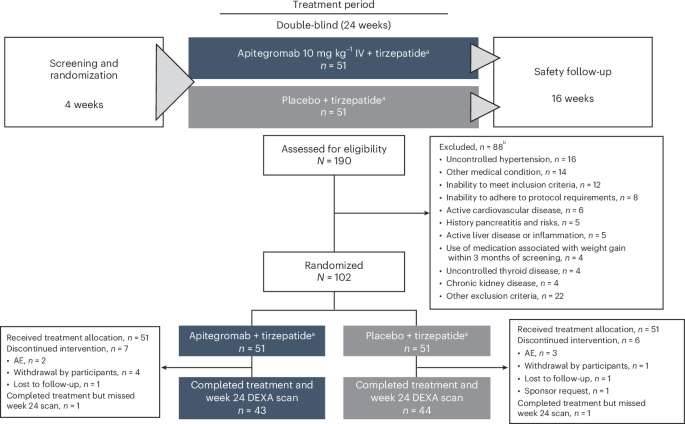
The EMBRAZE phase 2 trial (NCT06445075) evaluated whether adding apitegromab to tirzepatide therapy helps adults maintain lean body mass during weight loss. Conducted across seven U.S. sites, the study used DEXA scans to measure body composition changes over 24 weeks in participants with a BMI between 27 and 45.
Researchers designed this randomized, double-blind, placebo-controlled study to test the efficacy and safety of apitegromab. Participants received either the drug or a placebo alongside tirzepatide, an incretin mimetic therapy.
How did the EMBRAZE trial work?
Participants were randomized in a 1:1 ratio to receive either apitegromab plus tirzepatide or a placebo plus tirzepatide. Apitegromab and the placebo were administered intravenously every four weeks for a total of 24 weeks.
Tirzepatide followed a dose-escalation schedule. It started at 2.5 mg and increased by 2.5 mg every four weeks, reaching a maximum maintenance dose of 15 mg per week.
Following the 24-week treatment period, participants entered a 16-week safety period where no study treatments were administered. This allowed researchers to collect safety data through week 40.
Who was eligible for the study?
The study enrolled adults aged 18 to 65. Eligible participants needed a BMI of 30.0 to 45.0 kg m−2, or a BMI of 27.0 to 29.9 with at least one weight-related comorbid condition.
Strict exclusion criteria were applied to ensure safety. Individuals with active cardiovascular disease, uncontrolled hypertension, or a history of type 1 or type 2 diabetes were ineligible.
Researchers also excluded those with chronic kidney disease stages 1-5, active malignancy, or a history of bariatric surgery. Participants using other anti-obesity or antidiabetic medications within three months prior to screening were also barred.
What were the primary and secondary goals?
The primary endpoint focused on the change from baseline in lean body mass at 24 weeks. This was measured using whole-body DEXA scans of the trunk, arms, and legs.
Secondary endpoints included changes in total body weight and total fat mass. Researchers also looked at other DEXA parameters regarding body composition at the 24-week mark.
Exploratory goals included measuring physical function, such as force production via handheld dynamometry and the number of repetitions in a chair sit-to-stand test. Cardiometabolic markers, including hemoglobin A1C (HbA1C), were also monitored at weeks 24 and 32.
Why does this research matter?
Weight loss treatments often reduce total mass, but the quality of that loss matters. Preserving lean body mass is essential for maintaining physical function and metabolic health.
By combining an incretin mimetic like tirzepatide with apitegromab, researchers are investigating if they can optimize the weight loss process. The goal is to reduce fat while protecting the muscle that supports daily movement.
What may happen next?
Since this was a phase 2 trial, the results could inform the design of larger phase 3 studies. If the data shows a significant difference in lean body mass, researchers may explore wider applications for apitegromab.
Future analysis is likely to focus on the exploratory endpoints, such as whether preserved lean mass translates to better physical function in the chair sit-to-stand tests. This could determine if the drug provides a functional benefit beyond just a measurement on a scan.
The safety data collected through week 40 may also lead to refined guidelines on how to manage adverse events of special interest, such as creatine kinase elevations, in future trials.
Frequently Asked Questions
What was the primary measure of success in the EMBRAZE trial?
The primary endpoint was the change from baseline in lean body mass at 24 weeks, measured by whole-body DEXA scans.
Which medications were used in the study?
Participants received tirzepatide (an incretin mimetic) combined with either apitegromab or a placebo.
Where was the trial conducted?
The trial took place at seven sites across the United States, including locations in California, Florida, Illinois, Louisiana, Oklahoma, and Texas.
Do you think preserving muscle mass should be as important as total weight loss in health treatments?