
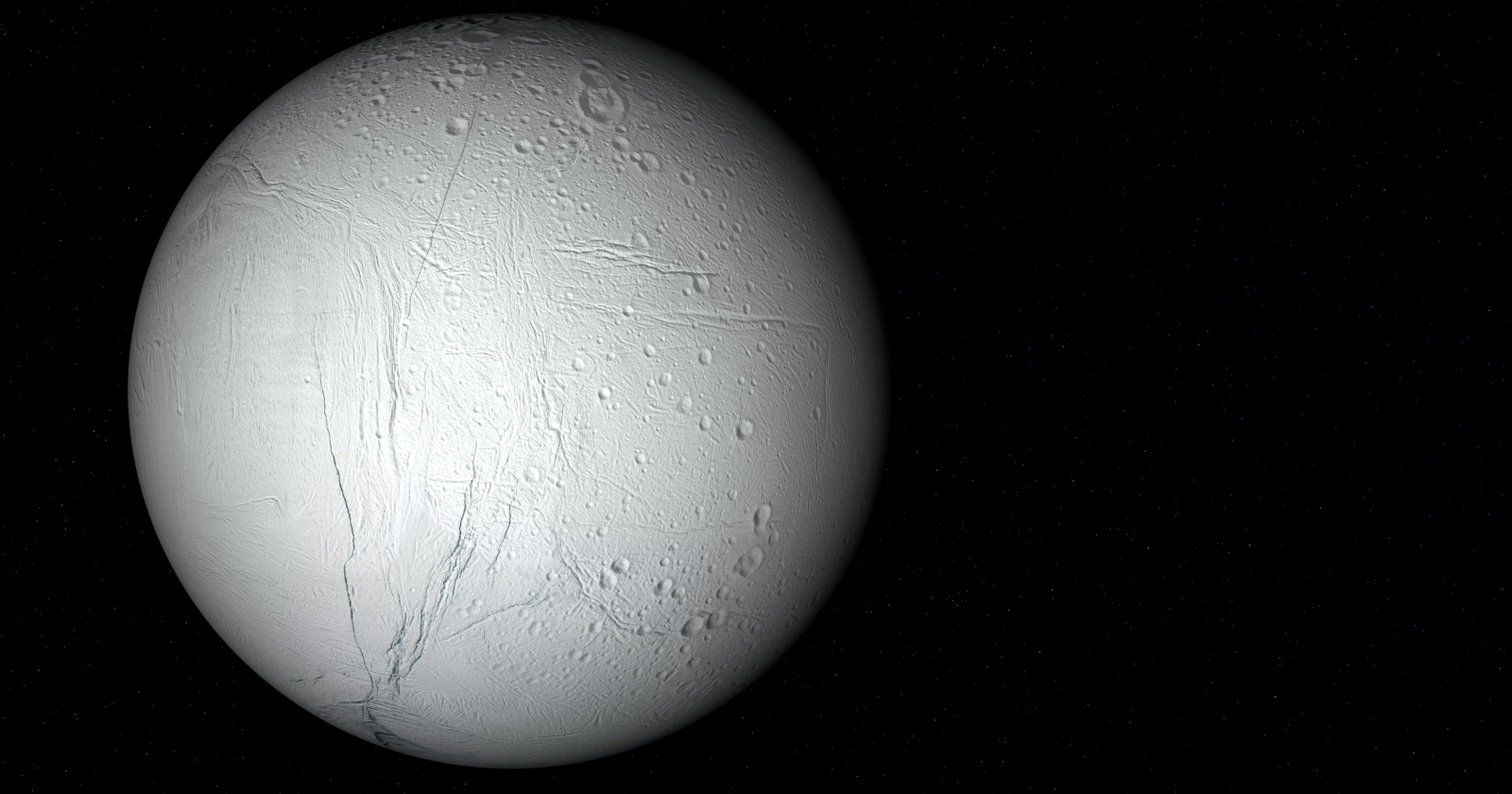
Enceladus, a tiny Saturnian moon only about 500 kilometres wide, is actively venting water vapour and ice grains into space from a salty ocean hidden beneath its crust – and modelling suggests that ocean may have remained warm and chemically active for geological timescales, perhaps long enough for life to have had a chance to emerge.
NASA’s Cassini spacecraft discovered that Enceladus, a moon of Saturn, contains the essential ingredients for habitability, including liquid water, chemical energy, and phosphates. According to Cassini data, the moon’s salty subsurface ocean vents organic molecules and minerals into space through southern fractures, creating a chemically rich environment where life could plausibly survive.
Why is Enceladus considered habitable?
The moon meets a specific checklist of conditions required for life. Cassini detected salt, silica, and organic molecules within plumes of water vapour and ice grains spraying from the south pole.

In 2017, the Cassini team reported molecular hydrogen in these plumes. This finding suggests the presence of hydrothermal vents on the ocean floor, where hot rock meets water to create chemical energy.
Analysis of ice grains in 2023 revealed phosphates, marking the first detection of phosphorus in an ocean beyond Earth. These phosphates appear at concentrations at least 100 times higher than those found in Earth’s seawater.
How does the moon maintain a liquid ocean?
Enceladus is approximately 500 kilometres across with a frozen shell covering a global ocean of liquid salt water. This ocean wraps around a rocky core.
Modelling indicates that Saturn’s gravity squeezes and flexes the moon as it orbits. This “tidal kneading” generates enough heat to potentially keep the ocean liquid and the vents active over geological timescales.
Scientists continue to debate the exact amount of heat supplied by these tides. While models suggest a stable history that could allow life to emerge, the age and stability of the ocean remain uncertain.
What happens next for Enceladus exploration?
Current data describes a location where life could survive, but no living organisms have been found. Confirming the presence of biology would require a mission specifically designed for that purpose.
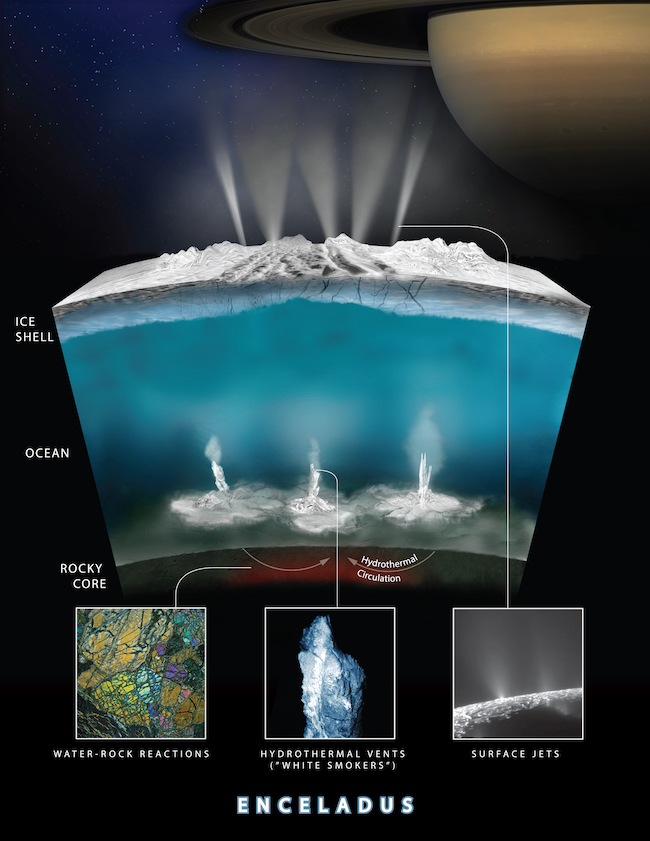
Proposed mission concepts include flying through the plumes with instruments to detect biological signatures. Another possible next step involves landing on the surface to sample the “fresh snow” of ocean spray.
Enceladus remains a high-priority target for these efforts because it allows scientists to sample a hidden sea without needing to drill through kilometres of ice.
Frequently Asked Questions
What is Enceladus?
Enceladus is a small moon of Saturn, roughly 500 kilometres across, featuring a salty subsurface ocean and active plumes at its south pole.
What was the significance of the 2023 discovery?
Researchers detected phosphates in ice grains, a critical element for life, at concentrations at least 100 times higher than in Earth’s seawater.
Has life been discovered on Enceladus?
No. While the moon is considered habitable due to its water, energy, and chemistry, nothing living has been found there.
Do you believe the discovery of phosphorus makes Enceladus the most viable candidate for finding extraterrestrial life?