
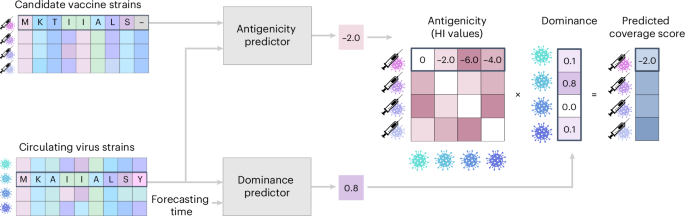
Evaluating the Effectiveness of AI in Influenza Vaccine Strain Selection
The quest to predict the evolution of seasonal influenza has long been a centerpiece of public health strategy. Recent efforts have sought to leverage artificial intelligence (AI) to enhance the selection of vaccine strains, aiming to better match circulating viruses and improve vaccine effectiveness. However, a critical reassessment of these technological models suggests that the promise of AI superiority in this field remains currently unproven.
Recent research indicates that while predictive evolutionary modelling—utilizing site-based mutation dynamics and fitness models—has provided a framework for understanding viral changes, the practical application of AI in selecting seasonal influenza vaccine strains has not yet demonstrated a clear, consistent advantage over existing methods. The shift toward computational biology, while promising in theory, faces significant hurdles when applied to the complex, real-world landscape of influenza A/H3N2 evolution.
The Complexity of Vaccine Matching
Vaccine effectiveness is inherently tied to how well the vaccine components align with the circulating influenza viruses. Historical data from seasons like 2018–2019 and 2021–2022 highlight the ongoing challenges in achieving high effectiveness against influenza A (H3N2). These seasonal variations underscore the difficulty of predicting viral drift, even when applying sophisticated statistical tools and evolutionary modelling.
The reliance on correlation coefficients and statistical methodologies—such as bootstrapping—is essential for interpreting the accuracy of these models. Without rigorous validation and a nuanced understanding of these metrics, the results produced by AI models may be subject to misinterpretation regarding their predictive power. The current consensus suggests that limited evidence exists to definitively claim that AI-based models currently outperform traditional, well-established selection methodologies.
Looking Ahead
What may happen next is a period of intensified scrutiny for AI-driven models. Analysts expect that future research will likely focus on bridging the gap between theoretical evolutionary fitness and actual clinical effectiveness. Developers will refine these models by integrating more diverse phenotypic and genotypic data, which could eventually yield more reliable long-term forecasts.
A possible next step for the scientific community is to establish standardized benchmarks for evaluating AI performance in this context. Should these models fail to show consistent superiority, the field may pivot back to hybrid approaches that favour human expertise in interpreting viral dynamics. The integration of AI is likely to remain a supplemental tool rather than a replacement for established surveillance and selection processes in the near term.
Frequently Asked Questions
Is AI currently better at selecting influenza vaccine strains than traditional methods?
Current research provides limited evidence to support the claim that AI-based models offer a superior advantage in the selection of seasonal influenza vaccine strains.
Why is it difficult to predict influenza A (H3N2) evolution?
Influenza A (H3N2) is subject to rapid evolution and viral drift, making it challenging to forecast which strains will be dominant, even when using sophisticated predictive fitness models and site-based dynamics.
What is the role of statistical validation in these models?
Rigorous statistical methods, including the appropriate use of correlation coefficients and bootstrapping, are essential for determining whether the predictive power of an AI model is statistically significant or merely an artifact of the data used.
How do you believe advancements in technology should influence the way we approach seasonal health preparations?