
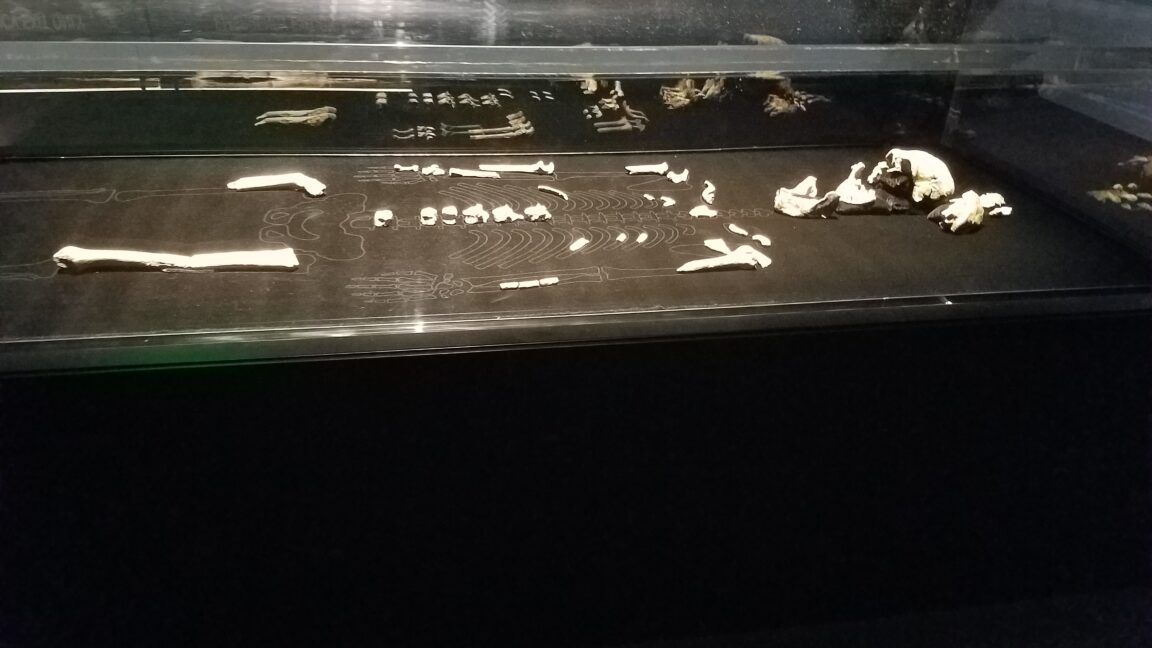
Every Homo naledi we know of is female, and the implications are fascinating
New evidence from the Rising Star cave system suggests that Homo naledi, a non-human hominin with a small brain, possessed complex cultural behaviors including the use of fire and the creation of deliberate wall engravings. Paleoanthropologist Lee Berger and his research team have identified these findings as a form of “first contact” with a non-human species capable of symbolic thought, fundamentally challenging current archaeological excavation ethics.
Why does the discovery of Homo naledi culture challenge archaeology?
The discovery of engravings and evidence of fire use in Homo naledi sites signals a shift in how researchers define intelligent behavior in non-human hominins. According to a 2023 paper by Lee Berger, John Hawks, and their colleagues, these markings were not intended for Homo sapiens, but rather for the Homo naledi themselves or their descendants. Unlike Neanderthals and Denisovans, who shared close genetic and cognitive similarities with modern humans, Homo naledi possessed significantly smaller brains. This suggests that complex symbolic culture is not exclusive to large-brained hominins, forcing a re-evaluation of the evolutionary requirements for art and ritual.
Unlike Homo sapiens, Homo naledi had a brain size roughly one-third that of a modern human. Despite this, their use of fire and creation of wall symbols suggests a level of cognitive complexity previously thought to be unique to our own lineage.
How will the ethics of excavation change for non-human species?
Lee Berger has publicly called for a moratorium on treating hominin remains like dinosaur fossils. Because Homo naledi demonstrated evidence of tending to their dead and creating art, Berger argues that the scientific community has a responsibility to handle these sites with the same respect afforded to human burial grounds. The team has paused excavations in the Rising Star cave system while they determine a new ethical framework. This shift moves the study of ancient hominins away from traditional paleontology and toward a discipline that recognizes the potential for “non-human” culture.

Comparison: Homo naledi vs. Neanderthals
Anthropologists generally categorize Neanderthals and Denisovans as so closely related to Homo sapiens that they are often considered near-peers. The following table highlights the distinctions between these groups based on current research:
| Species | Brain Size | Cultural Evidence |
|---|---|---|
| Homo sapiens | Large | Extensive symbolic culture |
| Neanderthals | Large | Tools, fire, symbolic art |
| Homo naledi | Small | Fire, symbolic engravings |
Frequently Asked Questions
Are Homo naledi considered human?
No. According to Lee Berger, Homo naledi is a non-human species. While they exhibited signs of intelligence and symbolic thought, their brain structure differs significantly from that of Homo sapiens.
What are the “engravings” found in the cave?
Researchers identified crosshatched symbols carved into the cave walls of the Rising Star system. These markings are believed to be intentional symbols created by Homo naledi rather than natural formations.
Why did the excavation team pause their work?
The team paused excavations to reflect on the ethical implications of digging up the remains of a species that clearly displayed signs of culture and ritual behavior, as noted by Lee Berger in his recent commentary on the site.
Stay updated on the latest findings regarding Homo naledi by following the official reports published in journals like Cell. The DOI for the recent protein analysis is 10.1016/j.cell.2026.05.044.
What do you think about the ethics of excavating these sites? Leave a comment below or subscribe to our newsletter for more updates on human evolution and archaeological discoveries.