

Exploring Riverside Country Park: A Nature Guide to Kent’s Medway Marshes
Riverside Country Park in Gillingham, Kent, serves as a critical ecological site known for its salt marshes and “Blue Carbon” capabilities. Located along the River Medway estuary, the park is designated as a Site of Special Scientific Interest (SSSI), providing essential habitats for migratory winter birds and aiding in carbon sequestration according to site data.
The park’s environment consists of mudflats, reed beds, ponds, and grasslands. These salt marshes, where saltwater and freshwater mix, support diverse ecosystems for small organisms, ducks, and sandpipers, particularly during the winter months.
What makes Riverside Country Park an ecological priority?
The area is recognized as the Medway Marshes Site of Special Scientific Interest (SSSI) due to its role in biodiversity and climate regulation. According to the site’s ecological profiles, the salt marshes function as “Blue Carbon” sinks, which absorb and store carbon dioxide.
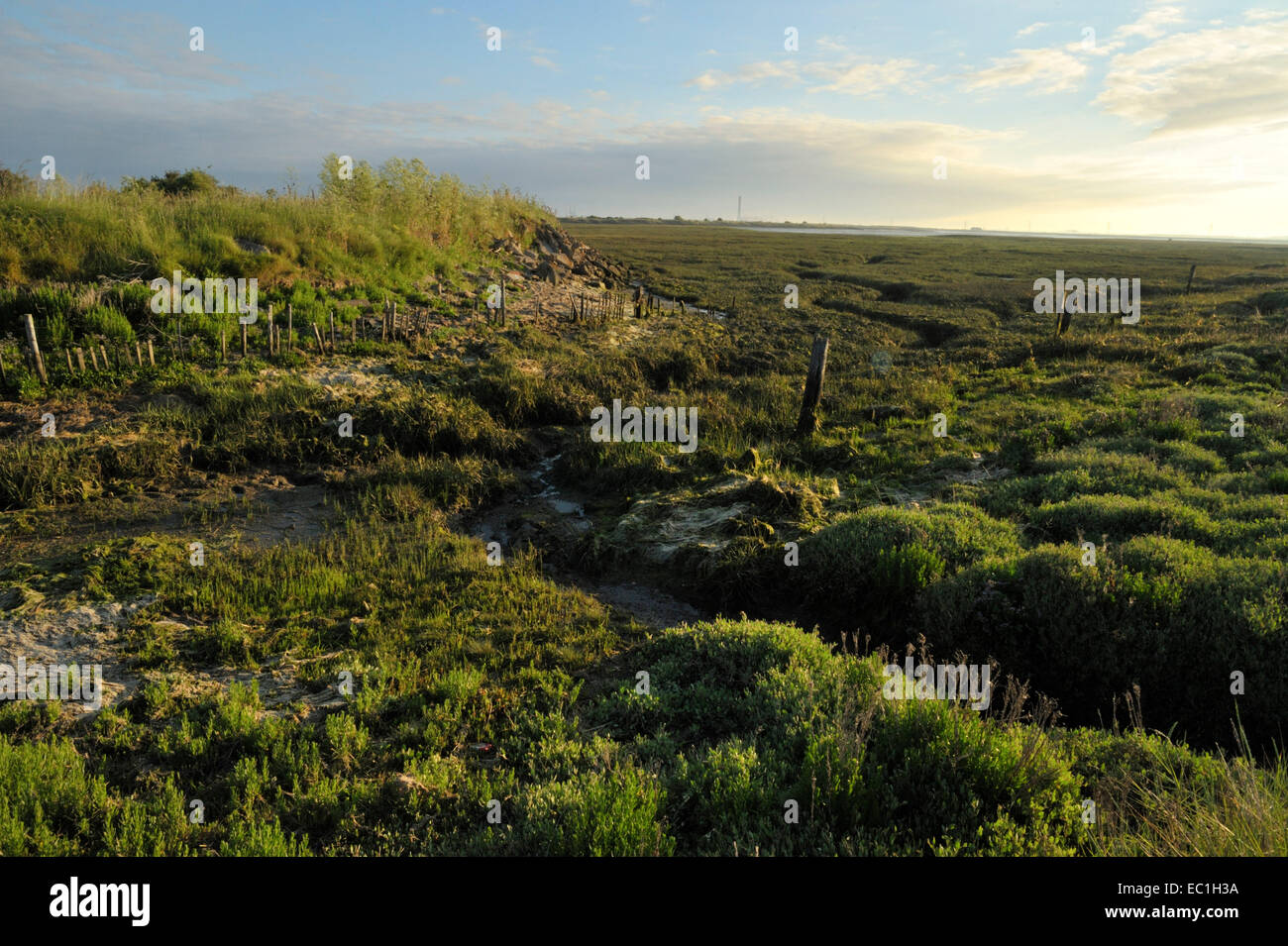
Beyond carbon capture, these wetlands mitigate flood damage and provide vital breeding and feeding grounds for fish and wild birds. The mudflats are specifically noted for being rich in nutrients that attract various migratory species.
How did industrial land become a nature reserve?
Established in the 1970s, the park occupies land that previously supported heavy industry, including docks and cement factories. The current landscape represents a transition from industrial utility to environmental coexistence.
This restoration effort transformed former industrial zones into a protected space that allows nature to return to the Medway riverbank. The result is a flat, accessible terrain that integrates managed paths with wild marshland.
Why do visible “tide lines” appear in the Medway estuary?
Visual boundaries, or “fronts,” occur on the water’s surface due to the interaction between the North Sea tides and the river’s flow. These lines are created when incoming saltwater meets the descending freshwater from upstream.
Differences in water depth and topography also contribute to this phenomenon. Shallow areas, such as those near Horrid Hill and Motney Hill, create ripples and turbulence, while deeper channels remain calmer. Additionally, differences in salinity and temperature prevent the two water masses from mixing immediately, creating a visible line on the surface.
What are the operational details for visitors?
Riverside Country Park is located at 333 Lower Rainham Road, Rainham, Gillingham ME7 2XH. The park opens daily at 8 am, though closing times fluctuate based on the season and sunset.
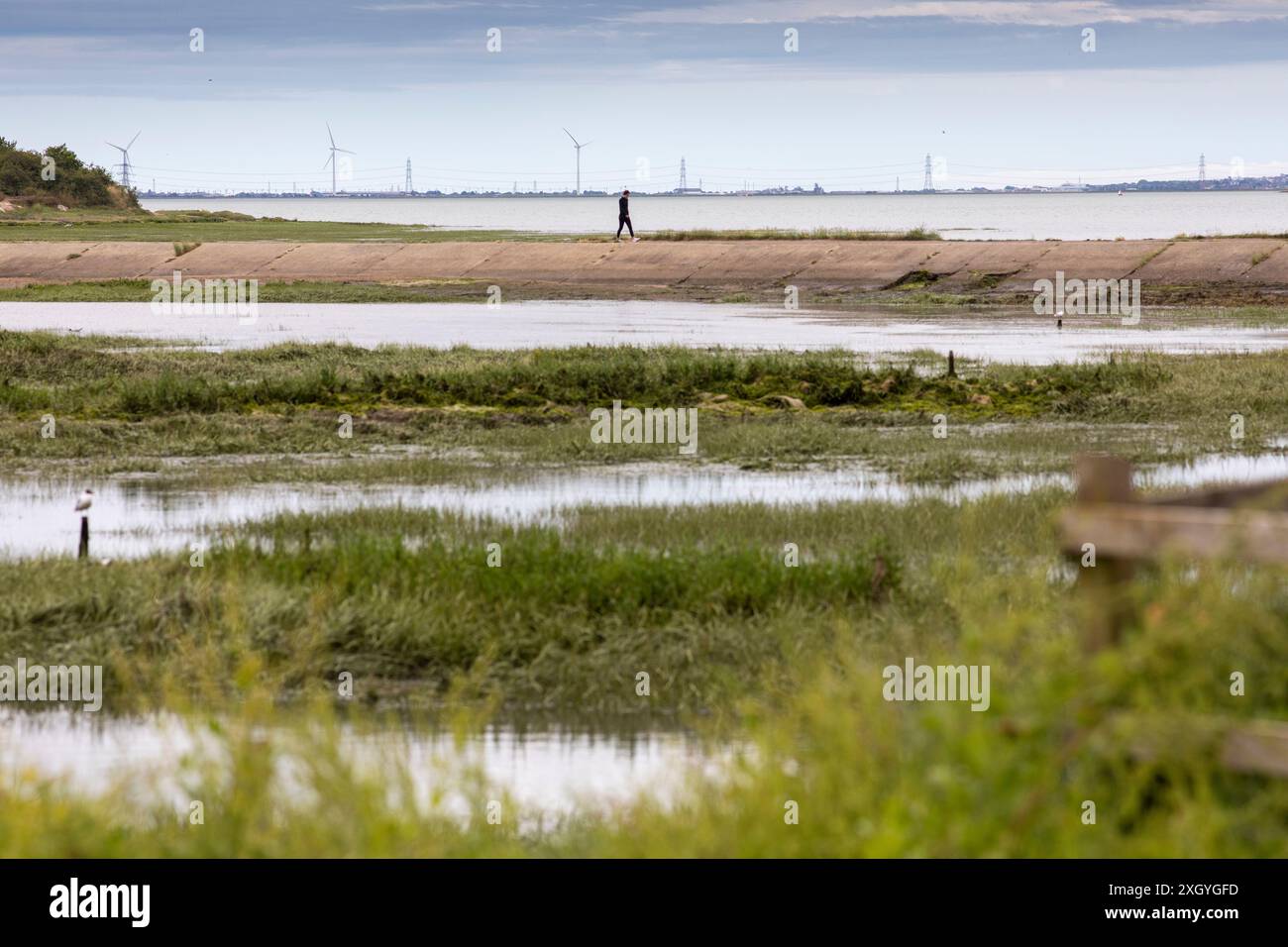
In February, gates are reported to close at 17:00. The park features a network of flat paths, including designated routes for horses, though some sections may be muddy depending on weather conditions.
Frequently Asked Questions
What is the primary environmental designation of the park?
The area is designated as the Medway Marshes Site of Special Scientific Interest (SSSI).
What is “Blue Carbon” in the context of this park?
It refers to the ability of the salt marshes to absorb and store carbon dioxide, while also mitigating floods and providing habitats for wildlife.
What causes the visible lines on the river’s surface?
These lines are caused by the meeting of saltwater and freshwater, tidal movements, and variations in water depth and temperature.
Do you believe industrial reclamation projects like this should be prioritized in other urban coastal areas?