
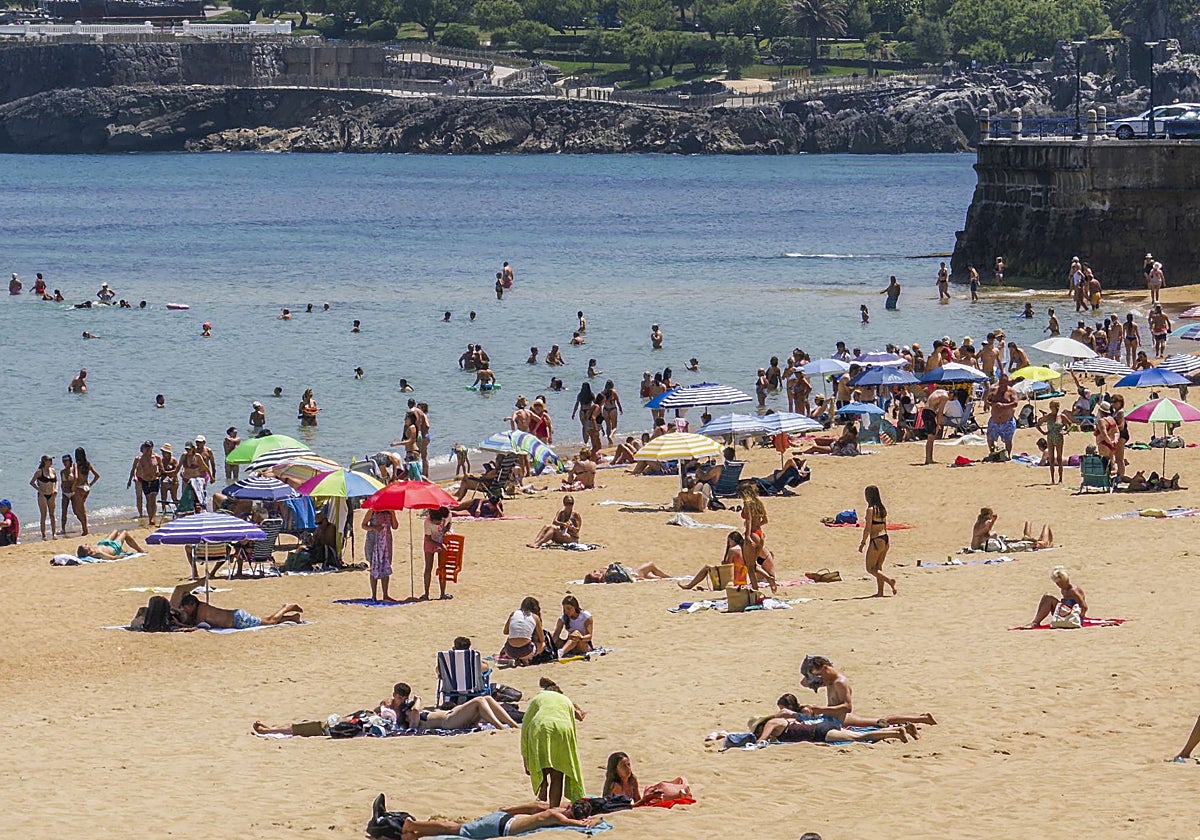
Extreme Heatwave Hits Cantabria: Record-Breaking Temperatures and Tropical Nights
Cantabria is currently experiencing an intense heat wave, with the State Meteorological Agency (Aemet) placing Liébana, the center of the region, and the Villaverde valley under red alert. Temperatures in these areas are expected to exceed 40 degrees Celsius, following a historic record of 43.7 degrees recorded in Tama on Tuesday. Meanwhile, the Cantabrian coast and the Ebro region remain under orange alert, with forecasts predicting temperatures surpassing 37 degrees.
Why the heat persists overnight
The high temperatures are being driven by a mass of warm air that is preventing the typical phenomenon of thermal inversion in mid-mountain areas. According to Aemet territorial delegate Sergio Fernández, locations between 600 and 900 meters in altitude are seeing the most significant nighttime heat. This atmospheric condition has resulted in “tropical nights,” where temperatures remain above 20 degrees, and “torrid nights,” where they stay above 25 degrees, such as in Tresviso and the Alto del Caracol.

What happens next
Meteorological data suggests that the rapid temperature spikes witnessed across the region, particularly in coastal areas like Castro Urdiales, are driven by strong southern winds. A potential shift in weather patterns is expected by the afternoon. Analysts and meteorological observers anticipate a change in wind direction, which could bring conditions similar to a galerna, though not of high intensity. This transition is likely to result in a significant drop in temperatures across Cantabria.
Temperature performance across the region
Data recorded this Wednesday highlights the widespread nature of the heat across Cantabria:
- Castro Urdiales: 38º
- Sierrapando (Torrelavega): 36.8º
- Villacarriedo: 36.2º
- San Felices de Buelna: 35.2º
- Santander airport: 31.8º
- Santillana del Mar: 31.6º
- San Roque de Riomiera: 30º
- San Vicente de la Barquera: 29.8º
- Tresviso: 29.6º
- Treto (Bárcena de Cicero): 29.4º
Frequently Asked Questions
What defines a “torrid night” according to Aemet?
A night is classified as torrid when the minimum temperature does not drop below 25 degrees Celsius.
Why are mountain areas experiencing higher nighttime temperatures than expected?
According to Aemet, the influx of a warm air mass prevents the usual thermal inversion in areas between 600 and 900 meters, causing heat to persist during the night hours.
Are there any signs of relief from the heat?
Yes, the forecast indicates a wind shift in the afternoon, which may bring a galerna-like event that is expected to lower temperatures significantly across the region.
How have you adjusted your daily routine to cope with these record-breaking temperatures?