
Fact Check: Did Indonesia Sell Rice to Malaysia at Rp10,000?
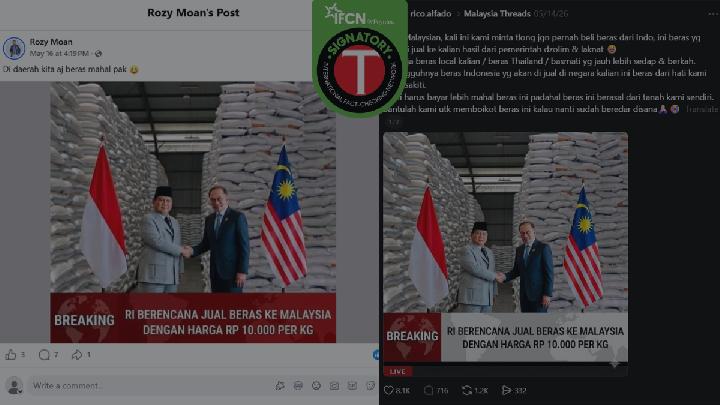
The Indonesian government is not currently exporting rice to Malaysia at a price of Rp10,000 per kilogram, according to state logistics agency Bulog and official government records. Claims circulating on social media regarding this specific price point are false, as the export plan remains in the exploratory stage with no final agreement on pricing or volume reached.
Why the Rp10,000 Rice Export Claim is Incorrect
Rumors suggesting a Rp10,000 per kilogram export price are baseless, according to Bulog’s Public Relations and Institutional Manager, Tomi Wijaya. This figure sits well below the domestic Highest Retail Price (HET), which ranges between Rp14,900 and Rp15,800 per kilogram depending on the region, as mandated by the National Food Agency (Bapanas).
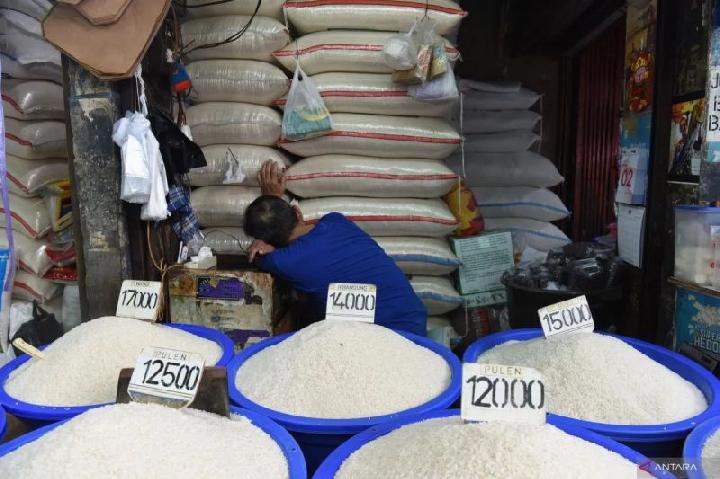
Bulog has explicitly guaranteed that any future export price will exceed the domestic HET to ensure the protection of farmers’ margins and to increase state revenue. Official efforts are currently focused on maintaining national stock adequacy and domestic price stability before any international agreements are finalized.
The viral image used to support these claims, which appeared to show President Prabowo Subianto and Prime Minister Anwar Ibrahim standing in front of rice sacks, was digitally altered. The original footage was captured during a January 27, 2025, meeting at the Petronas Twin Towers in Kuala Lumpur, where the two leaders discussed labor cooperation.
Presidential Directive on International Pricing
President Prabowo Subianto has set clear expectations for international trade. During the launch of the Merah Putih Village Cooperative outlet in Nganjuk, East Java, on May 16, 2026, the President publicly instructed Bulog President Director Ahmad Rizal Ramdhani not to underprice Indonesian rice in foreign markets.
Following this directive, Bulog is preparing a visit to Sarawak, Malaysia, to negotiate the terms of potential exports. According to Ahmad Rizal Ramdhani, the agency is currently evaluating whether these exports will follow a port-to-port arrangement or involve direct procurement at Tanjung Priok Port.
Samantha Carter notes that the government’s insistence on pricing above domestic HET reflects a strategic shift to prioritize local food security over volume-based exports. By tethering export prices to the domestic retail floor, officials are attempting to insulate the local agricultural sector from the volatility of international commodity markets while ensuring state revenue remains protected.
What Happens Next
Bulog’s upcoming visit to Sarawak, Malaysia, will likely determine the viability and scale of the proposed rice export plan. As negotiations progress, authorities have indicated that any final agreement will remain subject to strict government oversight to prioritize domestic needs.
Market observers expect that future updates regarding volume and pricing will only be released once the exploratory phase is complete. Until then, official policy remains focused on balancing the welfare of Indonesian farmers with broader economic goals.
Frequently Asked Questions
Is the Indonesian government selling rice to Malaysia for Rp10,000 per kilogram?
No. Bulog has confirmed that this claim is baseless and that the export plan is still in the exploratory stage with no agreement on price or volume.
How does the rumored price compare to domestic costs?
The rumored Rp10,000 price is significantly lower than the established domestic Highest Retail Price (HET), which is between Rp14,900 and Rp15,800 per kilogram.
What is the status of the rice export negotiations?
Bulog is currently scheduling a visit to Sarawak, Malaysia, to discuss logistics and pricing, with a mandate from President Prabowo Subianto to ensure prices do not undercut domestic market values.
How do you think balancing international trade with local food security affects your household budget?