

FDA approves new adjuvant treatment option for ccRCC patients with recurrence risk
The U.S. Food and Drug Administration (FDA) has approved a combination of pembrolizumab and belzutifan as an adjuvant treatment for adults with clear cell renal cell carcinoma (ccRCC) at intermediate-high or high risk of recurrence. According to Dana-Farber Cancer Institute, this regimen reduces the risk of recurrence, metastasis, or death by 28%.
The approval applies to patients following a nephrectomy, whether or not metastatic lesions were resected. This marks the first time belzutifan has been approved for earlier-stage ccRCC and the first approval for a combination regimen of a PD-1 and HIF-2α inhibitor.
Why was the pembrolizumab and belzutifan combination approved?
The FDA based its decision on the phase 3 LITESPARK-022 trial. Toni Choueiri, MD, director of the Lank Center for Genitourinary Oncology at Dana-Farber Cancer Institute, led the study.
Choueiri stated that surgery alone is often insufficient for many patients, and a meaningful proportion will relapse, frequently with metastatic disease. He noted that this combination offers a more effective strategy to prevent cancer from returning than using pembrolizumab alone.
The FDA also granted approval for a subcutaneous version of the treatment, combining pembrolizumab and berahyaluronidase alfa-pmph with belzutifan.
How did the LITESPARK-022 trial perform?
The study included 1,841 participants with ccRCC who had undergone surgery to remove tumors. While these patients showed no signs of cancer, they remained at an elevated risk of recurrence.
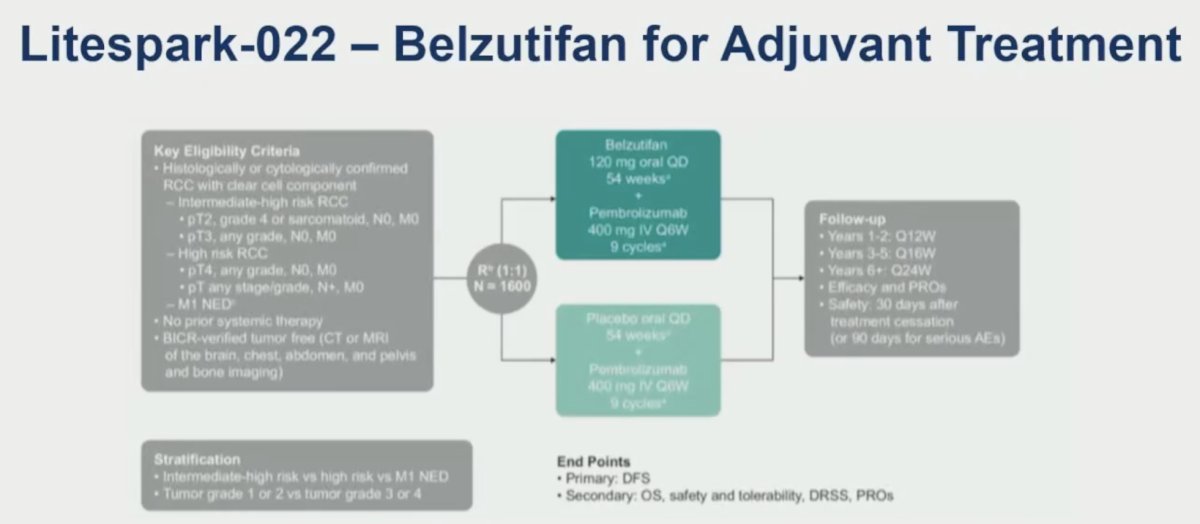
Researchers randomized patients to receive either pembrolizumab plus belzutifan or pembrolizumab plus a placebo. With a median follow-up of 28.4 months, 81% of those on the two-drug regimen remained cancer-free after an estimated 24 months.
In contrast, 74% of participants receiving the standard care of pembrolizumab and a placebo remained cancer-free. Side effects were consistent with previously reported data, according to the study presented at the 2026 American Society of Clinical Oncology Genitourinary Cancers Symposium.
What is the significance of belzutifan in kidney cancer?
Belzutifan is a HIF-2α inhibitor. According to Dana-Farber, it reduces the risk of progression by blocking HIF-2α, a protein that is overabundant in ccRCC cells and drives the growth of the cancer.
The need for such treatments is driven by the prevalence of the disease. Renal cell carcinoma (RCC) is the most common kidney cancer, accounting for nine out of 10 diagnoses. Clear cell RCC specifically makes up 75% of those cases.
Worldwide data from 2022 shows approximately 435,000 new kidney cancer diagnoses and 156,000 deaths from the disease.
What may happen next for ccRCC patients?
Patients at intermediate-high or high risk of recurrence may now have a new adjuvant option to discuss with their providers. The availability of both intravenous and subcutaneous administration routes could provide different delivery options for patients.

Given the trial results, this combination may become a more frequent alternative to the previous standard of care. Future clinical outcomes may depend on whether the 28% risk reduction is sustained over longer follow-up periods.
Frequently Asked Questions
What is clear cell renal cell carcinoma (ccRCC)?
It is the most common subtype of renal cell carcinoma, accounting for 75% of RCC diagnoses. RCC itself represents about nine out of 10 kidney cancer cases.
What were the results of the LITESPARK-022 trial?
The trial found that the combination of pembrolizumab and belzutifan resulted in a 28% decrease in the risk of recurrence, metastasis, or death compared to pembrolizumab plus placebo.
How does belzutifan work to stop cancer growth?
Belzutifan blocks HIF-2α, a protein that is overabundant in ccRCC cells and drives the growth of the cancer.
How do you think new combination therapies will change the approach to post-surgery cancer care?