

FIFA Under Fire for Restricting Spanish at World Cup Press Conferences
FIFA is facing backlash for restricting Spanish language use at 2026 World Cup press conferences, according to reporting by YTN. Current internal policies limit interpretation services to English and the official languages of the participating teams, excluding Spanish despite Mexico’s role as a co-host. This has triggered widespread criticism from Latin American football fans.
Why is FIFA restricting Spanish at the 2026 World Cup?
FIFA restricts Spanish because its internal operating policy only provides translation services for English and the specific languages of the teams competing in a match, according to YTN. This policy was applied during recent press conferences involving the Netherlands, Brazil, and Morocco.

The restriction created friction when Frenkie de Jong, a Netherlands midfielder who is fluent in Spanish due to his time at FC Barcelona, offered to answer a reporter’s Spanish-language question. FIFA officials blocked the exchange, citing a lack of provided interpretation, forcing de Jong to respond in English.
What happened with Vinícius Júnior and Achraf Hakimi?
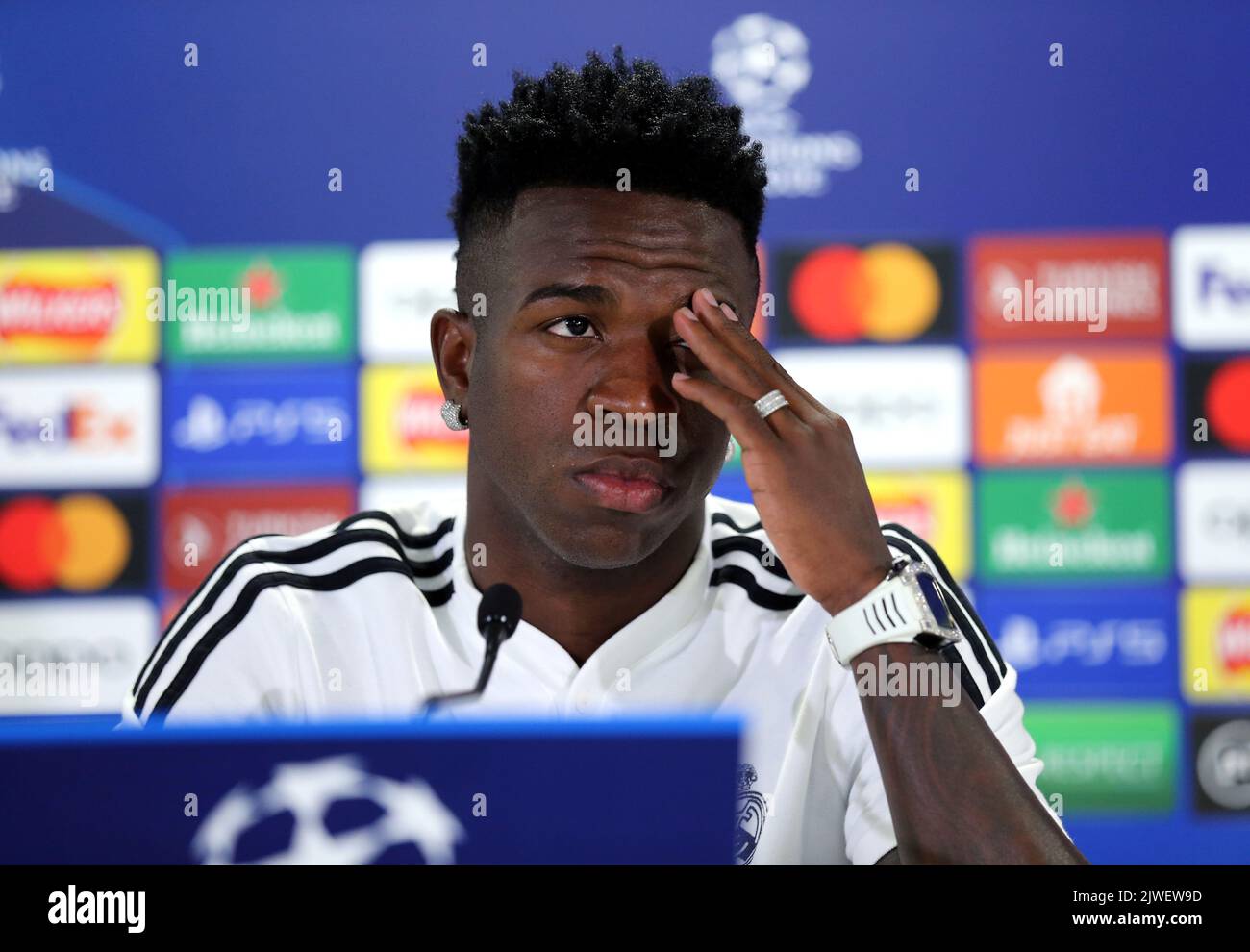
Similar conflicts occurred during sessions with Brazil’s Vinícius Júnior and Morocco’s Achraf Hakimi. YTN reports that Vinícius, who is fluent in Spanish after years at Real Madrid, politely requested that a Spanish journalist speak in Spanish. A FIFA official intervened, insisting the question be asked in English.
During Achraf Hakimi’s press conference, a Mexican reporter attempted to ask a question in Spanish. When a FIFA official strongly intervened to demand English, Hakimi—who was born in Madrid—defended the journalist. Hakimi signaled for the reporter to continue in Spanish and then provided his answer in English, bypassing the rigid protocol.
How does this policy conflict with the 2026 host demographics?
Fans on social media argue that FIFA’s stance is “too rigid” given the tournament’s geography. Since the 2026 World Cup is jointly hosted by the U.S., Canada, and Mexico, critics claim that ignoring Spanish is a failure to recognize the host nations’ cultural identities.
According to fan reactions cited by YTN, the lack of Spanish support is seen as a contradiction to the high ticket prices charged for the event. Critics have questioned why FIFA would “save on interpretation costs” while ignoring the primary language of one of its three host countries.
Will AI translation end language barriers in global sports?
The controversy has shifted the conversation toward the role of artificial intelligence in sports management. YTN reports that some fans believe FIFA’s reliance on manual interpreters is outdated given the availability of AI-based real-time translation services.
Future trends suggest a move toward AI-integrated headsets for journalists and players. This technology would allow a reporter to speak Spanish and a player to hear English instantly, removing the need for a third-party interpreter to “permit” the conversation. This shift would likely resolve the friction seen in the De Jong and Vinícius incidents by decentralizing the translation process.
For more on how technology is changing the game, see our guide on Sports Tech Innovations or visit the official FIFA portal for tournament regulations.
Frequently Asked Questions
Which languages does FIFA officially support at press conferences?
According to current policy reported by YTN, FIFA provides interpretation for English and the official languages of the teams participating in the specific match.

Why are Latin American fans angry?
Fans are frustrated that Spanish, a global language and the official language of co-host Mexico, is being restricted in favor of a strict English-first policy.
Did the players support the restrictions?
No. Players like Frenkie de Jong and Achraf Hakimi actively tried to accommodate reporters speaking Spanish, despite FIFA officials’ attempts to stop them.
Join the Conversation
Do you think FIFA should mandate Spanish as an official language for the 2026 World Cup? Should AI replace human interpreters in the press room?
Leave a comment below or subscribe to our newsletter for the latest sports updates.