
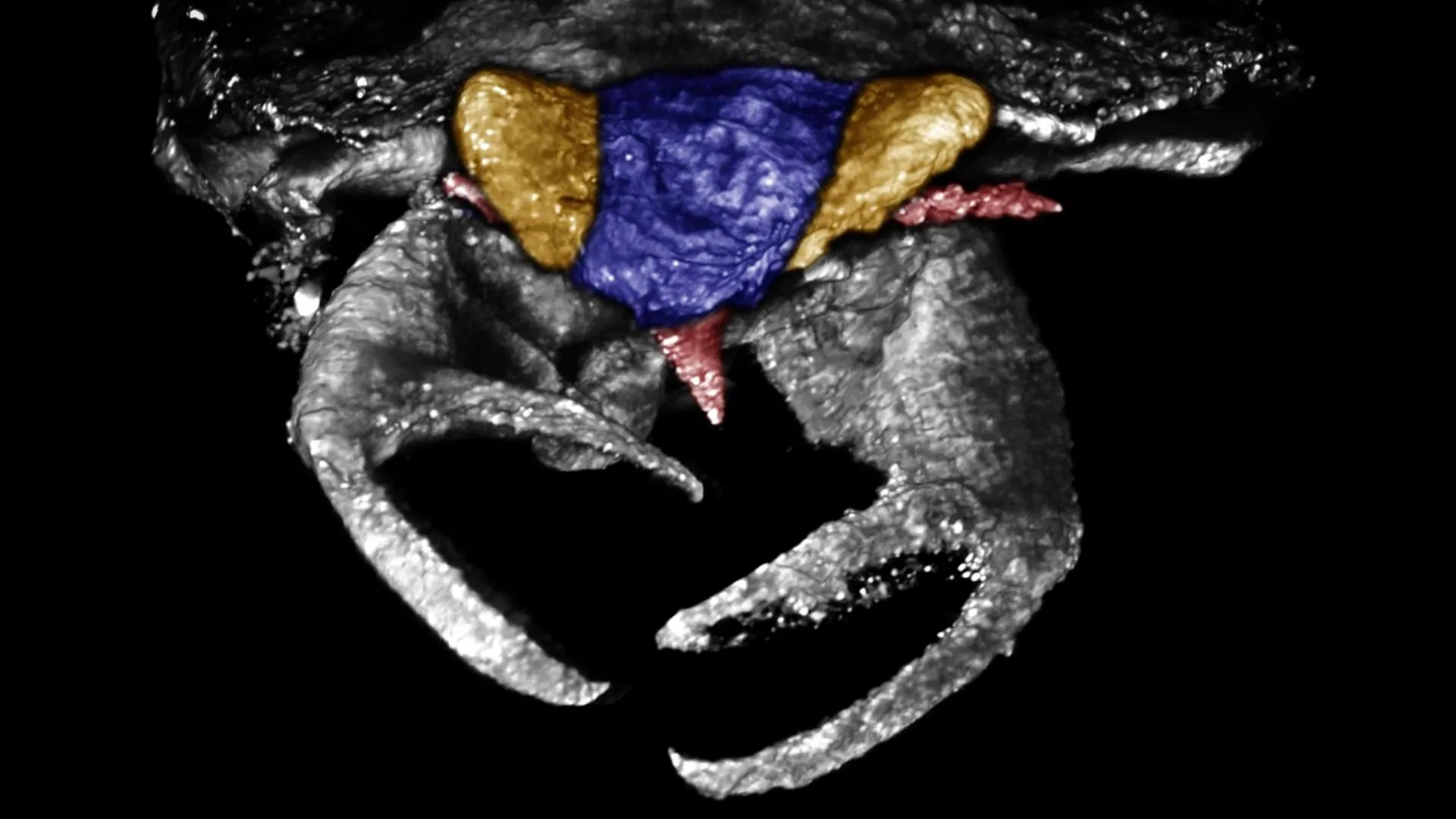
Finnish researchers identifies ancient crab-clawed bug in Myanmar
The Evolution of Adaptation: What ‘Crab-Like’ Insects Tell Us About the Future of Biology
The discovery of Carcinonepa libererrantes—a 100-million-year-old insect with crab-like pincers—is more than just a paleontological curiosity. It’s a masterclass in convergent evolution, the phenomenon where unrelated species independently evolve similar traits to solve the same environmental problems.
When we see a true bug from the Cretaceous period sporting chelae (pincers) typically reserved for crustaceans, we aren’t just looking at a “weird bug.” We are looking at a biological blueprint that has been tested over millions of years. As we move further into the 21st century, the study of these anomalies is driving new trends in robotics, genetics, and climate science.
The High-Tech Lens: From Micro-CT Scans to Digital Resurrection
The identification of the Carcinonepa was made possible not by a magnifying glass, but by micro-computed tomography (micro-CT) scanning. This technology allows scientists to peer through the opaque depths of amber without damaging the specimen, creating a high-resolution 3D map of the organism’s internal and external anatomy.
The trend is moving toward “Digital Paleontology.” We are entering an era where fossils are no longer just rocks in a museum; they are data sets. Future trends suggest a shift toward:
- AI-Driven Morphological Analysis: Using machine learning to compare thousands of fossilized appendages instantly, identifying evolutionary links that would take a human researcher decades to find.
- Virtual Reconstruction: Creating fully functional 3D simulations of extinct creatures to test how they moved, hunted, and interacted with their environment.
- Non-Invasive Chemical Mapping: Analyzing the chemical composition of amber to determine the exact temperature and humidity of the ancient world.
For those interested in how technology is reshaping our understanding of the past, exploring Nature’s latest research on evolutionary biology provides a glimpse into the tools currently being developed.
Biomimicry: Turning Ancient Anatomy into Modern Engineering
The “crab-claws” of an extinct insect aren’t just interesting to historians; they are a goldmine for engineers. Biomimicry—the practice of designing materials and systems modeled on biological entities—is currently one of the fastest-growing trends in industrial design.
The specific gripping mechanism of the Carcinonepa‘s chelae could inspire the next generation of micro-robotics. Imagine surgical robots capable of performing ultra-precise maneuvers in the human body, using gripping mechanisms perfected by a water bug 100 million years ago.
Real-World Application: Soft Robotics
Current trends in “soft robotics” are moving away from rigid metal joints toward flexible, organic-inspired actuators. By studying the joint articulation of prehistoric arthropods, engineers can create grippers that are both strong and delicate, reducing the risk of damage when handling fragile objects in manufacturing or medicine.
The Amber Goldmine: Why Myanmar’s Fossils Matter Now
The Kachin region of Myanmar has become a focal point for paleontology because its amber preserves “soft tissue” and intricate structures that traditional mineralization destroys. This allows us to see the “missing links” of the insect world.
As we face a modern biodiversity crisis, these fossils serve as a baseline. By understanding how insects adapted to the volatile climate of the Cretaceous period, scientists can better predict how modern species might evolve—or fail to evolve—in response to current global warming.
This research is often conducted through global collaborations, such as the partnership between the University of Oulu and other European institutions, highlighting a trend toward “Open Science” where data is shared across borders to accelerate discovery.
Frequently Asked Questions
Q: What is convergent evolution?
A: It is the process where organisms that are not closely related independently evolve similar traits as a result of having to adapt to similar environments or ecological niches.
Q: Why is amber better than stone for fossils?
A: Amber is fossilized tree resin, which encapsulates organisms in an airtight seal. This preserves fine details—like hairs, wing veins, and claws—that are usually lost in sedimentary rock.
Q: Can we bring these insects back to life like in Jurassic Park?
A: Currently, no. While amber preserves the shape of the organism perfectly, DNA degrades over millions of years. However, we can “resurrect” them digitally through 3D modelling.
What do you think? Could the secrets of the ancient world hold the key to the next great technological breakthrough, or are we overestimating the utility of the fossil record? Let us know your thoughts in the comments below or share this article with a fellow science enthusiast!
Want to stay updated on the intersection of science and technology? Subscribe to our weekly deep-dive newsletter.