
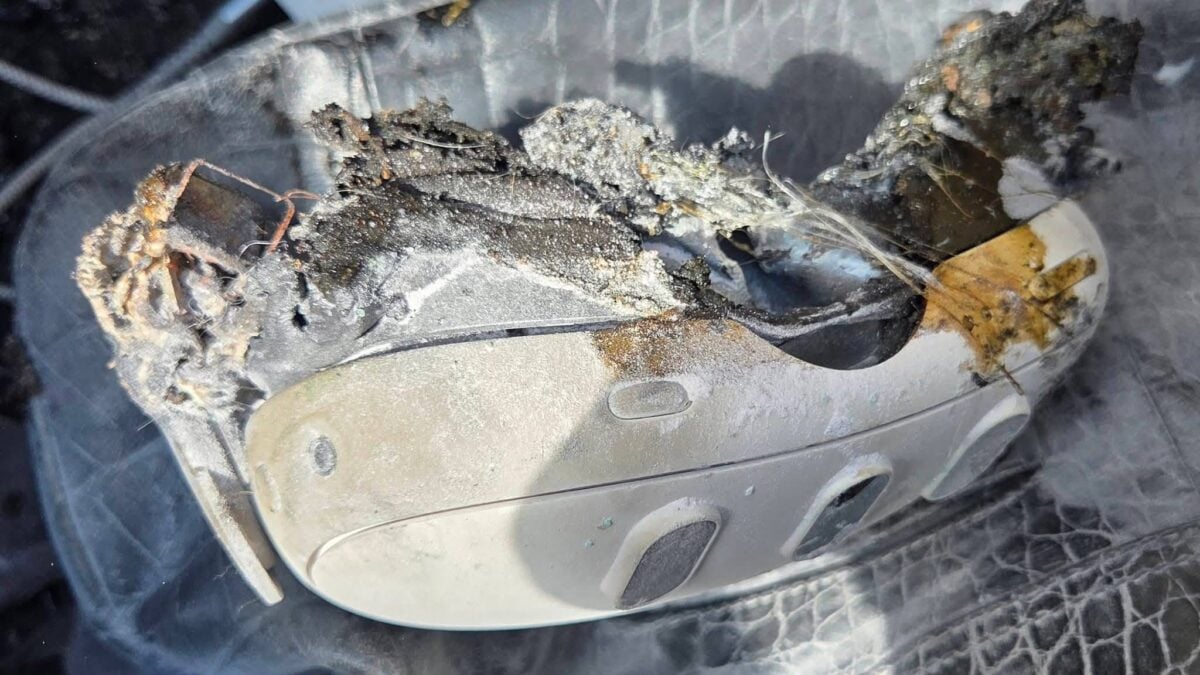
Firefighters Investigating Explosion Caused By Meta Quest 3
A Meta Quest 3 external battery is suspected of starting a residential fire in Frankfort, Maine, on June 11, according to the Frankfort Volunteer Fire Department. The battery exploded while charging on a nightstand, producing a fireball that rolled down a flight of stairs. No direct injuries were reported in the incident.
Why do VR headset batteries catch fire?
Lithium-ion batteries, used in the Meta Quest 3 and most modern electronics, can fail due to internal shorts or overheating, leading to a process called thermal runaway. In the Frankfort case, local news reports indicate a resident left an external battery charging on a nightstand before leaving the house. Home security footage captured red flashes of light and a loud “pop” before debris ignited.
This isn’t an isolated risk for VR hardware. Valve has previously warned Steam Deck modders against tampering with batteries due to potential fire hazards. Similarly, owners of older PlayStation Portables (PSP) often find “hunchback” batteries—units that have swollen over time—which indicates chemical degradation and an increased risk of rupture.
What happens during an unattended battery explosion?
The scale of the danger often depends on the battery’s placement and the materials surrounding it. The Frankfort Volunteer Fire Department highlighted the intensity of the Quest 3 incident on Facebook, noting that the nightstand was roughly 14 feet from the stairs, and the stairs were 15 feet long. Despite this distance, a flaming chunk of debris traveled the entire length of the staircase.
Security footage showed four dogs sprinting downstairs away from the bedroom as the fireball descended. Local authorities are currently investigating the site to determine if the explosion released harmful fumes into the home’s living spaces.
How do consumer electronic fires compare to EV risks?
While a VR battery creates a localized fire, the same chemistry powers electric vehicles (EVs), where the scale of failure is significantly larger. According to reports from The Star, some Tesla fires have been described as “kill boxes” due to the combination of intense electrical heat and electronic door glitches that can trap occupants inside.
The difference lies in the energy density. A Meta Quest battery contains enough energy to ignite a bedroom, but an EV battery pack contains enough energy to burn through asphalt and resist traditional firefighting methods for hours. Both, however, stem from the same inherent instability of lithium-ion cells when damaged or overcharged.
Future Trends in Battery Safety
Industry shifts are moving toward solid-state batteries to eliminate the flammable liquid electrolytes found in the Quest 3 and Steam Deck. These next-gen batteries promise higher energy density without the risk of thermal runaway. Until then, manufacturers are increasingly relying on software-level “smart charging” to prevent the overcharging that often leads to the “hunchback” effect seen in older PSP units.
Frequently Asked Questions
Is it safe to charge my VR headset overnight?
It is generally discouraged. Charging while sleeping or away from home means you cannot react to early warning signs, such as the smell of ozone or excessive heat, which often precede a battery failure.

How can I tell if my battery is dangerous?
Look for physical deformation (swelling), discoloration of the plastic casing, or a sweet, metallic smell. If a battery feels excessively hot during a normal charge, stop using it immediately.
What should I do if a lithium battery catches fire?
Do not use water on a small electrical fire if you aren’t sure of the source; use a Class B or ABC fire extinguisher. If the fire is spreading, evacuate the premises and call emergency services immediately, as the fumes are toxic.
Want to stay updated on the latest tech safety warnings? Subscribe to our newsletter or leave a comment below to tell us about your experience with battery degradation in your older gadgets.