

First Case of Clade I Mpox Confirmed in United States
The California Department of Public Health has confirmed the first known case of clade I mpox in the United States. The case involves an individual who recently traveled from Eastern Africa and is currently isolating at home. According to the CDC, the overall risk of clade I mpox to the general U.S. population remains low.
The patient received treatment at a local medical facility shortly after returning to the U.S. and was subsequently released. The individual is not on mpox-specific treatment, but the CDC reports that their symptoms are improving.
Patient specimens were tested and confirmed for clade I monkeypox virus. These samples are being sent to the CDC for additional viral characterization, while the agency works with state officials to identify and follow up with potential contacts.
Why is clade I mpox different from clade II?
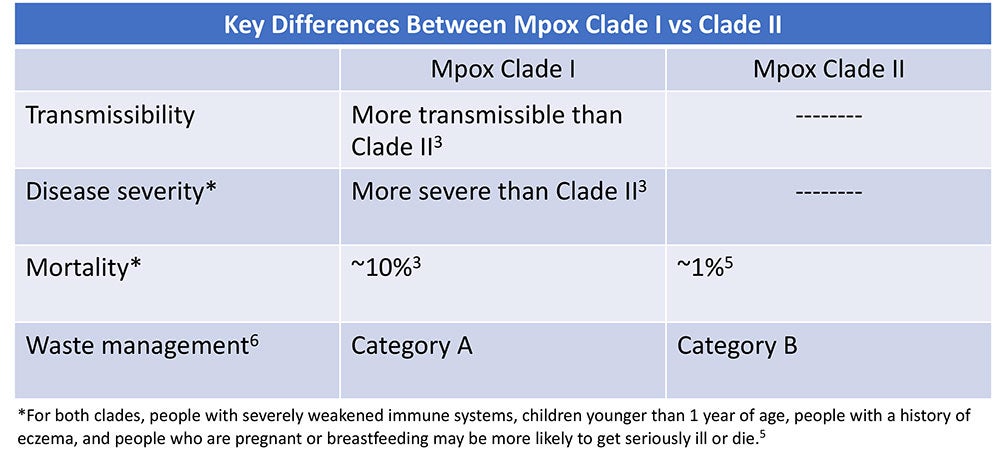
There are two primary types of mpox: clade I (subclades Ia and Ib) and clade II (subclades IIa and IIb). While clade IIb caused the global outbreak starting in 2022, clade I has not been reported in the U.S. until this case.

Historically, the CDC notes that clade I mpox caused more deaths and more severe illness than clade II. Past outbreaks of clade I saw death rates between 3% and 11%.
Recent data indicates current clade I infections may not be as severe. In recent outbreaks, death rates have dropped to approximately 1% when patients received supportive clinical care and medical oversight.
What is the risk to the U.S. public?
The CDC maintains that the risk to the general public is low. Simulations conducted by the agency suggest that close-contact transmissions within households are unlikely to cause a large number of clade I cases in the U.S.

The agency points to other countries as evidence of limited spread. Travel-associated cases of subclade Ib have appeared in Germany, India, Kenya, Sweden, Thailand, Zimbabwe, and the United Kingdom.
In Sweden, Thailand, Germany, and India, there was no apparent onward spread. In the United Kingdom, the CDC reports that spread has been limited to close household contacts.
How can people protect themselves?
CDC guidance remains unchanged despite the new case. The agency recommends avoiding close contact with people showing mpox symptoms, specifically those with skin or genital lesions.
The public should also avoid contaminated materials used by sick individuals, such as bedding, clothing, toothbrushes, or sex toys. Eligible individuals are encouraged to receive both recommended doses of the mpox vaccine.
The CDC notes that casual contact, such as that experienced during travel, is unlikely to pose significant transmission risks.
What happens next with monitoring?
The CDC may continue to use wastewater samples to provide early warnings of mpox activity in communities. This data helps the agency and local partners decide if further testing or actions are necessary.
Clinicians are encouraged to request expedited clade-specific testing for patients with travel history to Central and Eastern Africa. The CDC is also continuing laboratory training and surveillance support in Central and Eastern Africa to stop transmission at the source.
Frequently Asked Questions
What are the typical symptoms of mpox?
People often develop a rash on the chest, face, mouth, hands, feet, and near the genitals, including the penis, testicles, labia, vagina, and anus.
Is clade I more deadly than clade II?
Historically, clade I caused more severe illness and deaths. However, recent data shows death rates as low as 1% with proper care, and rates are expected to be much lower in countries with strong healthcare systems like the U.S.
How is the CDC tracking the virus domestically?
The CDC is monitoring wastewater samples and recommending expedited testing for suspected cases involving travel to Central and Eastern Africa.
Do you feel better informed about the differences between mpox clades after reading this report?