
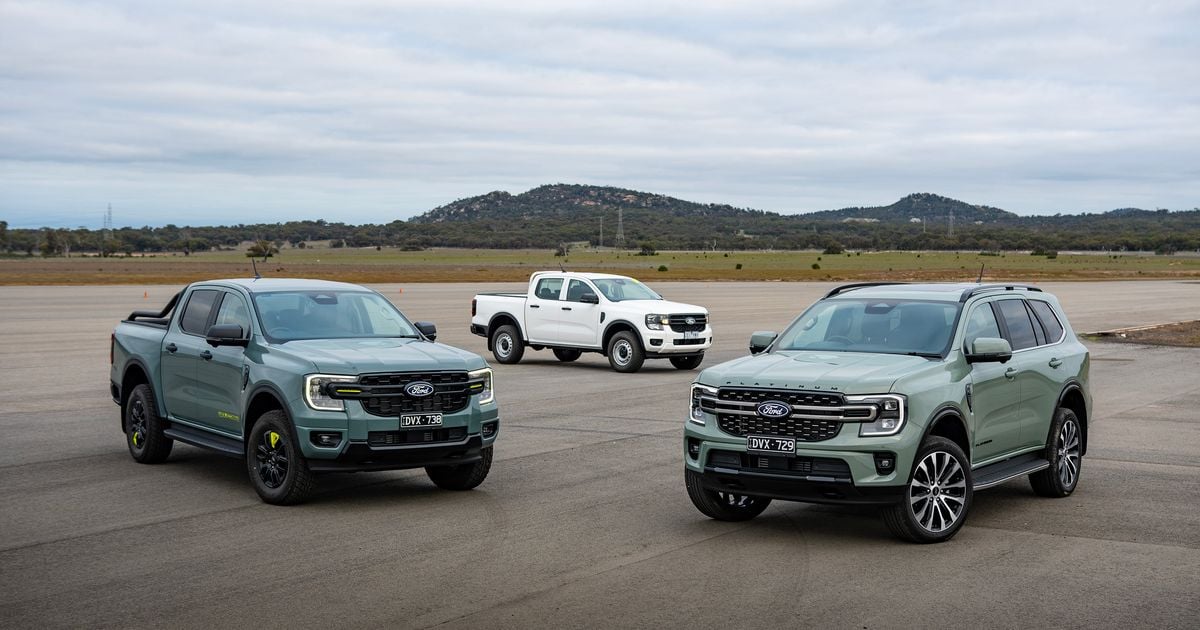
Ford defends less powerful new Ranger and Everest powertrain
Ford’s latest MY2026.50 refresh of the Ranger ute and Everest SUV introduces a significant under-the-hood change that could reshape buyer expectations in Australia’s dual-cab market. The automaker has swapped the proven but aging 2.0-litre Bi-Turbo diesel—once a cornerstone of the original Ranger Raptor and later adopted across the lineup—with a new single-turbo 2.0-litre four-cylinder engine. The shift marks a departure from twin-turbocharging, resulting in a notable drop in power and torque: the outgoing engine produced 154kW and 500Nm, while the new unit delivers 125kW and 405Nm. Yet Ford insists the move is not just about performance trade-offs but a strategic realignment of capability, efficiency, and long-term viability.
Why the Engine Change Matters
The retirement of the Bi-Turbo engine is part of a global rationalization effort, driven by emissions compliance requirements in key markets. Ford Australia’s director of marketing, Ambrose Henderson, emphasized that the new single-turbo engine—derived from the Transit van’s powertrain—eliminates the problematic wet cambelt design, which has been discontinued worldwide. While competitors like the Toyota Hilux (2.8L turbo-diesel, 150kW/500Nm) and Mitsubishi Triton/Nissan Navara (2.4L bi-turbo, 150kW/470Nm) retain higher outputs, Ford frames the change as an evolution in real-world responsiveness. The new engine’s torque curve is claimed to offer broader, more usable torque across its rev range, paired with improved refinement and a 10-speed automatic transmission (up from six speeds) for smoother shifts.
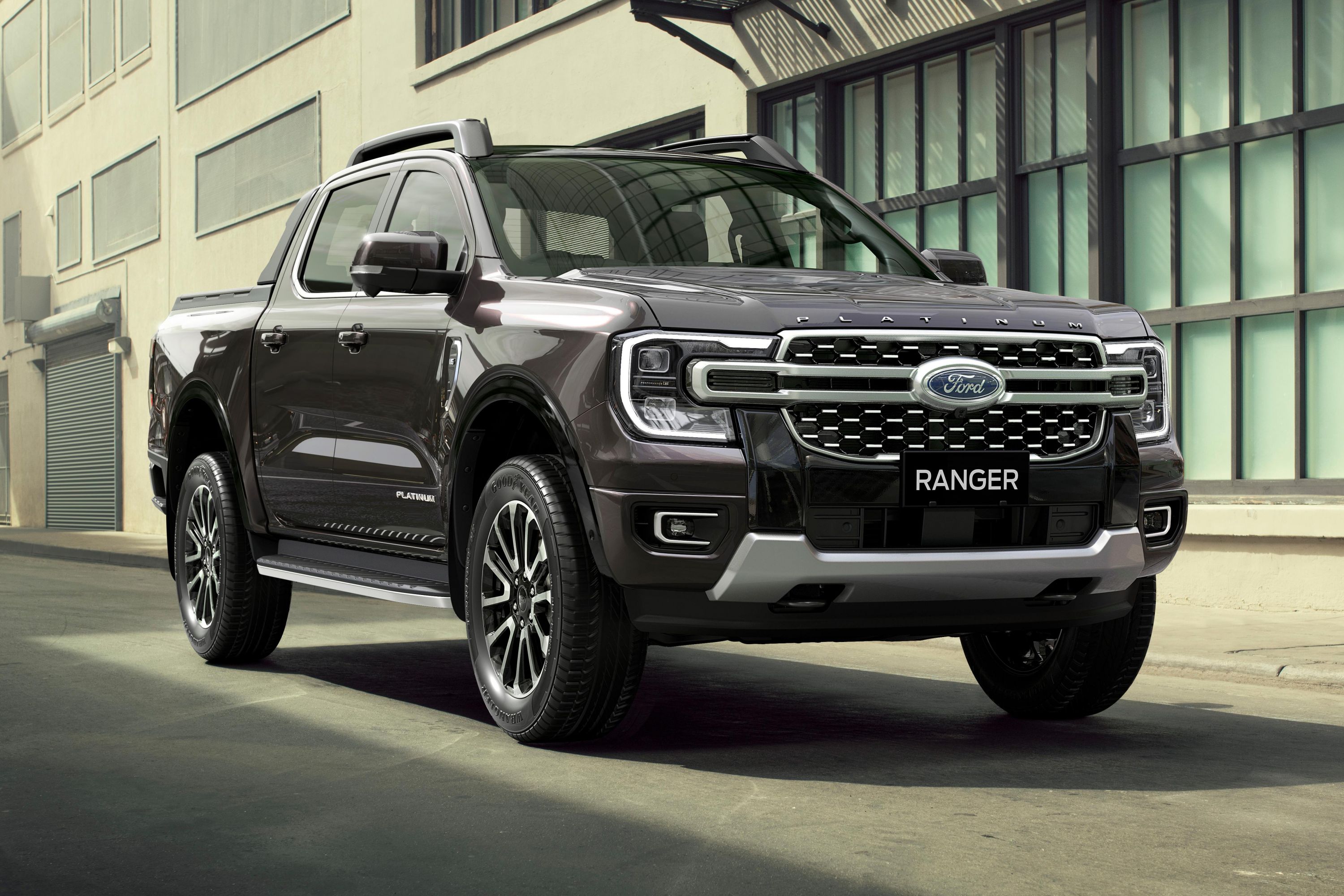
Fuel efficiency gains are another selling point: the Ranger’s official combined consumption drops to 6.8–7.6L/100km (4×2/4×4), down from 7.6–8.2L/100km for the Bi-Turbo. Ford also highlights cost-of-ownership reductions, citing upgrades like a chain-driven timing system (replacing the wet cambelt), steel pistons, and a revised fuel system. Chief program engineer Pritika Maharaj noted that the 2.0-litre’s 3.73 final drive ratio and 10-speed transmission calibration ensure capability—including a 3.5-tonne towing rating—without sacrificing efficiency.
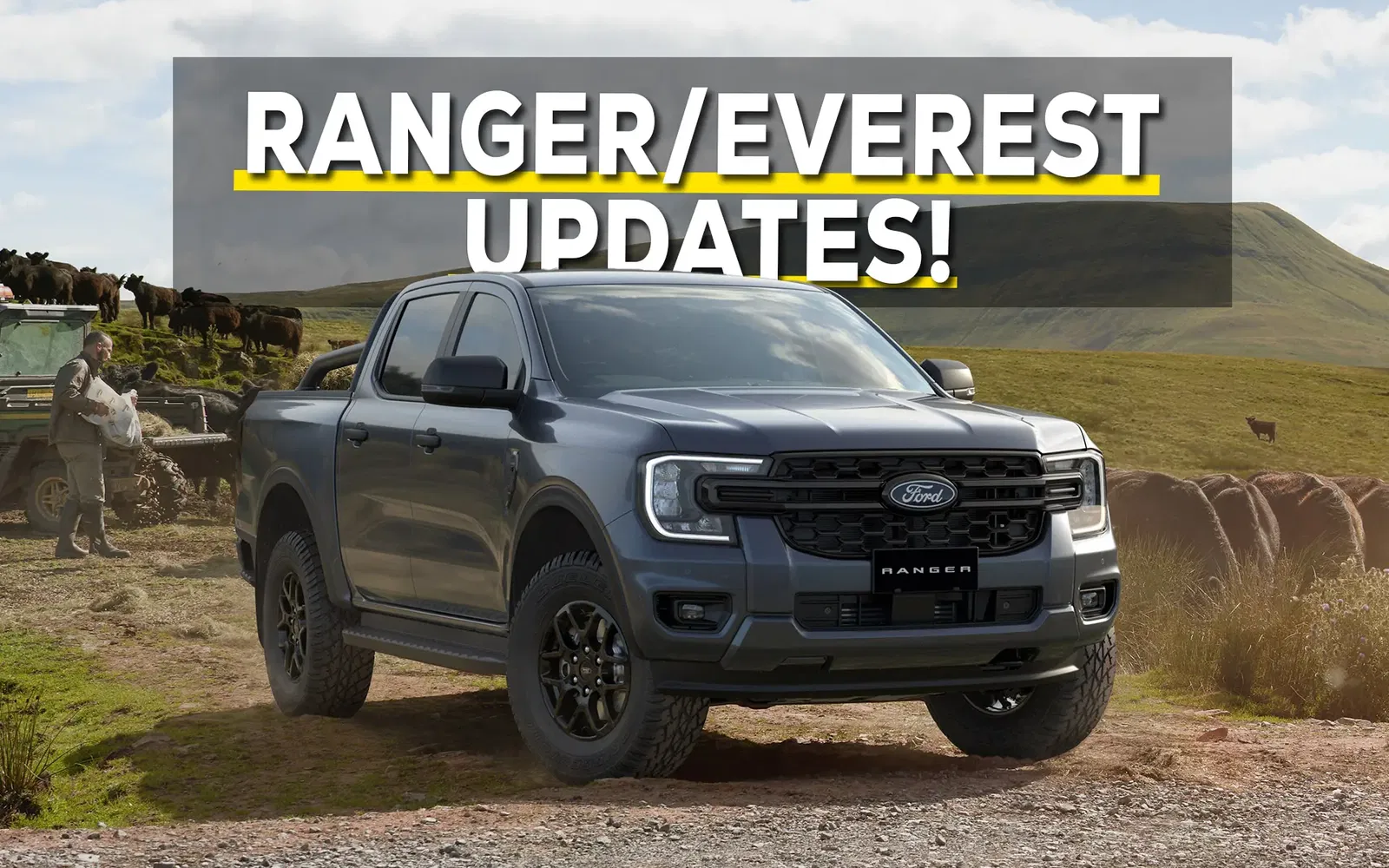
The move underscores Ford’s strategy of offering a broader engine lineup to cater to diverse customer needs. Alongside the new diesel, the Ranger retains a 3.0L V6 turbo-diesel, a 2.3L plug-in hybrid, and the Raptor’s 3.0L twin-turbo petrol V6. Henderson framed the decision as a matter of choice: buyers seeking peak performance can opt for the V6 options, while those prioritizing value and efficiency now have a more refined, lower-maintenance alternative.
The outgoing 2.0L Bi-Turbo diesel debuted in the original Ranger Raptor before becoming the best-selling engine in the wider Ranger and Everest lineups, proving its durability over a decade of production.
Ford’s engine rationalization reflects a broader industry trend where automakers prioritize global compliance and reduced complexity over localized performance tuning. The trade-off—lower peak power in exchange for improved efficiency, reliability, and lower servicing costs—could appeal to fleet operators and rural buyers more than performance enthusiasts. The success of this strategy may hinge on whether Ford can convince customers that real-world usability and long-term savings outweigh the loss of torque figures. Competitors like Toyota and Mitsubishi, which retain higher-output diesels, may leverage this gap in marketing, particularly in segments where towing and payload demands are critical.
What Could Happen Next
The market reaction to the new engine will likely depend on how effectively Ford communicates its benefits beyond the spec sheet. Early adopters may prioritize the elimination of cambelt servicing and the fuel economy improvements, while traditionalists could resist the power and torque reductions. If the 2.0L single-turbo proves reliable in real-world conditions, it could set a new benchmark for entry-level diesel refinement, potentially influencing competitors to rethink their own powertrain strategies.
A possible next step for Ford could involve refining the engine’s calibration further to address any perceived lag in acceleration, particularly in off-road or heavy-load scenarios. The company may also face pressure to introduce hybrid or mild-hybrid variants in future updates to align with evolving emissions standards and consumer demand for electrified options. Meanwhile, rivals could accelerate their own diesel engine updates to counter Ford’s efficiency claims, particularly if the new Ranger struggles to match competitors in towing or payload tests.
Frequently Asked Questions
Why did Ford replace the Bi-Turbo diesel with a single-turbo engine?
The change is part of a global engine rationalization plan to meet emissions regulations in other markets and eliminate the problematic wet cambelt design, which has been discontinued worldwide. The new single-turbo engine also aims to improve refinement and efficiency.
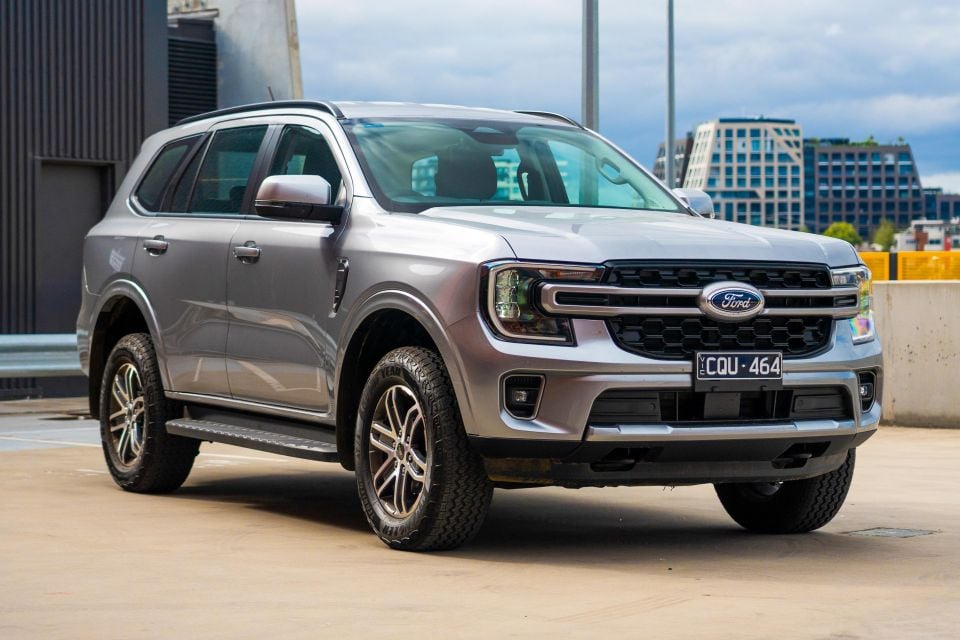
How does the new engine compare to competitors like the Toyota Hilux or Mitsubishi Triton?
The new Ford 2.0L single-turbo produces 125kW and 405Nm, compared to the Hilux’s 2.8L turbo-diesel (150kW/500Nm) and the Triton/Navara’s 2.4L bi-turbo (150kW/470Nm). Ford argues the new engine offers broader, more usable torque and better real-world responsiveness, though peak outputs are lower.
Will the new engine affect towing or off-road capability?
Ford maintains that the 2.0L single-turbo, paired with a 10-speed transmission and a 3.73 final drive ratio, retains a 3.5-tonne towing rating. However, the loss of torque could impact acceleration in heavy loads or off-road conditions, where competitors’ higher-output diesels may hold an advantage.
With diesel engines facing stricter emissions rules globally, how do you see this shift affecting the future of work ute performance in Australia?