
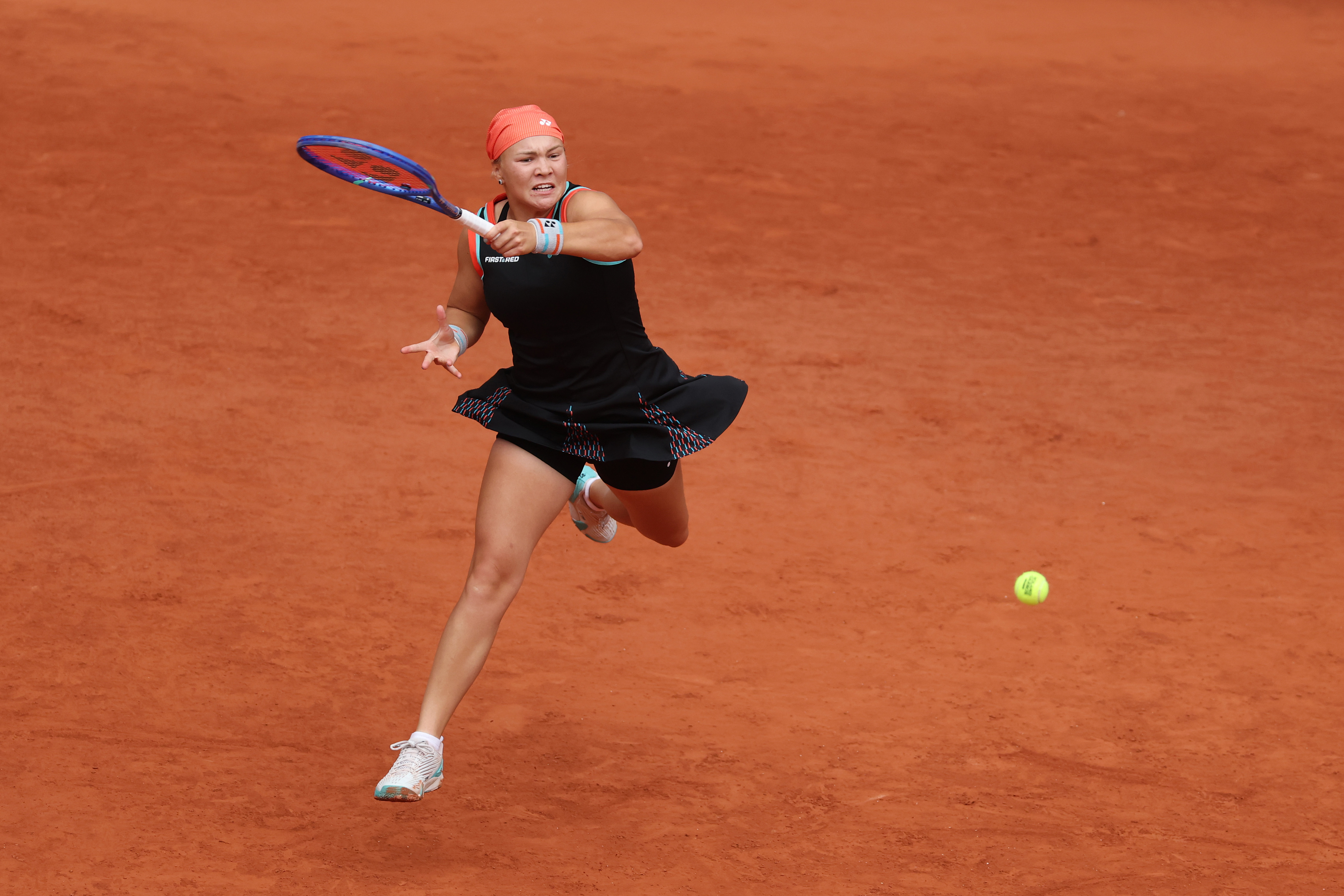
From 6-3, 4-1 down, Shnaider stuns Sabalenka to make first Slam semifinal
Diana Shnaider’s stunning three-set victory over World No. 1 Aryna Sabalenka at Roland Garros marked one of the most dramatic upsets of the 2026 tournament. The No. 25 seed, 22, came from a set and a double-break deficit to claim a 3-6, 7-5, 6-0 win in 2 hours and 12 minutes, ending Sabalenka’s six-consecutive-major semifinal streak. The match, played on Court Philippe-Chatrier under gusty winds, saw Shnaider dominate the final set with 10 consecutive games, while Sabalenka recorded 57 unforced errors, including 17 in the decider.
The result extended Shnaider’s breakthrough season, which included a first Top 10 win over Coco Gauff in 2024 and a second 6-0 third set in a row. She becomes the second-youngest active player with a major semifinal on her resume, trailing only 19-year-old Mirra Andreeva, who also reached the Paris final four. The quarterfinal also set a historic milestone: for the first time, a Grand Slam semifinal lineup consists entirely of players born in the 21st century, with Andreeva (2007), Shnaider (2004), Marta Kostyuk (2002), and Maja Chwalinska (2001) all competing.
Shnaider’s path to the semis included a 6-0 third set against Madison Keys in the fourth round, a performance that foreshadowed her dominance against Sabalenka. The Russian left-hander’s ability to adapt to wind conditions—something she noted Sabalenka struggled with—proved pivotal. “I just tried to keep reminding myself that it’s same conditions for both of us,” Shnaider said, referencing Sabalenka’s 2025 final loss to Coco Gauff in similar weather.
Shnaider now faces Maja Chwalinska, a qualifier making her first major semifinal. The match will be the first Roland Garros semifinal between left-handers in the Open Era, following Seles’ 1992 Wimbledon and Kvitova’s 2014 Wimbledon victories. Both players have faced each other once before, with Shnaider winning in 2022. Chwalinska’s unorthodox playstyle—emphasizing drop shots and slices—poses a new challenge for Shnaider, who acknowledged the “big switch” in tactics.
With Sabalenka’s streak snapped and the semifinal field reshaped, the stage is set for a potential first-time Grand Slam champion. The tournament’s historic all-young semifinal lineup could lead to a debut title, a rarity in recent years. Analysts suggest Shnaider’s tactical adjustments and mental resilience will be critical as she attempts to capitalize on her momentum.
Frequently Asked Questions
- Who did Diana Shnaider defeat to reach the Roland Garros semifinals?
- She defeated World No. 1 Aryna Sabalenka in the quarterfinals, coming from a set and a double-break deficit.
- What is significant about the Roland Garros semifinal lineup?
- It marks the first time a Grand Slam semifinal consists entirely of players born in the 21st century, with four under-25 competitors.
- How many times has Shnaider recorded a 6-0 third set in a Grand Slam?
- This is her second 6-0 third set in a row, following a win over Madison Keys in the fourth round.
As the tournament reaches its climax, the question remains: Can Shnaider sustain her extraordinary form against a qualifier who has already defied expectations? Or will Chwalinska’s unorthodox style prove the final hurdle in her bid for history?