
From Salk Institute discovery to patient care: Vitamin D analog shuts down pancreatic cancer’s shield in clinical trial
Breaking the “Shield”: A New Era in Pancreatic Cancer Treatment
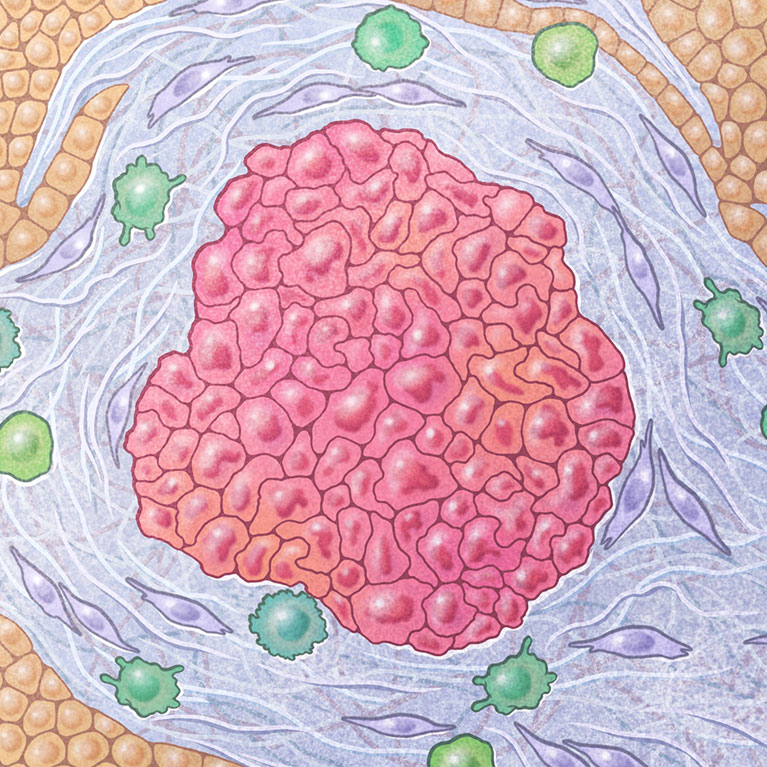
For decades, pancreatic cancer has been one of the most formidable challenges in oncology. The primary reason isn’t just the aggressiveness of the cancer cells themselves, but the “fortress” they build around themselves.

This protective barrier, known as the tumor microenvironment, consists of dense connective tissue and activated fibroblasts. This shield acts as a physical and chemical wall, blocking chemotherapy drugs from reaching the tumor and keeping the body’s immune cells at bay.
However, groundbreaking research from the Salk Institute and Dana-Farber Cancer Institute is shifting the paradigm. Instead of trying to blast through the wall, scientists are finding ways to “reprogram” it.
Reprogramming the Microenvironment with Vitamin D Analogs
The latest clinical evidence suggests that we can use the body’s own regulatory systems to dismantle this protective shield. The key lies in the vitamin D receptor (VDR), a molecule that governs cell behavior and inflammatory responses.
In a recent clinical trial, researchers used paricalcitol, a synthetic vitamin D analog. Unlike standard supplements, this analog is designed to resist degradation and specifically target the VDR to reduce the activation of the fibroblasts that form the tumor’s shield.
The results were striking: the combination of paricalcitol and standard chemotherapy not only proved safe but also increased the infiltration of T-cells into the tumor. By “softening” the microenvironment, the chemotherapy could finally do its job more effectively.
Synthetic Analogs vs. Standard Supplements
It is critical to distinguish between synthetic analogs and over-the-counter vitamin D3 supplements. While some early studies explored high-dose vitamin D3 for various cancers, large-scale phase 3 trials—such as the SOLARIS trial for colorectal cancer—found that standard high-dose vitamin D3 did not provide a significant benefit.

The success in pancreatic cancer stems from using a synthetic analog like paricalcitol, which is FDA-approved for other uses (such as chronic kidney disease) and interacts with the VDR in a more precise, therapeutic manner.
The Shift Toward Precision Oncology and Biomarkers
One of the most significant takeaways from this research is the role of biomarkers. Not every patient responded to the vitamin D analog in the same way. The data revealed that patients with high expression of the vitamin D receptor (VDR) in their tumors saw the most significant improvements in overall survival.
This points toward a future of “Precision Oncology,” where doctors won’t just treat “pancreatic cancer,” but will instead treat the specific molecular profile of a patient’s tumor. By testing for VDR levels before treatment, clinicians can predict who will benefit most from stromal remodeling therapies.
This approach mirrors the success seen in other areas of oncology, such as HER2 testing in breast cancer, where the treatment is tailored to the genetic expression of the tumor.
Future Trends: Beyond the Pancreas
The ability to “reprogram” the tumor microenvironment has implications far beyond the pancreas. Many other “hard-to-treat” cancers, including certain types of lung and breast cancers, also utilize a fibrotic shield to resist therapy.
We are likely to see three major trends emerge in the coming years:
- Combination “Cocktails”: Combining stromal remodeling agents (like VDR analogs) with immunotherapy (like PD-1 inhibitors) to turn “cold” tumors “hot.”
- Repurposing Existing Drugs: A surge in trials using FDA-approved drugs for non-cancer indications to treat the tumor microenvironment, reducing the time and cost of drug development.
- Spatial Transcriptomics: Using advanced imaging to map exactly where fibroblasts and immune cells are located in a tumor to time the delivery of drugs more effectively.
For more information on the latest in cancer research, you can explore the official updates from the Dana-Farber Cancer Institute or the Salk Institute.
Frequently Asked Questions
Can I just take high-dose Vitamin D3 supplements to treat pancreatic cancer?
No. The clinical success mentioned is based on paricalcitol, a synthetic analog, not standard vitamin D3. Supplements do not have the same pharmacological properties and should not replace prescribed medical treatment.
What is a “tumor microenvironment”?
It is the cellular environment surrounding a tumor, including blood vessels, immune cells, and fibroblasts. In pancreatic cancer, this environment often becomes a dense, protective barrier that blocks treatment.
Is paricalcitol approved for cancer?
Currently, paricalcitol is FDA-approved for treating secondary hyperparathyroidism in patients with chronic kidney disease. Its use in pancreatic cancer is currently being evaluated in clinical trials.
How does VDR expression affect treatment?
The vitamin D receptor (VDR) is the “lock” that the drug (the “key”) opens. Patients with more VDR “locks” in their tumor cells typically respond better to the therapy.
Join the Conversation
Do you believe precision oncology is the key to curing the most stubborn cancers? Or are we overlooking other critical factors in the tumor microenvironment? Share your thoughts in the comments below or subscribe to our newsletter for the latest breakthroughs in medical science.