
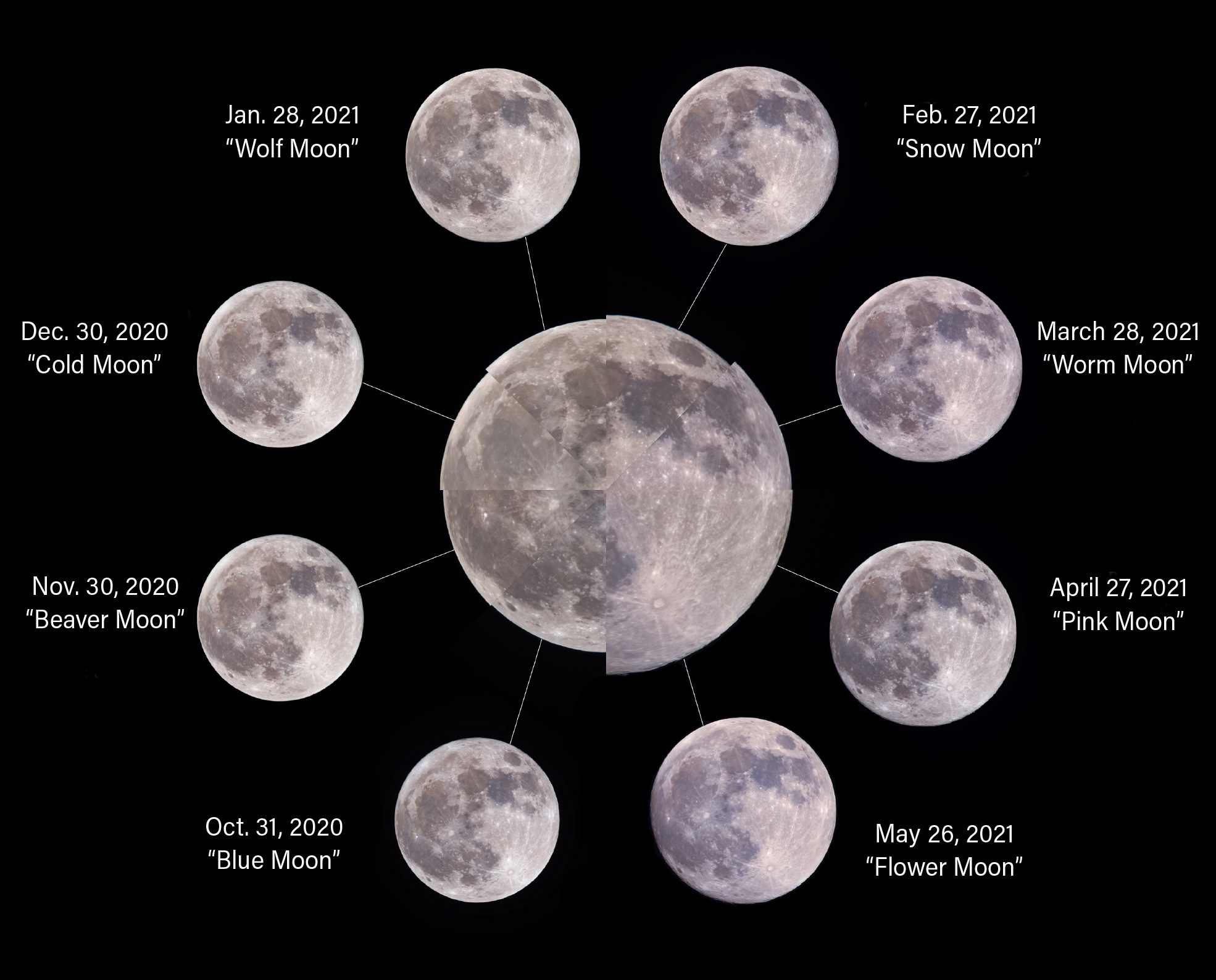
Full Moon: Rare Blue micromoon to appear for last time until 2053
The Rare Celestial Dance: Why Micromoons and Blue Moons Capture Our Imagination
There is something inherently humbling about looking up at the night sky. While we are often captivated by the dramatic flair of a “Supermoon,” there is a quiet, understated beauty in its counterpart: the micromoon. This weekend, stargazers are treated to a rare celestial alignment where a Blue Moon coincides with this smaller, dimmer lunar phase—a phenomenon we won’t see again for decades.

But beyond the immediate spectacle, these events offer a window into the predictable yet ever-changing mechanics of our solar system. As we track these lunar cycles, we aren’t just watching the sky; we are observing the precise orbital dance that has fascinated humanity since the dawn of time.
What Exactly Is a Micromoon?
To understand the “why” behind these events, we have to look at the Moon’s elliptical orbit. Unlike a perfect circle, the Moon’s path around Earth is oval-shaped. A micromoon occurs when the full moon coincides with the apogee—the point in its orbit where it is furthest from Earth.

Because it sits roughly 250,000 miles away, it can appear up to 14% smaller and dimmer than a supermoon. While “dimmer” might sound disappointing, it offers a unique opportunity for astrophotographers. The lack of intense glare often allows for better detail to be captured on the lunar surface, provided you have the right equipment.
The “Blue Moon” Misconception
Despite the poetic name, the Moon will not actually turn blue. A Blue Moon is simply a calendar anomaly: it is the second full moon occurring within a single calendar month. Because our lunar cycle is roughly 29.5 days, these “extras” happen every two to three years.
The term has evolved from folklore into a standard astronomical reference. While it doesn’t change the colour of the lunar disc, it does serve as a reminder of how our human calendar systems struggle to align perfectly with celestial rhythms.
Future Trends in Amateur Astronomy
Interest in lunar events is at an all-time high. With the rise of affordable, high-quality digital cameras and smartphone adapters for telescopes, the barrier to entry for amateur astronomers has never been lower. We are seeing a trend toward “community stargazing,” where enthusiasts share real-time tracking data on platforms like NASA’s Sky Events calendar.
Looking ahead, we are entering a period where celestial coincidences are being tracked with higher precision than ever. While this specific Blue-Micromoon alignment is rare, the advancement of predictive algorithms means One can now map out these events centuries in advance, turning casual stargazing into a planned scientific pursuit.
Did You Know?
The term “once in a blue moon” actually dates back to the 16th century, though it originally implied something that was impossible or would never happen. It wasn’t until the 19th century that it began to be used to describe rare but predictable occurrences.
Frequently Asked Questions (FAQ)
- Will the Moon actually look blue this weekend?
No. The Moon will appear its usual white or pale yellow. The “Blue Moon” title is strictly based on the timing of the full moon within the month. - How much smaller is a micromoon compared to a regular full moon?
A micromoon can appear about 14% smaller in diameter than a supermoon, making it slightly less bright in the night sky. - What is the best way to view a micromoon?
You don’t need special equipment. The naked eye is sufficient, but finding a spot with a clear view of the southern horizon away from city light pollution will provide the best visibility. - When is the next time a Blue Moon and micromoon will coincide?
This specific, rare alignment of a Blue Moon that is also a micromoon won’t occur again until 2053.
Are you planning to photograph the upcoming micromoon? We’d love to see your shots. Share your experiences in the comments below or join our newsletter to get monthly updates on upcoming celestial events!