

Full Sonos surround sound system with soundbar, subwoofer, and two speakers is $340 cheaper in Limited Time Amazon deal
The home cinema market is shifting toward wireless, high-channel-count systems like the Sonos Arc Ultra bundle, which utilizes 9.1.4 spatial audio processing. This trend replaces traditional AV receivers with software-driven ecosystems that use Dolby Atmos to simulate immersive environments without physical wiring, according to Sonos product specifications.
Why is wireless spatial audio replacing traditional home theaters?
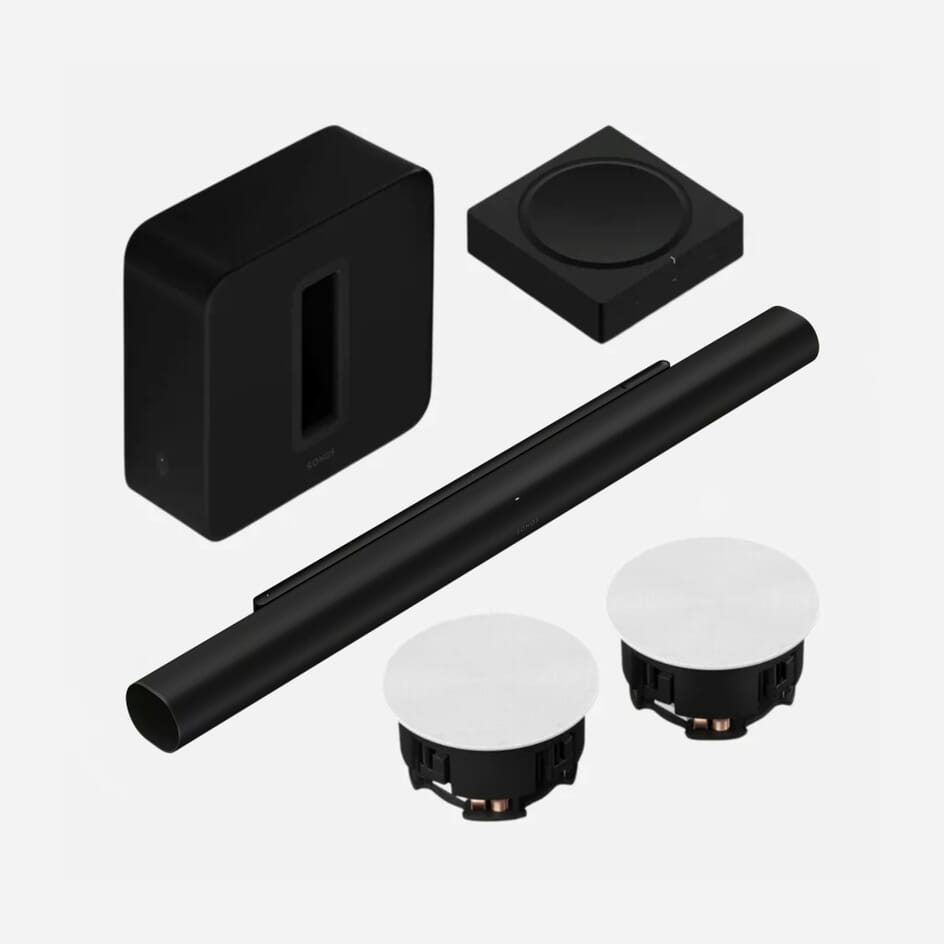
Consumers are abandoning complex AV receivers and speaker cables for integrated wireless ecosystems. The Sonos Arc Ultra bundle demonstrates this shift by combining a soundbar, subwoofer, and rear speakers into a single Wi-Fi-managed network.
Traditional setups require manual wiring and physical placement of multiple amplifiers. In contrast, the Arc Ultra uses 9.1.4 spatial audio processing to handle sound placement digitally. This allows the system to project effects around and above the listener using software rather than a dozen physical cables.
The move toward wireless connectivity reduces installation time and removes the need for professional wiring in living rooms. Sonos specifications indicate that the Sub 4 and Era 100 speakers connect over Wi-Fi, allowing for flexible placement—including placing the subwoofer on its side or under furniture.
How will AI-driven room tuning change audio quality?
Software-based calibration is replacing the manual “by-ear” tuning of the past. Sonos utilizes Trueplay tuning to adapt audio output to the specific acoustics of a room.

Current technology analyzes how sound bounces off walls and ceilings to correct frequency imbalances. Future trends point toward real-time adaptive audio, where systems constantly adjust based on the number of people in a room or the movement of furniture.
This shift removes the need for acoustic foam or professional room treatment. By using internal microphones and processing power, these systems create a “virtual” acoustic environment that mimics a dedicated cinema room regardless of the actual architecture.
What is the impact of high-channel counts on the consumer experience?
The leap from 5.1 surround sound to 9.1.4 processing increases the precision of sound localization. While 5.1 systems provide basic front, center, and rear audio, 9.1.4 systems add side-surrounds and overhead channels.
According to the product details, the Arc Ultra handles the front soundstage and Atmos effects, while the Era 100s provide rear-channel immersion. This separation allows the Sub 4 to handle low-frequency effects exclusively, freeing the other speakers to focus on dialogue clarity and high-frequency detail.
This distribution of labor prevents “audio muddiness,” a common issue in single-bar setups. As processing power increases, the gap between “soundbars” and “dedicated home theaters” continues to shrink.
Comparing Wireless Bundles vs. Traditional Component Systems
| Feature | Wireless Bundle (e.g., Sonos) | Traditional AV Receiver |
|---|---|---|
| Installation | Plug-and-play / App-based | Manual wiring / Component stacking |
| Calibration | Software (Trueplay) | Manual or Mic-based (Audyssey) |
| Footprint | Minimal / Distributed | Large receiver + multiple cables |
Frequently Asked Questions
Do I need a separate amplifier for the Sonos Arc Ultra bundle?
No. The system is designed to function without a traditional AV receiver, as the amplification is built into the soundbar, subwoofer, and speakers.
What is the difference between 5.1 and 9.1.4 audio?
5.1 consists of five main channels and one subwoofer. 9.1.4 adds four more surround channels and four overhead (height) channels for a more three-dimensional experience.
Can the Sub 4 be placed anywhere?
Yes. Sonos specifications state the Sub 4 can be placed upright, on its side, or under furniture, provided it has a Wi-Fi connection.
Want to upgrade your home cinema experience?
Share your current setup in the comments below or subscribe to our newsletter for the latest audio tech analysis.