
Get an inside look at DC’s long-abandoned hospital, infamous for research that led to rise of lobotomies – NBC4 Washington
St. Elizabeths Hospital, a 180-acre campus in Southeast Washington, D.C., stands as a stark monument to the evolving history of mental health treatment in America. Originally established as the Government Hospital for the Insane, the facility served tens of thousands of patients over a 150-year period. While the site is now largely abandoned and closed to the public, it remains a significant landmark that chronicles both the progress and the darker chapters of psychiatric medicine.
The Legacy of Dr. Walter Freeman
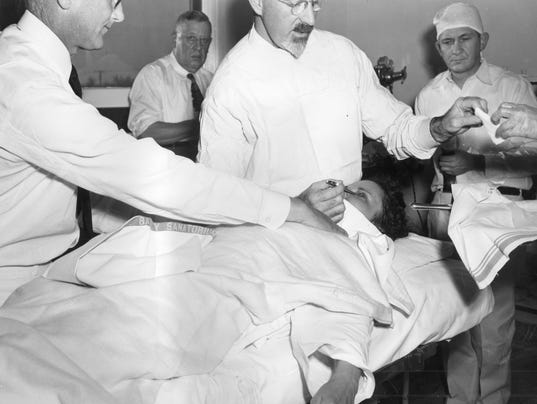
The campus is perhaps most infamous for its association with Dr. Walter Freeman, the first chair of the Department of Neurology at The George Washington University. Beginning in 1924, Freeman conducted extensive research at St. Elizabeths, performing thousands of autopsies on patients who had died at the facility. These studies provided the foundation for his later work as a prominent advocate for surgical interventions in mental health.
Freeman is best known for developing the transorbital lobotomy, often referred to as the “icepick method.” Between 1930 and 1960, he performed over 3,000 lobotomies, including the 1941 procedure on Rosemary Kennedy, the sister of future President John F. Kennedy. That specific intervention left the young woman permanently disabled, highlighting the devastating consequences of the experimental techniques practiced during that era.
Did You Know?
St. Elizabeths was the first federal facility in the United States built specifically to treat mental illness, and it maintained segregated wards for Black and white patients during and after the Civil War.
Decay and Preservation
Today, the site is a collection of contrasts. While some areas of the campus have been revitalized, many historic structures remain in a state of profound neglect. Building P, once a bustling center for doctors and patients, now features crumbling facades, shattered windows, and rusted caged doorways. The interior, still marked by original pastel blues and yellows, serves as a haunting reminder of the time when screened atriums were used in the belief that fresh air could cure mental illness.
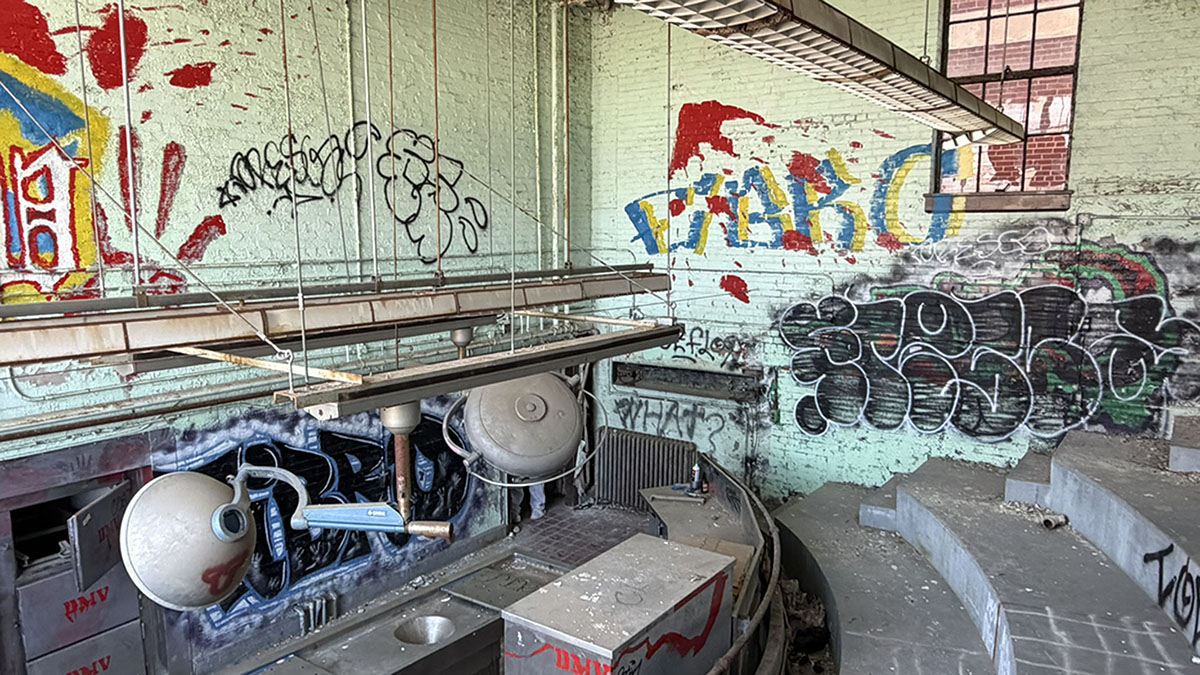
The Blackburn Laboratory, which houses the infamous autopsy theater, remains an eerie site of solitude. Inside, the space where Freeman developed his controversial theories is now covered in graffiti, with rusted file cabinets still containing slides of brain cells from long-deceased patients. Despite the deterioration, the facility was added to the National Register of Historic Places in 1979.
Expert Insight:
The history of St. Elizabeths reflects the broader, often turbulent trajectory of clinical psychiatry. The shift from the physical, often invasive “psychosurgery” of the early 20th century to the eventual reliance on antipsychotic medications marks a critical transition in how society understands and treats the human mind. The preservation of these buildings forces us to confront the ethical tensions between scientific ambition and patient welfare.
Future Redevelopment
The future of the campus remains a work in progress. Developers have established plans to restore the remaining historic buildings, though the timeline for these projects is extensive. Building P is slated to be converted into a community hub for nonprofits, while the Blackburn Building may be relocated and repurposed, possibly as a museum.
Frequently Asked Questions
What was the purpose of the autopsy theater at St. Elizabeths?
The autopsy theater was used by Dr. Walter Freeman to perform thousands of autopsies on patients who died at the hospital. These procedures allowed him to develop the theories and techniques that led to his promotion of the prefrontal and transorbital lobotomy.
Why did the use of lobotomies decline?
The procedure fell out of favor due to poor patient outcomes that did not meet initial expectations, shifting public perception, and the development of more effective antipsychotic medications.
Is the campus currently open to the public?
No, the campus has been abandoned and closed to the public for decades, though parts of the grounds have undergone revitalization.
How should society balance the preservation of historically significant but painful sites with the need for modern redevelopment?