
Global Security and AI Intelligence: Geopolitics, China, and the Tech Race
The U.S.-China tech rivalry is shifting toward infrastructure and cognitive warfare, according to reports from OpenAI, the Financial Times, and the SCSP. While the U.S. maintains a slight edge in quantum hardware, China’s long-term strategic coordination and use of American AI tools for influence operations create a volatile global security environment.
Why is the Middle East ceasefire remaining fragile?
The current ceasefire is holding, but Chip Usher reports the stability is precarious and could last into the summer without a permanent resolution. Usher attributes this limbo to three leaders—Donald Trump, Benjamin Netanyahu, and Iran’s new leader—who possess incompatible needs and very little overlap in their goals.
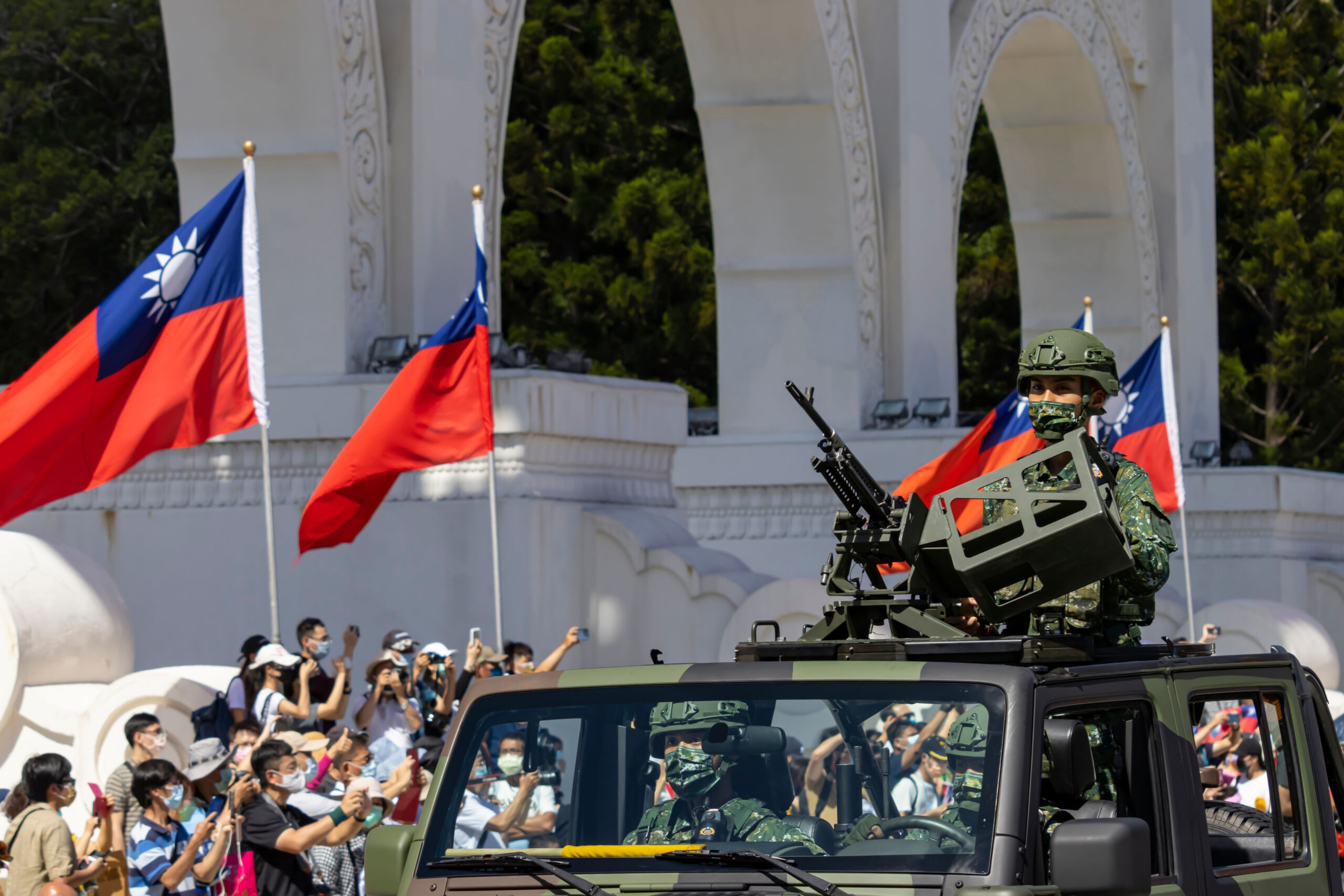
The risk of a return to active conflict is rising, according to Usher’s analysis. This volatility coincides with broader geopolitical instability, including the status of Taiwan. Demetri Sevastopulo of the Financial Times reports that Taipei is currently in “wait-and-see” mode for the remainder of the year.
Sevastopulo notes that a $14 billion arms package for Taiwan remains stalled. He highlights a specific concern: U.S. rhetoric describing arms sales as a “bargaining chip,” which echoes talking points used by Xi Jinping. Sevastopulo argues that this alignment suggests Xi has “won the cognitive war” regarding Taiwan’s security commitments.
How is China using American AI to influence U.S. policy?
China is utilizing American AI tools to stoke internal U.S. dissent, according to Ben Nimmo, head of intelligence and investigations at OpenAI. Nimmo detailed a covert influence operation where fake accounts posing as Americans used ChatGPT to generate content criticizing the energy consumption of AI data centers.
Nimmo notes a specific irony: the operators chose ChatGPT over China’s own DeepSeek. This suggests that American models are currently viewed as more effective for mimicking native English speakers to deceive domestic audiences.
This trend toward “dual-use” AI is mirrored in how labs release their models. Rama Elluru points to Anthropic’s release of Fable 5 and Mythos 5 as a case study in AI governance. Elluru explains that these are actually the same model; only a single set of safeguards separates the public version from the one reserved for vetted cyber defenders.
What is the current state of the U.S.-China quantum and AI race?
The U.S. leads the quantum race “barely,” according to a tech net assessment by the SCSP. The report analyzed 36 metrics, finding that while the U.S. dominates in innovation and deployed hardware, China holds an advantage in patience and coordination.
The SCSP reports that China has operated under a coordinated national strategy since 1997, creating a compounding effect that threatens the U.S. lead. To counter this, the National Science Foundation (NSF) is changing its funding model. Dr. Erwin Gianchandani, NSF Assistant Director, says the new X-Labs initiative will bet on teams rather than individual proposals.
Gianchandani argues the traditional grant model is too slow to compete with China. X-Labs aims to provide a multi-year runway for “platform technology,” similar to the decades-long development of CRISPR.
How is the U.S. restricting Chinese tech infrastructure?
The Pentagon has reissued its 1260H list, which bans the Department of Defense from using certain Chinese firms. David Lin reports that EV giants BYD and NIO are included on the list for the first time.
Lin notes the list was quietly pulled before a Beijing summit, making its return a calculated signal. However, he warns that using a blacklist to warn U.S. companies away from Chinese tech could eventually undercut the list’s own credibility if not enforced consistently.
While the government restricts tech, the private sector is scrambling for labor. Meta’s Director of Workforce Strategy, Kate Ross, announced a $150 million push called America’s Workforce Academy. The program trains skilled-trades workers to build AI infrastructure with guaranteed jobs upon completion.
The demand is stark. Ross reports that a previous Meta fiber-technician program received 35,000 applications for only 1,000 available spots in its first week.
Comparison: U.S. vs. China Strategic Approach
| Metric | United States | China |
|---|---|---|
| Quantum Edge | Innovation & Hardware | National Coordination |
| Funding Model | Shifting to Team-based (X-Labs) | Long-term State Strategy |
| AI Strategy | Rapid Model Deployment | Covert Influence Ops |
Frequently Asked Questions
What is the Pentagon’s 1260H list?
It is a list of Chinese military companies that are off-limits for the U.S. Department of Defense to ensure national security and prevent reliance on adversary tech.
Why did Chinese operators use ChatGPT instead of DeepSeek?
According to OpenAI’s Ben Nimmo, ChatGPT is more effective at generating content that appears to be written by native Americans, making covert influence operations more believable.
What is the “X-Labs” initiative?
An NSF program that funds research teams rather than specific proposals, providing a longer timeline to develop breakthrough platform technologies to better compete with China.
Want to stay ahead of the AI and geopolitical curve?
Join the conversation in the comments below or subscribe to our newsletter for weekly deep dives into the tech war.