
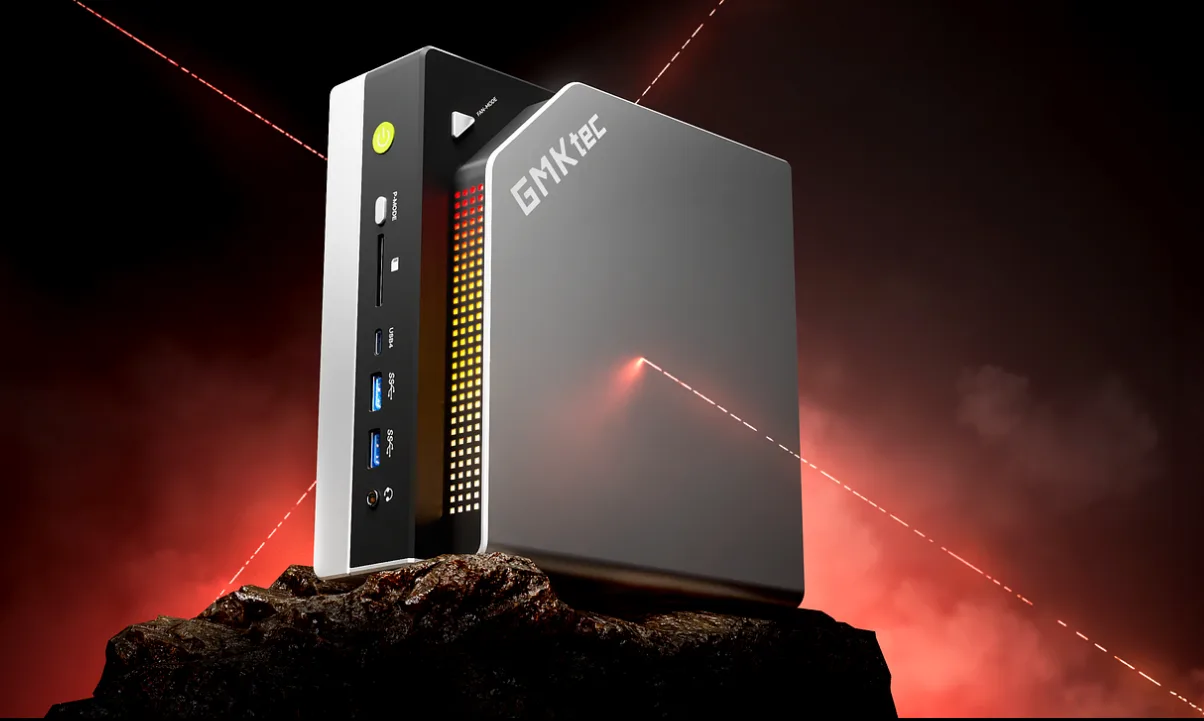
GMKtec Evo-X3: A Compact AI-Powered Mini PC with AMD Ryzen AI Max+ 395 and OCuLink Support
GMKtec is set to release its Evo-X3 mini PC on June 29, targeting the growing demand for local AI processing and professional-grade mobile computing. Featuring the AMD Ryzen AI Max+ 395 processor and support for up to 128GB of LPDDR5X RAM, the device is designed to handle large language models offline while maintaining a compact, vertical desktop footprint.
Why are manufacturers shifting toward local AI workstations?
The industry is moving away from cloud-dependent AI toward localized hardware to ensure data privacy and reduce latency. According to GMKtec, the Evo-X3 is specifically engineered to run large language models, such as the 235-billion parameter Qwen3, entirely offline. By keeping heavy computational tasks on the local machine, users avoid the security risks and bandwidth bottlenecks associated with cloud-based AI services. This trend mirrors a broader shift in enterprise computing where dedicated AI nodes are prioritized over generic server access.
The Evo-X3 utilizes a 140W thermal design, managed by a triple heat-pipe cooling system. This allows the machine to maintain peak performance during intensive AI rendering without exceeding standard noise levels, a common hurdle in small-form-factor design.
How does the OCuLink port change the mini PC market?
The integration of an OCuLink (PCIe Gen4 x4) port allows the Evo-X3 to bypass the limitations of integrated graphics by connecting directly to desktop-class external GPUs. While the device features the Radeon 8060S integrated graphics, this expansion path enables users to attach NVIDIA RTX 40 or 50 series cards. This design choice addresses a primary criticism of previous mini PCs: the inability to upgrade graphical power as AI and 3D rendering demands grow over time. By offering this flexibility, GMKtec positions the Evo-X3 as a long-term workstation rather than a disposable office unit.
How does the Evo-X3 compare to current market rivals?
The competitive landscape for high-performance mini PCs is intensifying as manufacturers race to implement mobile-desktop hybrids. The following table highlights how current market offerings are positioning themselves:
| Manufacturer | Model | Key Feature |
|---|---|---|
| GMKtec | Evo-X3 | 128GB RAM support for local LLMs |
| Peladn | HO5 | Ryzen AI 9 HX 470 with OCuLink |
| Minisforum | MS-03 | Intel Panther Lake, 180 TOPS AI performance |
While the Evo-X3 emphasizes massive memory capacity for local AI, competitors like Minisforum are pushing raw TOPS (Trillions of Operations Per Second) output, indicating a split in the market between memory-heavy local processing and raw compute-focused architectures.
When selecting a mini PC for AI development, prioritize systems that support high-speed RAM (8000MHz+) and OCuLink connectivity. These features are more critical for future-proofing your workstation than the base CPU clock speed alone.
Frequently Asked Questions
Can the Evo-X3 be used for gaming?
Yes. While marketed as an AI workstation, the inclusion of the Radeon 8060S and the OCuLink port for external GPUs makes it highly capable of handling modern gaming titles.
When can I purchase the GMKtec Evo-X3?
Early access registration opens June 22, with the full global launch scheduled for June 29. Early registrants may qualify for a $20 discount.
Is the storage expandable?
Yes, the device features dual PCIe 4.0 M.2 NVMe slots, supporting up to 4TB of storage, providing the high-speed read/write performance necessary for large AI datasets.
Are you planning to transition your AI workflow to a local workstation, or do you prefer the convenience of the cloud? Let us know your thoughts in the comments below or subscribe to our newsletter for the latest hardware benchmarks.