
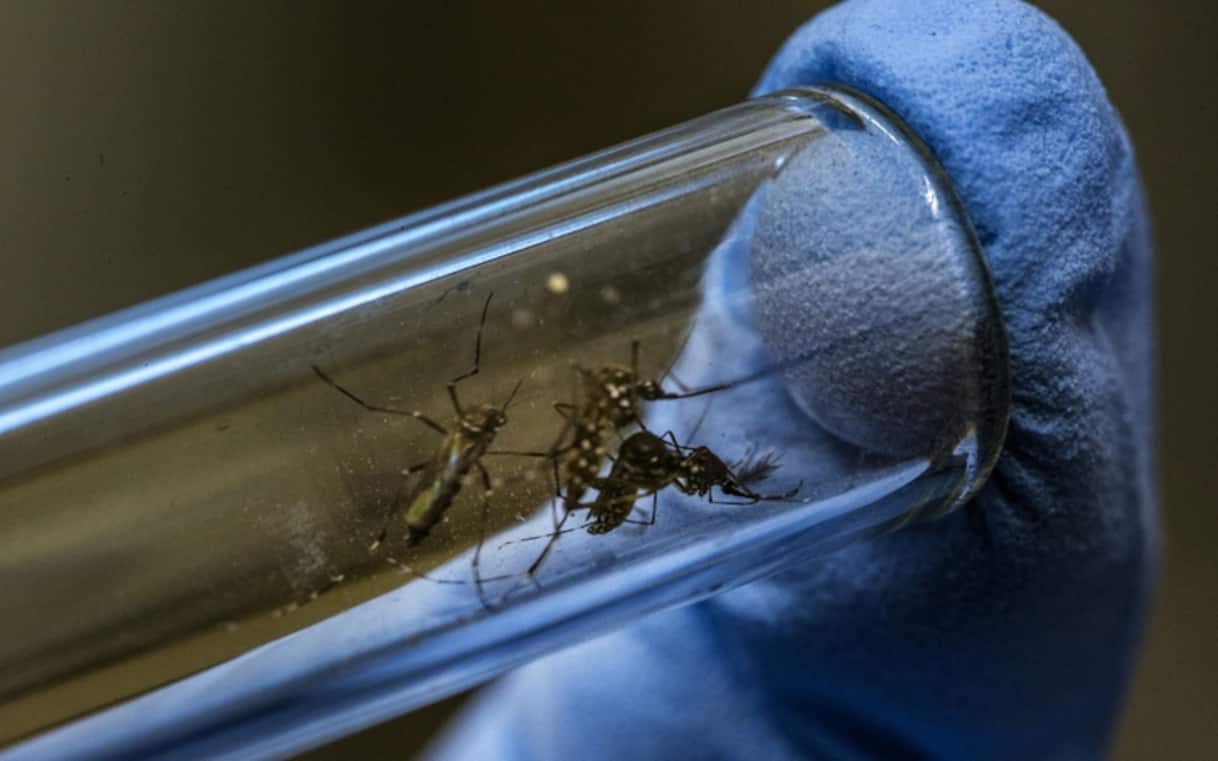
Google Seeks US Approval to Release 32 Million Sterile Mosquitoes
Google has officially requested authorization from the United States government to release up to 32 million sterilized male mosquitoes across California and Florida. The initiative is part of “Project Debug,” a long-standing effort by the company to apply its technological and data-science capabilities to global health challenges. The proposal is currently under review by the Environmental Protection Agency (EPA), which is overseeing a public consultation process that concludes on June 5.
The Science of Population Control
The core of this initiative relies on the “sterile insect technique,” a method experts have utilized for decades to manage problematic insect populations. Google’s approach specifically targets Aedes aegypti mosquitoes, a species known for transmitting serious diseases including dengue, Zika, yellow fever and chikungunya.
To achieve this, the company utilizes automated breeding systems and artificial intelligence to separate male mosquitoes from females. Because male mosquitoes do not bite or transmit disease, they are the ideal candidates for release. These males are treated with a naturally occurring bacterium that prevents them from successfully reproducing with wild female mosquitoes, effectively curbing the population growth of the species.
Did You Know? Project Debug, which was fully acquired by Google from its former parent company Verily in December 2024, began exploring technological solutions to combat disease-carrying mosquitoes as early as ten years ago.
Global Precedents and Future Projections
The effectiveness of this technology has already been observed in Singapore. Through the release of millions of male mosquitoes carrying the Wolbachia gene, officials saw a suppression of 80% to 90% in the local Aedes aegypti population. This biological intervention led to a reduction of more than 70% in dengue cases within 6 to 12 months following the releases.
If the EPA grants approval for the two-year plan in the U.S., the project would involve releasing approximately 16 million mosquitoes annually. Analysts expect that if the deployment is successful in California and Florida, it could serve as a template for future large-scale vector control. However, the outcome remains contingent on the results of the upcoming public consultation and subsequent regulatory review.
Expert Insight: Samantha Carter notes that while the promise of an 80% reduction in disease-carrying vectors is significant, the challenge lies in the precision of the deployment. By leveraging AI to ensure the right number of insects are released in the right locations, Google is attempting to scale a biological control method that was once labor-intensive into a high-tech, data-driven operation.
Frequently Asked Questions
Do the male mosquitoes released by Google pose a risk to humans?
No. According to the project specifications, male mosquitoes do not bite and do not transmit any diseases.
What is the primary goal of the releases in Florida and California?
The goal is to reduce the population of Aedes aegypti mosquitoes, which are responsible for spreading viruses like Zika, dengue, and yellow fever.
How does the technology work to stop the mosquitoes?
The mosquitoes are bred with a naturally occurring bacterium that prevents them from successfully reproducing when they mate with wild female mosquitoes.
Given the potential for significant disease reduction, what are your thoughts on using large-scale biological interventions to manage local insect populations?