
Grande Caata: Lo Spettacolo Come Pensiero per il Futuro (E la Delusione Che Ci Lascia)**
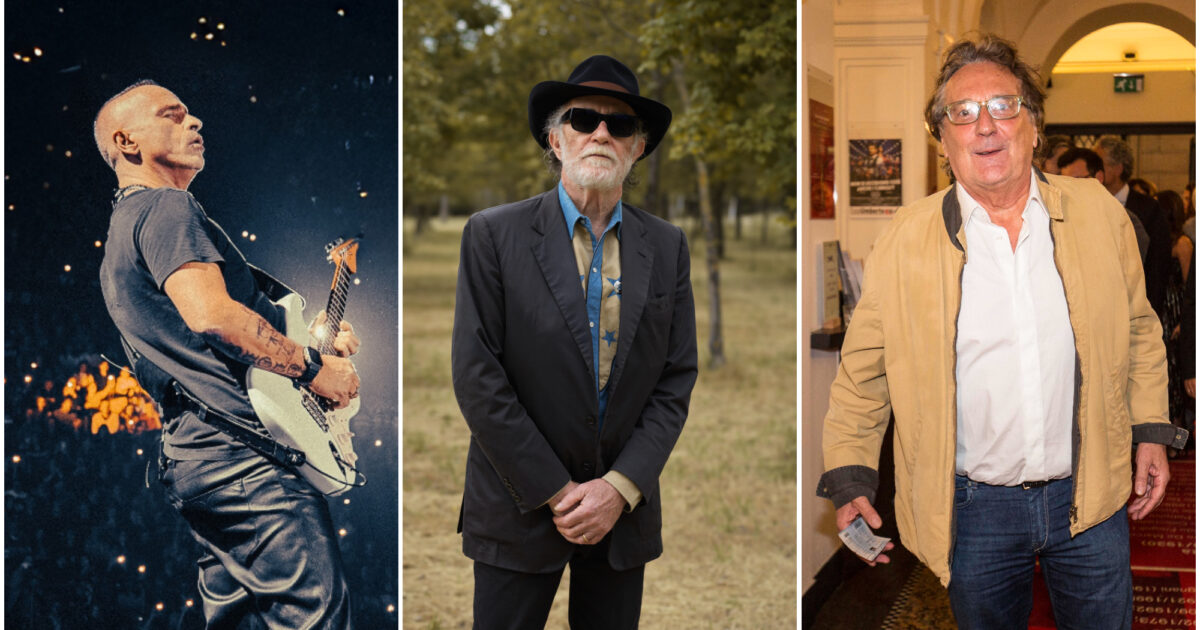
Legendary Italian singer-songwriter Francesco De Gregori has reignited a longstanding debate about the role of artists in public discourse, sparking sharp criticism from peers and fans alike. During a May 26 presentation for his live project *Nevergreen (Perfette Sconosciute)*, De Gregori expressed skepticism about artists openly taking political or moral stances—particularly on issues like war or opposition to figures like Donald Trump. His remarks have drawn strong pushback, including from fellow musicians Enzo Iacchetti and Eros Ramazzotti.
The Statement and Its Fallout
De Gregori’s comments began with a measured critique of artists using their platforms to endorse specific political positions. “I always feel a certain embarrassment when a man of show—someone with public visibility—wants to take a clear stance on international conflicts,” he said. “Everything around us needs to be analyzed with extreme care.”
He expanded on this during the event, questioning whether public proclamations—whether from stages or open letters—truly serve a purpose. “Do we need Springsteen to declare he’s against the Trump administration?” he asked. “I don’t believe so, and it’s a role I don’t feel I can share.” De Gregori emphasized that he avoids making declarations, arguing that no single artist should dictate positions on complex issues like Gaza or Israel. “I don’t give lessons,” he added, “because I also have confused ideas. I contain multitudes, and my thinking isn’t totalitarian.”
Why the Backlash?
The response to De Gregori’s remarks has been swift and polarizing. Enzo Iacchetti, a fellow Italian artist, called his stance a “great mistake” (*”Grande cazzata”*), arguing that musicians *should* engage with the world for the sake of their children’s future. Eros Ramazzotti, while softer in tone, also disagreed: “I’m not in agreement with the master with the human face.”
De Gregori’s position challenges a growing expectation that celebrities—especially those with cultural influence—must take public stands on moral and political issues. His reluctance to do so, framed as humility, has been interpreted by some as detachment or even complicity with the status quo.
What Could Happen Next?
De Gregori’s remarks may fuel further debates within Italy’s music community, particularly among artists who see public advocacy as non-negotiable. Critics could amplify their dissent, framing his views as out of touch with younger generations, who increasingly expect cultural figures to align with progressive causes. Conversely, supporters might rally around his defence of artistic autonomy, arguing that personal convictions should remain private.
De Gregori’s upcoming live performances—including *Nevergreen (Perfette Sconosciute)*—could also become flashpoints. If he avoids political commentary in interviews or onstage, it may reinforce perceptions of detachment. Alternatively, if he doubles down on his stance, it could polarize audiences further, testing the boundaries of what fans expect from their idols.
Frequently Asked Questions
Did Francesco De Gregori explicitly criticize Bruce Springsteen’s political stance?
No. De Gregori used Springsteen as an example to question whether any artist *needs* to publicly oppose figures like Donald Trump, not as a direct critique of Springsteen’s actions.

What specific issues did De Gregori mention as off-limits for artists?
He cited wars, the Trump administration, and conflicts involving Gaza or Israel as examples of topics where he believes artists should avoid making public declarations.
How did Enzo Iacchetti and Eros Ramazzotti respond to De Gregori’s comments?
Iacchetti called it a “great mistake,” arguing artists must think about the world’s future. Ramazzotti, while less blunt, also disagreed, stating he was “not in agreement with the master.”
As artists continue to navigate the balance between silence and activism, De Gregori’s remarks raise a question for all of us: *Should cultural figures lead with their convictions—or stay out of the fray entirely?*