
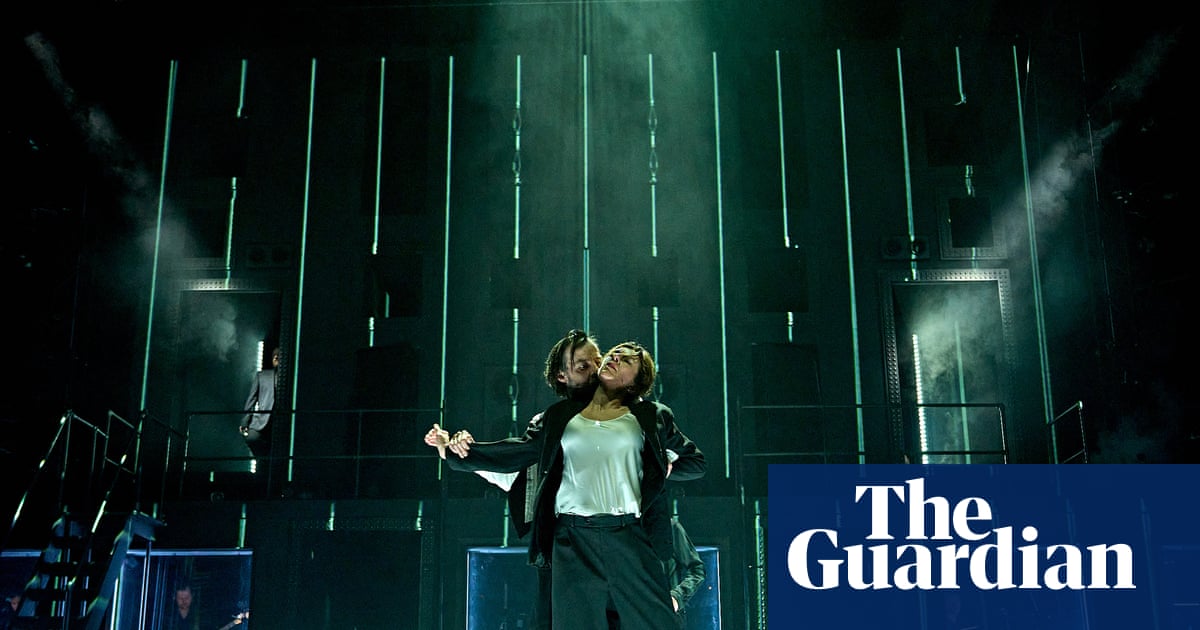
Hamlet Hail to the Thief: Radiohead and Shakespeare Fusion at the Barbican
“Hamlet Hail to the Thief,” a co-production between Factory International and the Royal Shakespeare Company, merges Shakespeare’s tragedy with Radiohead’s 2003 album. Opening at London’s Barbican theatre on October 31, the production signals a trend toward “sonic reimagining,” where contemporary music provides the emotional and political architecture for classical texts.
Why is the fusion of classical theatre and contemporary music growing?
The move toward interdisciplinary productions allows classical works to bypass traditional “period” constraints. By integrating Radiohead’s sixth album, co-creators Thom Yorke, Steven Hoggett, and Christine Jones shift the play’s atmosphere from a historical court to a state of modern paranoia.
This approach differs from traditional theatrical scores. While a standard score supports the dialogue, this production uses reworked lyrics to reinforce themes of grief and despair. Yorke’s involvement goes beyond licensing; he reworked the music specifically for the stage, reflecting a broader industry trend where musicians act as dramaturgs.
How does political music reshape Shakespearean narratives?
Integrating music with a specific political origin changes how audiences interpret the protagonist. Mark Fisher, writing for The Guardian, described Samuel Blenkin’s Hamlet as “a voice of a generation exasperated by the failures of his superiors.”

Fisher linked this performance to the same anger Yorke and Radiohead expressed following the events of September 11. This creates a dual-layered political commentary: the internal corruption of Denmark and the external geopolitical instability of the early 2000s. This trend of “contextual layering” allows directors to make 400-year-old plays feel immediate without rewriting the original text.
What does the Barbican production reveal about future stage trends?
The production’s journey from Aviva Studios in Manchester and the Royal Shakespeare theatre in Stratford-upon-Avon to the Barbican suggests a growing demand for “intense spaces” that blur the line between concert and play. Director Steven Hoggett stated the Barbican is a venue where “the boundaries [are] blown apart as to what theatre might be.”
Another emerging trend is the use of archival audio to inform live performance. Yorke utilized archive live recordings from 2003 to 2009 to rediscover the energy of the original songs. These newly mixed versions were released as a surprise album last summer, creating a symbiotic relationship between the recorded music industry and the live stage.
Comparison: Traditional Scores vs. Sonic Fusion
The difference between a traditional production and a fusion like Hamlet Hail to the Thief is evident in the creative hierarchy:
| Feature | Traditional Shakespeare Score | Sonic Fusion (Yorke/RSC) |
|---|---|---|
| Role of Music | Atmospheric background/mood setting | Core narrative and thematic driver |
| Composition | Written to fit specific scenes | Existing album reworked for stage |
| Political Link | Usually implicit or tied to the plot | Explicitly tied to external historical events |
Frequently Asked Questions
When and where is “Hamlet Hail to the Thief” playing?
The production runs from October 31 to January 23 at the Barbican theatre in London.
Who is playing the lead role of Hamlet?
Samuel Blenkin returns to the role of Hamlet, a performance praised by The Guardian for its intensity.
Which Radiohead album is used in the play?
The production uses a reworked version of the 2003 album Hail to the Thief, performed live by musicians and actors.
Who are the other key cast members?
The cast includes Paul Hilton as Claudius, Claudia Harrison as Gertrude, and Ami Tredrea as Ophelia.
Do you think modern music enhances or distracts from classical plays?