

Handcuffed Suspect Steals Police Car in Wild Dallas Chase
A suspect in Dallas, Stacey Huffman, escaped from a police cruiser by slipping his handcuffs and seizing the driver’s seat during a transport. This incident, documented by the Dallas Police Department, highlights critical gaps in custodial transport security and is driving a shift toward reinforced vehicle partitioning and biometric restraint systems in law enforcement.
Why are traditional police transport protocols failing?
The Dallas incident reveals a dangerous gap between protocol and reality. According to the Dallas Police Department, Stacey Huffman managed to slip his left hand from his restraints while keeping his wrists behind his back to avoid detection. This “stealth escape” suggests that standard cuffing techniques aren’t always foolproof, especially when suspects are under the influence of controlled substances, which was a primary charge in this case.

Most escapes happen because of a breakdown in the “double-lock” mechanism. When officers don’t engage the double lock, handcuffs can tighten or loosen based on the suspect’s movement. The Dallas Police Department’s Special Investigations Unit is currently reviewing whether this specific failure occurred during the arrest of Huffman.
It’s not just about the cuffs. The fact that Huffman could slide from the back seat to the driver’s seat indicates a failure in physical partitioning. Many older patrol cars have gaps or removable barriers that don’t fully isolate the passenger compartment. When officers Ibrahim Kante and Kenneth Harper exited the vehicle to address Huffman’s agitation, they left a window of opportunity that turned a routine transport into a high-speed chase.
How will “Smart Cruisers” prevent future escapes?
Law enforcement agencies are moving toward vehicles that act more like mobile cells than cars. The future of police transport lies in total isolation. We’re seeing a trend toward reinforced, seamless polycarbonate partitions that eliminate any possibility of a suspect reaching the front cabin.
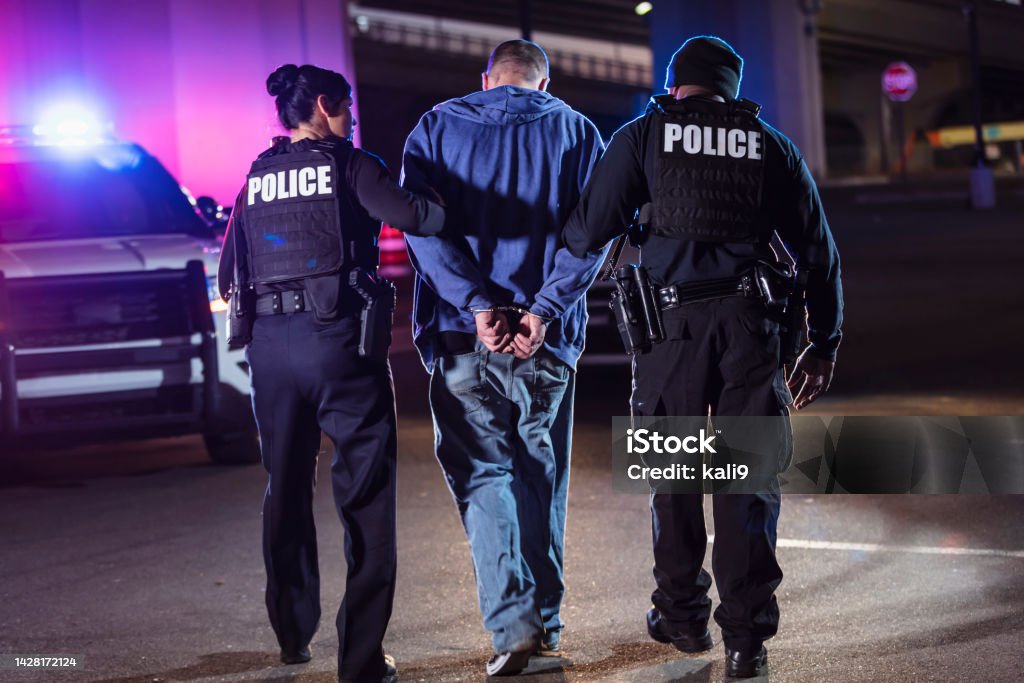
AI-integrated cabin monitoring is the next big leap. While the Dallas incident was captured on dashcams, the footage was used for evidence after the fact. Future systems will use real-time computer vision to alert officers the second a suspect unbuckles their seatbelt or shifts their body position toward the front. This removes the need for the officer to constantly glance in the rearview mirror.
Remote vehicle immobilization is also becoming a priority. In the Dallas case, Huffman drove the car at 50 mph (80 km/h) before jumping out. New fleet management software allows dispatchers or officers to remotely kill the engine or lock the transmission if a vehicle is hijacked, potentially stopping a chase before it gains momentum.
Are biometric restraints the next step in officer safety?
The ease with which Huffman slipped his restraints puts a spotlight on the limitations of steel cuffs. Industry experts are now looking at biometric and electronic restraints. These devices can monitor a suspect’s pulse or tension levels and alert officers if the restraint is being tampered with or if the suspect is attempting to slip out.
Comparing this to traditional methods, electronic cuffs offer a digital audit trail. According to reports from the Office of Community Police Oversight, transparency is a key part of the Dallas investigation. Biometric restraints would provide an exact timestamp of when a cuff was locked, double-locked, or breached, removing the “he-said, she-said” from internal affairs investigations.
What happens to the legal framework after such failures?
Incidents like this usually trigger a rewrite of Standard Operating Procedures (SOPs). The Dallas Police Department is now under scrutiny by the Dallas County District Attorney to determine if the officers’ decision to exit the vehicle while the suspect was still inside constituted a breach of safety protocol.
We’re likely to see a shift in how “high-risk” transports are categorized. Instead of basing the risk solely on the suspect’s criminal record, agencies may start basing it on the suspect’s current state (e.g., suspected drug use), requiring a two-officer transport or a dedicated prisoner van rather than a standard patrol cruiser.
For the suspect, the legal consequences escalate rapidly. Huffman didn’t just face charges for drugs and weapons; he added “Unauthorized Use of a Motor Vehicle” and “Escape from Custody” to his record. This creates a legal precedent where the act of escaping becomes a more significant charge than the original reason for the stop.
For more insights on law enforcement technology, check out our guide on the evolution of police surveillance or visit the FBI’s Law Enforcement Bulletin for official safety standards.
Frequently Asked Questions
Can a person actually slip out of handcuffs?
Yes, if the cuffs are not tightened correctly or the double-lock isn’t engaged, individuals with small wrists or those who use specific lubrication/tension techniques can slip out.

Why didn’t the police car have a permanent wall?
Many patrol cars use partial barriers to allow officers to interact with suspects or move them quickly. However, as seen in Dallas, these gaps can be exploited.
What is a “Special Investigations Unit”?
It’s an internal police division tasked with investigating serious misconduct, systemic failures, or high-profile incidents within the department to ensure accountability.
What do you think?
Should police cars be redesigned as fully enclosed cells, or does that go too far? Let us know your thoughts in the comments below or subscribe to our newsletter for more deep dives into public safety and tech.