

Haunting Sounds of The World’s Largest Living Thing Recorded : ScienceAlert
Pando, a 6,000-metric-ton quaking aspen colony in Utah, is being monitored using hydrophones to record vibrations traveling through its shared root system. Sound artist Jeff Rice and the organization Friends of Pando are using these acoustic recordings to analyze the organism’s hydraulic systems and environmental health, according to project reports.
The organism consists of 47,000 stems sharing identical DNA, sprawling across 100 acres. While it appears to be a forest, it’s a single male quaking aspen (Populus tremuloides) that has lived for an estimated 12,000 years. Recent efforts to “listen” to the tree provide a non-destructive way to study one of Earth’s largest living things.
How do hydrophones “hear” a forest?
Sound artist Jeff Rice used a hydrophone—a microphone designed for underwater use—by placing it in a hollow at the base of a branch and threading it down to the roots. Rice reported that hydrophones don’t require water to function; they pick up vibrations from solid surfaces like roots.

During a thunderstorm, Rice captured a low, eerie rumbling. He told the 184th Meeting of the Acoustical Society of America that this sound is likely the vibration of millions of leaves passing through the branches and down into the earth. The device also recorded thumps from a branch being tapped 90 feet away, a sound that wasn’t audible through the air at that distance.
Why does Pando’s sound matter for science?
The project began as art but shifted toward scientific application. Lance Oditt, founder of Friends of Pando, stated that converting wind-driven vibrations into sound could reveal the inner workings of Pando’s hidden hydraulic system without damaging the tree.
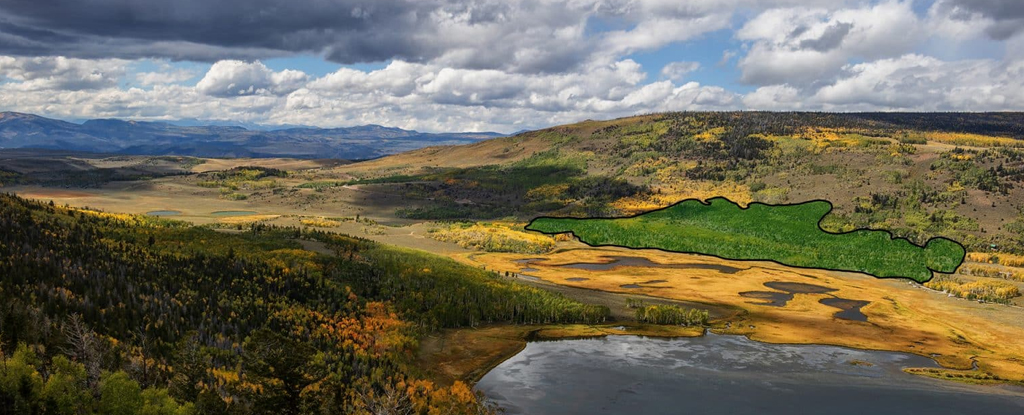
Rice noted that these natural sounds provide a baseline for local biodiversity. By recording the leaves, bark, and surrounding ecosystem, researchers can measure environmental changes over time. Friends of Pando intends to use this data to study water movement, root depth, and insect colonies—areas where current knowledge is limited.
What is threatening the world’s largest organism?
Despite its size, Pando is deteriorating. Friends of Pando reports that human activities have disrupted the ecosystem’s balance. Specifically, the clearing of land and the slaughter of predators have led to an increase in herbivore populations. These animals eat the young stems, preventing the colony from regenerating.
This creates a critical contrast in the tree’s survival strategy. While quaking aspens can produce seeds, pollination is rare in large stands because they are usually clones of a single sex. Pando relies on its root system to spread, making the protection of those roots and the prevention of over-grazing essential for its survival.
How does this compare to other forest networks?
Pando’s connectivity is more extreme than typical aspen groves. While many colonial aspens share roots, the scale of Pando—100 acres of identical DNA—makes it a unique biological entity. The fact that a physical thump can travel 90 feet through the root system suggests a level of structural integration that differs from the looser “wood wide web” seen in mixed-species forests.
For more on how plants communicate, see our guide on mycorrhizal networks or visit the Ecosystem Sound project to hear the recordings.
Frequently Asked Questions
Is Pando one tree or a forest?
It’s a single organism. While it looks like a forest of 47,000 trees, every stem is a genetic clone connected by one root system.

How old is Pando?
It is estimated to be around 12,000 years old, according to Friends of Pando.
Can humans actually hear Pando?
Not with the naked ear. The vibrations are too faint for human hearing and require specialized equipment like hydrophones to be detected.
Join the Conversation
Do you think acoustic monitoring is the future of conservation science? Let us know in the comments below or subscribe to our newsletter for more updates on Earth’s ancient organisms.