
Hogyan kerülhetett víz a forró Merkúrra? Megvan a válasz a rejtélyre
Mercury’s Icy Secret: How a Scorched World Keeps Its Cool
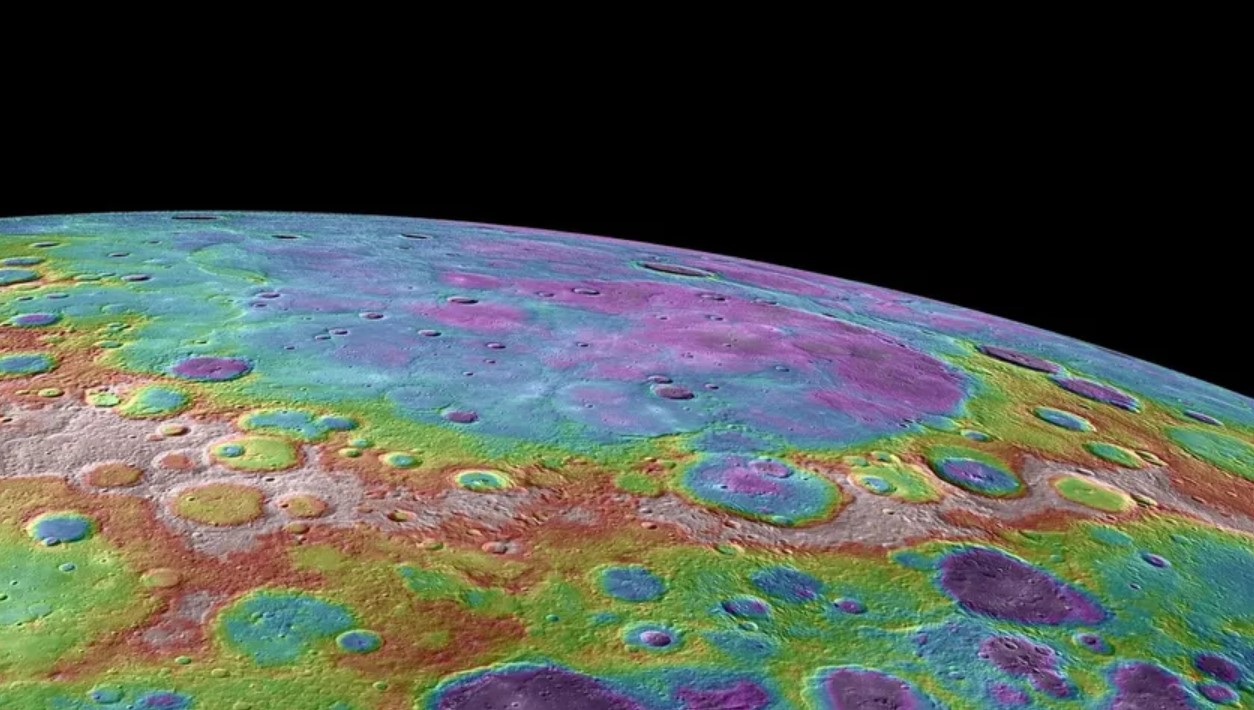
Mercury is the closest planet to the Sun, a world of blistering extremes where daytime temperatures soar to 430°C. Yet, tucked away in the shadows of its polar craters, the planet harbors a substance that seems entirely out of place: water ice. For years, the origin of this frozen reservoir has been one of the most intriguing mysteries in our solar system.
A breakthrough study led by planetary scientist Dr. Parvathy Prem of the Johns Hopkins Applied Physics Laboratory (APL) suggests that a single, massive impact by an asteroid or comet may have been responsible for delivering the entirety of Mercury’s water.
The Physics of an Impact
Using advanced computational modeling, Dr. Prem’s team simulated the aftermath of a 17-kilometer-wide object striking the planet at a staggering 30 kilometers per second. The simulation revealed that this cataclysmic event created a short-lived, dense atmosphere composed of water vapor.
This “temporary atmosphere” essentially blanketed the planet. While solar radiation began to break down these water molecules through a process called photolysis, the sheer scale of the impact created a self-shielding effect. This process protected the water, allowing it to migrate toward the poles, where it eventually became trapped in the permanent, dark shadows of deep craters.
The Future of Planetary Exploration
Our understanding of Mercury has evolved significantly since the NASA MESSENGER mission first confirmed the presence of ice in 2011. By using radar and neutron spectroscopy, scientists were able to peer into the dark, showing us that these deposits are often covered by a mysterious, dark, carbon-rich material that acts as a thermal blanket.
The next chapter in this discovery is already underway. The BepiColombo mission, a joint effort between the European Space Agency and the Japan Aerospace Exploration Agency, is currently en route to the planet. Its arrival will mark a new era of high-resolution mapping, potentially confirming the chemical composition of these elusive polar deposits.
Why This Matters for Space Science
Understanding how water is delivered to planetary surfaces is crucial for the broader study of habitability. Whether on the Moon, Mars, or Mercury, “volatiles”—substances that easily vaporize—are the keys to understanding how life-sustaining elements are distributed across the solar system.
Frequently Asked Questions
- How can water survive on the hottest planet? It survives in “cold traps”—craters at the north and south poles that never receive direct sunlight.
- Was the water on Mercury there from the beginning? Current research suggests it was likely delivered by a massive, singular asteroid or comet impact.
- What is the next mission to Mercury? The BepiColombo mission is the primary focus, designed to provide deeper insights into the planet’s surface and environment.
Want to stay up to date with the latest cosmic discoveries? Subscribe to our newsletter for weekly updates on space exploration, or explore our archives for more deep dives into the mysteries of our solar system. Have a question about Mercury’s ice? Leave a comment below and let’s discuss!