
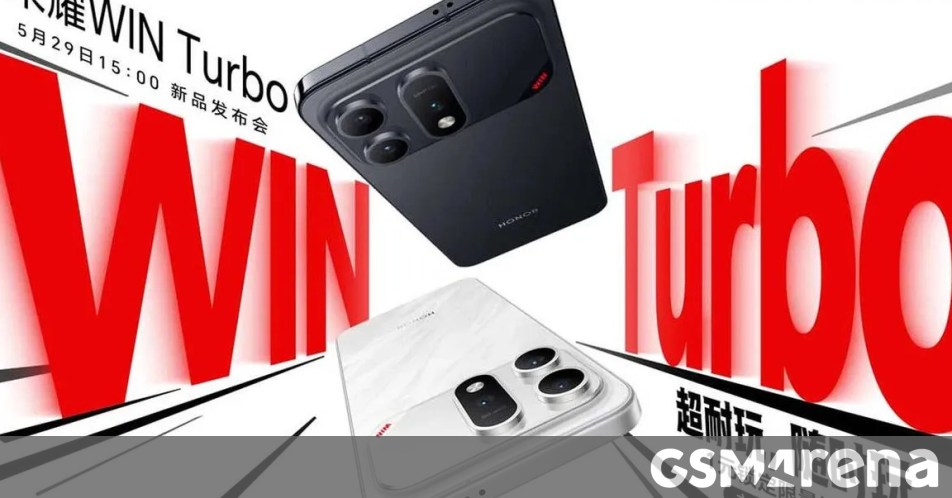
Honor Win Turbo unveiled with 10,000 mAh battery and durable chassis
The Death of the Power Bank? The Rise of 10,000mAh Batteries
For years, the smartphone industry hit a plateau. We saw battery capacities hover around the 5,000mAh mark, with manufacturers focusing on software optimization and faster charging to mask the limitation. However, a shift is happening. The arrival of devices like the Honor Win Turbo, featuring a massive 10,000mAh battery, signals a return to “brute force” endurance.
This isn’t just about adding more lithium; it’s about material science. The industry is moving toward silicon-carbon battery technology, which allows for higher energy density in a smaller footprint. This means we can finally have multi-day battery life without carrying a device the size of a brick.
As we look forward, expect this “Endurance Class” of smartphones to grow. We are moving toward a world where “low battery anxiety” becomes a relic of the past, potentially reducing our reliance on external power banks and cumbersome charging cables during travel.
Efficiency Over Raw Power: The New Performance Metric
For a long time, the “spec war” was won by whoever had the fastest processor. But there is a diminishing return to raw speed. Most users don’t need a Snapdragon 8 Elite for scrolling through social media or attending Zoom calls; they need a phone that doesn’t die by 4 PM.
The strategy seen in the Win Turbo—opting for a mid-range, power-efficient chipset like the Dimensity 8500 over a flagship powerhouse—highlights a growing trend: The Efficiency Pivot. By pairing a massive battery with a chip that draws less power, manufacturers are creating a new category of “Endurance” devices.
This approach mirrors what we’ve seen in the laptop market with the transition to ARM-based chips, where battery life became a more valuable selling point than peak clock speeds. In the coming years, we will likely see more “Turbo” or “Endurance” variants of flagship phones that prioritize longevity over benchmark scores.
For more on how chipsets impact daily usage, check out our guide on understanding mobile processor efficiency.
Beyond Waterproof: When Mainstream Phones Become “Rugged”
We’ve grown accustomed to IP68 ratings, which generally mean a phone can survive a dip in a pool. But the industry is pushing further. The introduction of IP69 and IP69K ratings in non-rugged, mainstream designs is a game-changer.
While IP68 protects against immersion, IP69K protects against high-pressure, high-temperature water jets. Traditionally, this was reserved for industrial equipment or “rugged” phones that looked like pieces of military hardware. Bringing this to a sleek, consumer-facing device suggests that “durability” is becoming a standard luxury rather than a niche requirement.
This trend suggests a future where the distinction between “rugged phones” and “standard phones” disappears. We are heading toward an era of “invisible durability,” where your elegant glass-and-metal device can survive conditions that would have destroyed a phone five years ago.
The Future of the “Power User” Ecosystem
What does this mean for the average consumer? We are seeing the fragmentation of the “Flagship” category. Instead of one “do-it-all” phone, we are moving toward specialized high-end tiers:
- The Performance Tier: Maximum GPU/CPU power, active cooling, and fast charging for gamers and creators.
- The Endurance Tier: 10,000mAh+ batteries, efficiency-focused chips, and extreme durability for travelers and field workers.
- The Ultra-Compact Tier: Small form factors with optimized batteries for the minimalism-focused user.
This diversification allows users to choose a device based on their actual lifestyle rather than just buying the most expensive model available. The integration of high-brightness displays (reaching 8,000 nits) alongside these batteries ensures that these devices remain usable in the harshest outdoor environments, further cementing the shift toward utility-driven innovation.
Frequently Asked Questions
Q: Does a 10,000mAh battery make a phone too heavy?
A: While it adds weight, the use of silicon-carbon materials helps keep the footprint manageable compared to older battery technologies.
Q: What is the difference between IP68 and IP69K?
A: IP68 is for static water immersion. IP69K is for protection against high-pressure and high-temperature water jets.
Q: Will bigger batteries slow down charging speeds?
A: Not necessarily. While a 10,000mAh battery takes longer to fill than a 5,000mAh one, high-wattage fast charging (like 80W or 100W) helps keep charging times within a reasonable window (usually under 90-120 minutes).
What’s more important to you in a new phone: a processor that can handle the heaviest games, or a battery that lasts for three days straight? Let us know in the comments below!
Want to stay ahead of the curve on mobile tech? Subscribe to our newsletter for weekly deep dives into the gadgets shaping our future.