
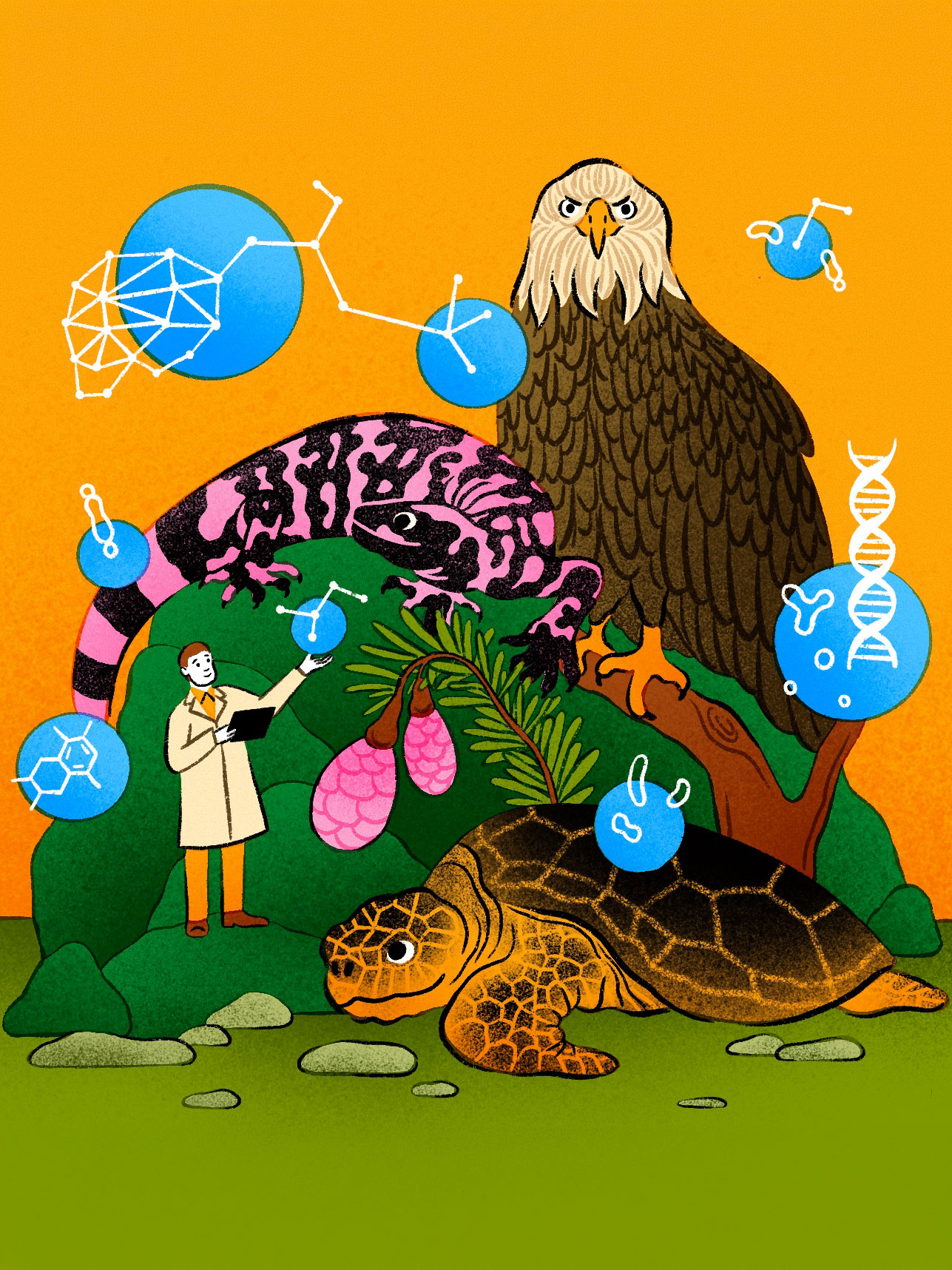
How Big Pharma Expertise Is Revolutionizing Conservation Chemistry
Tim Ce ak, a chemist with two decades of experience in the pharmaceutical industry, is applying advanced drug-design techniques to treat wildlife species, including Gila monsters and loggerhead turtles. By utilizing artificial intelligence and protein modeling, Ce ak aims to move away from the traditional practice of treating animals with human-formulated drugs, which can often prove toxic to non-human patients.
The Gila monster, a species Tim Ce ak has treated for parasites, provided the hormonal basis for widely used human weight-loss medications like Ozempic.
How Artificial Intelligence Transforms Wildlife Treatment
Drug development is historically slow and expensive, but Ce ak utilizes Google DeepMind’s AlphaFold to accelerate the process. Instead of traditional laboratory cultivation, this software allows him to visualize the three-dimensional structure of a mutant protein on a screen. Once the structure is identified, his team generates potential drugs that bind to those specific proteins. With the aid of laboratory robots, Ce ak can process up to 1,500 potential drug candidates per day.
The Shift Toward Precision Conservation Chemistry
Ce ak describes his work as “conservation chemistry,” a discipline designed to avoid the indiscriminate harm caused by conventional medicines. He notes that standard treatments, such as the antifungal itraconazole used for frogs with skin infections, frequently cause lethal side effects in the animals they are meant to cure. By developing therapies tailored specifically to the biological needs of the animal, he hopes to minimize collateral damage to healthy cells.
The transition of pharmaceutical-grade precision to the field of wildlife conservation represents a significant shift in how researchers address mass extinction. By applying high-tech drug discovery tools—previously reserved for human diseases like HIV and cancer—to endangered species, scientists may be able to mitigate the historical failures of using human-centric medicine on wildlife populations.
What May Happen Next
As this practice develops, researchers may see a broader application of precision insecticides and targeted treatments for various species. Future efforts could involve the expansion of these methods to address complex health threats in diverse ecosystems, such as the ongoing struggle to protect hemlock trees from invasive species. If successful, this approach could reduce the reliance on chemical tools that have historically caused unintended ecological damage, such as the DDT-related decline of bald eagles or the impact of livestock painkillers on vulture populations.
Frequently Asked Questions
What is conservation chemistry?
It is a discipline championed by Tim Ce ak that applies precision pharmaceutical development techniques, such as AI-driven protein modeling, to create treatments specifically designed for animal patients rather than repurposing human drugs.
Why is using human drugs on animals often problematic?
According to Ce ak, drugs formulated for humans often cause indiscriminate damage to an animal’s healthy cells, similar to how traditional cancer treatments function in humans. A primary example is the use of itraconazole, which can be lethal to frogs despite its use as a standard antifungal treatment.
How does AI speed up the discovery of new treatments?
By using software like AlphaFold, researchers can visualize the 3D structure of proteins and generate potential drug matches digitally. This replaces the slower, traditional method of growing samples in a lab, allowing for the processing of up to 1,500 potential treatments daily with robotic assistance.
How might the integration of high-tech pharmaceutical tools change our approach to protecting endangered species from extinction?