
How Climate Change Is Slowing Earth’s Rotation-And Why It’s a Major Warning Sign
<. !DOCTYPE html>
The Day Is Getting Longer: How Climate Change Is Slowing Earth’s Rotation—and Why It Matters
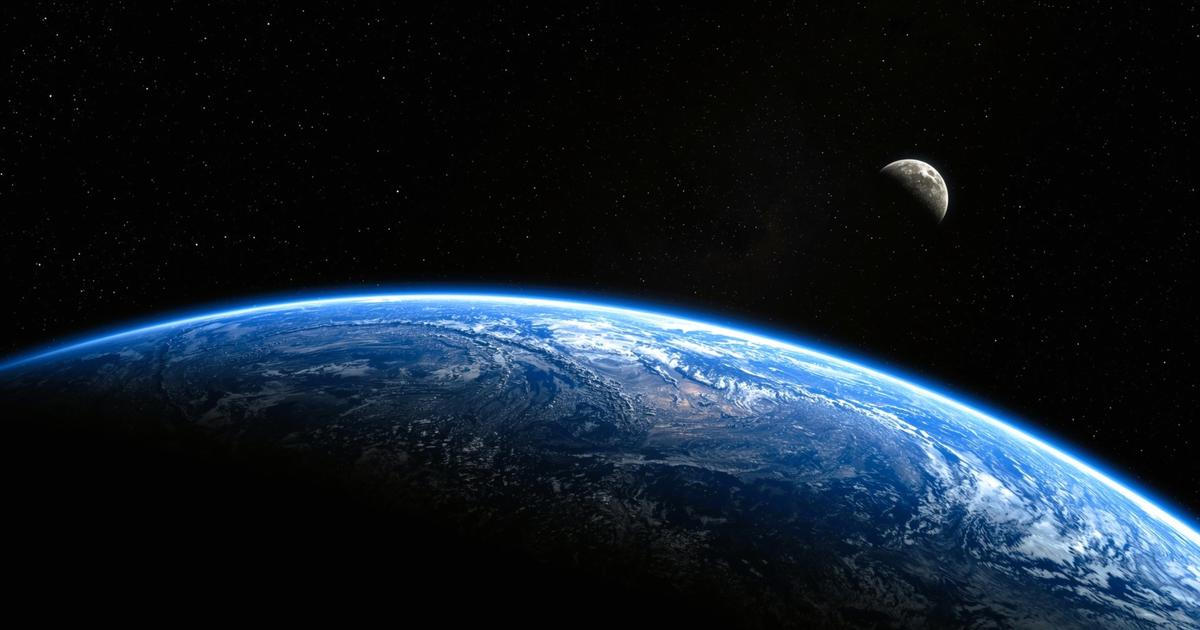
Every day on Earth lasts a fraction of a second longer than it did a century ago. The change is so subtle—just 1.33 milliseconds per century—that most people will never notice it. Yet behind this seemingly insignificant shift lies one of the most profound demonstrations of humanity’s impact on the planet: climate change is altering Earth’s rotation. New research from Vienna University and ETH Zurich confirms that the current slowdown in Earth’s spin is unprecedented in the last 3.6 million years. What’s more, if greenhouse gas emissions continue unchecked, this effect could soon surpass even the gravitational pull of the Moon—reshaping timekeeping, satellite navigation, and our understanding of planetary physics.
— ### **The Physics Behind the Slowdown: Why Is Earth Spinning Slower?** At first glance, Earth’s rotation might seem stable—like a well-oiled machine. But the planet is actually a dynamic system, constantly influenced by forces both natural and human-made. The latest study, published in Journal of Geophysical Research, reveals that **melting polar ice and rising sea levels are redistributing Earth’s mass**, effectively changing its moment of inertia.
Think of Earth like a spinning figure skater. When the skater pulls their arms in, they spin faster. When they extend their arms outward, rotation slows. The same principle applies to Earth: as ice melts and water shifts toward the equator, the planet’s mass moves farther from its axis, causing it to spin slower—just like the skater’s extended arms.
This isn’t just theory. The study’s authors analysed microscopic fossil shells from ancient ocean organisms (called benthic foraminifera) to reconstruct sea-level changes over millions of years. Using machine learning, they compared past data with today’s rapid ice loss—only to find that no natural process has ever caused such a dramatic redistribution of mass in such a short time.
To put the scale into perspective: The amount of ice melting from Greenland and Antarctica today is equivalent to stacking a 10-kilometer-high ice cube over New York City—taller than Mount Everest. And the energy required to move this mass? It’s comparable to the force of a major earthquake, not in terms of destruction, but in sheer planetary energy.
— ### **Climate Change: The New Dominant Force on Earth’s Rotation** For millennia, Earth’s rotation has been influenced by: – **Tidal forces from the Moon** (slowing rotation over billions of years) – **Geophysical processes** (core dynamics, earthquakes) – **Atmospheric changes** (wind patterns, ocean currents) But now, human-induced climate change has entered the equation as a dominant player. The study’s lead author, Professor Mostafa Kiani Shahvandi, explains: > *“We found that the current rate of ice melt and sea-level rise is unmatched in the geological record. The last time we saw a similar shift was around two million years ago—but even then, it required a perfect storm of sensitive ice sheets and natural CO₂ increases. Today, we’re achieving the same effect in just a few decades.”*
If emissions continue on their current trajectory, climate change could become the primary driver of Earth’s rotational slowdown by 2100, overshadowing even the Moon’s gravitational influence. This isn’t just an academic concern—it has real-world consequences for technology we rely on daily.
— ### **How a Slower-Spinning Earth Could Disrupt Modern Life** You might assume that a few extra milliseconds per century don’t matter. But modern infrastructure depends on hyper-precise timekeeping. Here’s how Earth’s slowdown could ripple through society: #### **1. GPS and Satellite Navigation Errors** – GPS systems rely on atomic clocks synchronized with Earth’s rotation. A miscalculation of even a millisecond can lead to meter-level inaccuracies in positioning. – **Example:** In 2012, a leap second was added to atomic time to account for Earth’s slowdown. If this becomes a regular occurrence, it could disrupt autonomous vehicles, drone deliveries, and air traffic control systems. #### **2. Space Exploration Challenges** – Missions to Mars or the Moon depend on exact timing for rocket launches and orbital adjustments. A slower Earth could throw off these calculations, increasing fuel costs and mission risks. – **NASA’s Deep Space Network** already accounts for Earth’s rotational variations—but future missions may need even more precise adjustments. #### **3. Climate modelling and Weather Prediction** – Ocean currents and atmospheric patterns are influenced by Earth’s rotation (the Coriolis effect). A slower spin could alter these systems, making long-term climate projections less accurate. – **Pro Tip:** Some climate models already factor in rotational changes, but as the slowdown accelerates, these adjustments will need constant updates. #### **4. Legal and Financial Systems** – Stock markets and financial transactions rely on synchronized global clocks. Even a tiny delay could cause trading errors or regulatory discrepancies. – **Fun Fact:** The New York Stock Exchange uses atomic clocks to timestamp trades—imagine the chaos if Earth’s rotation threw off these timestamps! — ### **Did You Know?** – **Earth’s days have always been getting longer.** Thanks to the Moon’s gravity, a day was just 18 hours long 4.5 billion years ago—and it’s still slowing down. But climate change is accelerating this process 100x faster than natural causes**. – **The last time Earth’s rotation changed this dramatically was during the Pliocene epoch**, when global temperatures were similar to today’s projections. Back then, sea levels were 10–20 meters higher than now. – **Your smartphone is already affected.** Many devices use network time protocols (NTP) that sync with Earth’s rotation. As the slowdown worsens, these systems may need updates. — ### **What’s Next? Could We Reverse the Trend?** The good news? You can slow—or even reverse—the rate of Earth’s rotational change by mitigating climate change.** Here’s how: ✅ **Accelerate renewable energy adoption** – Reducing fossil fuel emissions directly limits ice melt and sea-level rise. ✅ **Protect polar ice sheets** – Initiatives like Ice911’s reflective geoengineering could help preserve glaciers. ✅ **Improve global timekeeping infrastructure** – Agencies like the IETF are already working on leap second alternatives to handle rotational shifts. ✅ **Invest in quantum clocks** – Next-gen atomic clocks could provide even more precise timekeeping, reducing reliance on Earth’s natural rotation.
Individual actions matter too! Supporting policies that reduce carbon footprints—whether through energy-efficient homes, green transportation, or carbon offsets—helps preserve Earth’s rotational stability for future generations.
— ### **FAQ: Earth’s Rotation and Climate Change**
How much longer will days get in the next 100 years?
Will this affect the length of a year?
Could Earth’s rotation ever stop?
How do scientists measure Earth’s rotation so precisely?
Will this slowdown cause more earthquakes?
— ### **The Bigger Picture: A Planet Out of Balance** Earth’s slowing rotation is more than a scientific curiosity—it’s a visible symptom of humanity’s impact on the planet**. From rising sea levels to disrupted ecosystems, the changes we’re causing today will echo for millennia.
“We’re not just changing the climate—we’re altering the fundamental physics of our planet.” —Benedikt Soja, ETH Zurich
As we stand on the brink of a future where climate change dictates Earth’s spin, one thing is clear: the choices we make today will determine whether this slowdown becomes a minor footnote in history—or a defining crisis of our time.
— ### **What You Can Do Next** 🔹 **Stay informed:** Follow updates from IPCC and NASA’s climate research. 🔹 **Advocate for change:** Support policies that limit emissions and protect polar regions. 🔹 **Explore more:** Read about how melting ice alters ocean circulation or how we might redefine time in a slower-spinning world. 🔹 **Join the conversation:** Share your thoughts in the comments—how do you think we should respond to these changes?
Earth’s rotation is slowing. The question is: Will we act in time to change the course?
—