
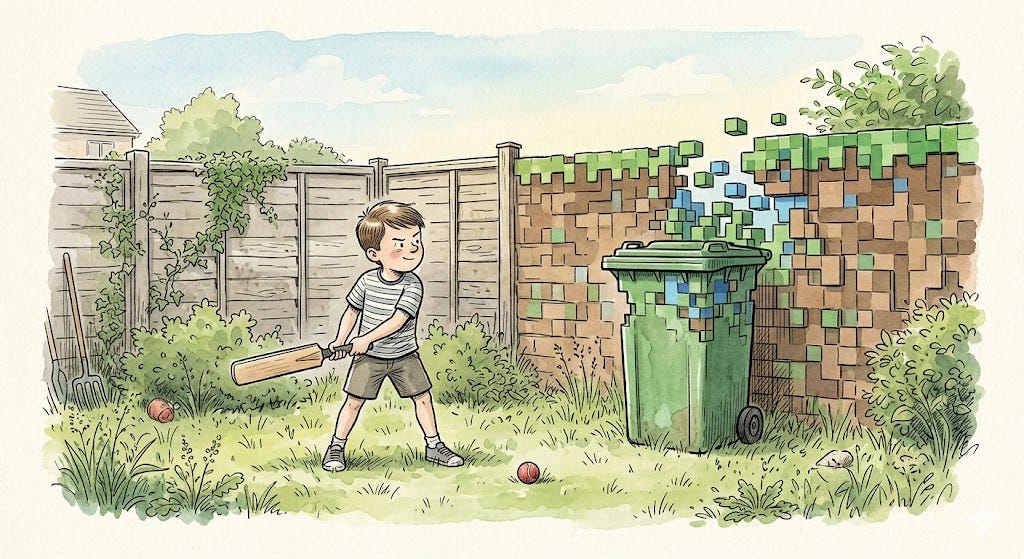
How cricket earns the second interaction
Cricket development is currently shifting from traditional, institution-led pathways toward a multi-layered model that integrates physical play with digital engagement. According to developmental practitioner Jamie Lloyd, the most effective youth sports model may involve simply providing equipment and space for children to play without restrictive contracts or data harvesting. This evolution reflects a 2026 reality where children, such as those in regional Australia, move naturally between backyard games, organized programs like Cricket Blast, and digital environments like Roblox or Minecraft.
Did You Know? Sports experiences on the Roblox platform logged 1.1 billion hours in the second half of 2025, a 154% increase year-on-year, according to the 2026 Digital Expression Report fielded by Ipsos.
Why the Digital Backyard Matters
The transition to digital spaces serves as a “second interaction” that maintains interest between formal training sessions. Data from Roy Morgan indicates that Roblox penetration among Australian children aged 6 to 13 is approximately 61%, rising to 70% for those aged 12 or 13. Research by Jo Redfern of Fanshift suggests that successful sports experiences on these platforms are often built by independent developers rather than governing bodies. For instance, the football game Blue Lock: Rivals achieved 4.6 billion lifetime visits, outperforming official league activations because it prioritizes social connection and iterative updates over rigid brand safety protocols.
The Role of Ownership in Virtual Environments
Minecraft offers a different model of engagement, allowing children to build their own cricket grounds and define the rules of play. While major organizations like MLB have already integrated official stadiums into the game, cricket currently lacks a comparable presence. By allowing children to design their own versions of iconic venues—or entirely new arenas—sports organizations could foster a sense of ownership that precedes a child’s formal introduction to the sport. As noted in industry analysis, this approach allows kids to build the game before the sport dictates how it should be played.

Expert Insight: Samantha Carter notes that the stakes involve moving beyond “campaign mode,” where digital activations have defined start and end dates. The evidence suggests that a live product, which requires constant iteration and community feedback, is essential for retaining interest when no real-world match is scheduled.
What May Happen Next
The International Cricket Council (ICC) has initiated a formal tender process for a fully licensed cricket game, with mobile rights beginning in 2028 and console rights in 2029. Potential bidders include EA Sports, Krafton, Big Ant Studios, Reliance Jio, and Nazara Technologies. While a high-production console game could provide the cultural legitimacy seen in titles like NBA 2K or EA FC, analysts suggest the challenge remains in avoiding a product that only appeals to existing fans. Future development may focus on enabling third-party creators to build platforms that link digital experiences back to real-world participation programs.
Frequently Asked Questions
How does the digital backyard influence real-world cricket participation?
Digital platforms act as “second interaction machines” that keep children engaged with the sport between organized sessions, such as the period between a Wednesday Cricket Blast program and a weekend match.

Why do independent games often outperform official sports activations?
According to Jo Redfern, official activations often struggle with approval cycles and brand safety constraints, whereas independent developers can ship updates quickly based on direct feedback from player communities.
What is the status of a fully licensed cricket console game?
The ICC has opened a formal tender for a licensed game with console rights expected to begin in 2029. Reported bidders include EA Sports, Krafton, Big Ant Studios, Reliance Jio, and Nazara Technologies, with EA Sports associated with a potential development budget of $50 to $60 million.
Is the current structure of youth sports development too reliant on institutional models, or should it lean further into the unstructured play seen in the digital backyard?