

How Garmin Uses Software to Tier Its Watches – and Drive Upgrades
Garmin is shifting its product strategy from hardware-led upgrades to software-driven tiering. By gating features like Training Readiness and Topographic maps behind specific models or the Garmin Connect+ subscription, the company creates artificial reasons to upgrade even when internal processors and sensors remain identical across generations.
Why is Garmin gating features on identical hardware?
Garmin uses software as its primary lever to segment the market. According to recent product rollouts, the company increasingly reserves high-value features for pricier models, even when the hardware is capable of running them. This strategy allows Garmin to maintain high margins without the costly R&D required for entirely new chipsets every year.
Take the mid-range lineup as a prime example. The Vivoactive 6 launched in April 2025 with the same Elevate Gen 4 heart-rate sensor, the same 1.2-inch AMOLED panel, and the same $299 price tag as its predecessor, the Vivoactive 5. Yet, the “new” experience consists mostly of a redesigned interface and new sport profiles—updates that are essentially software toggles.
The Forerunner 165 and 170 follow a similar pattern. Both share the same sensor, case, and GPS chip. However, Garmin chose to enable Training Status, Training Readiness, and a new Sleep Coach only on the 170, justifying a $50 price increase for features that require no new hardware to function.
How does Garmin’s update cycle differ from Apple’s?
The contrast in philosophy between Garmin and Apple is stark. Apple generally ships a single watchOS update annually to roughly five years’ worth of legacy devices. They typically only withhold a feature if the hardware physically cannot support it.

Garmin operates on a model-by-model, quarter-by-quarter basis. According to the company’s rollout patterns, the deciding factor for a new feature isn’t technical capability, but where the watch sits in the current sales lineup. This is evidenced by the Fenix E, released in August 2024. Despite using the aging Elevate Gen 4 sensor and lacking multi-band GNSS, the Fenix E receives the same current software as the flagship Fenix 8 because it’s still being actively sold.
This creates a fragmented ecosystem. A user with a hardware-superior Epix (Gen 2) might find themselves without the latest features simply because their model is no longer the “current” offering, while a cheaper, newer model gets the update.
Will your Garmin watch become obsolete via software?
We’re seeing the beginning of “software sunsetting” for high-end devices. The Fenix 8 launch in August 2024 highlighted this trend. Teardowns show the Fenix 8 reuses the NXP i.MX RT500 processor and the same sensor hub used since the Fenix 7 in early 2022. The core platform hasn’t changed in roughly four years.
Despite this hardware continuity, Garmin immediately stopped developing new features for the Fenix 7, Epix, and their Pro variants the moment the Fenix 8 arrived. Owners of the Fenix 7 Pro, which was barely 18 months old by early 2025, found their devices cut off from feature updates, receiving only bug fixes. This suggests a future where the “life” of a flagship watch is defined by a software support window rather than the physical durability of the device.
What does the Garmin Connect+ subscription signal for the future?
The launch of Garmin Connect+ in March 2025 at $6.99 per month marks a pivot toward a SaaS (Software as a Service) model. By placing “Active Intelligence” insights and nutrition tracking behind a paywall, Garmin is testing how much users are willing to pay for data interpretation after already paying a premium for the hardware.
This move is sensitive because it validates user fears: if features are gated by software rather than hardware, any future capability could theoretically be moved behind a subscription. We’re already seeing this with nutrition tracking. For those paying $1,200 for a MicroLED Fenix 8 Pro, a recurring fee feels like a “double dip” by the manufacturer.
The Shift in Value Proposition
| Old Model | New Model |
|---|---|
| Value based on sensor accuracy and battery life. | Value based on AI insights and software ecosystem. |
| Hardware upgrades every 3–4 years. | Software “tiers” updated every 12 months. |
| One-time purchase for lifetime features. | Hardware purchase + recurring software subscriptions. |
How does this affect the “Map Gating” strategy?
Maps are the most visible example of software tiering. While full topographic maps require significant storage, Garmin often withholds them even when the hardware is capable. The 2025 Forerunner 970 ($749.99) includes full TopoActive maps, while the Forerunner 570 ($549.99), launched the same day on closely related hardware, does not.
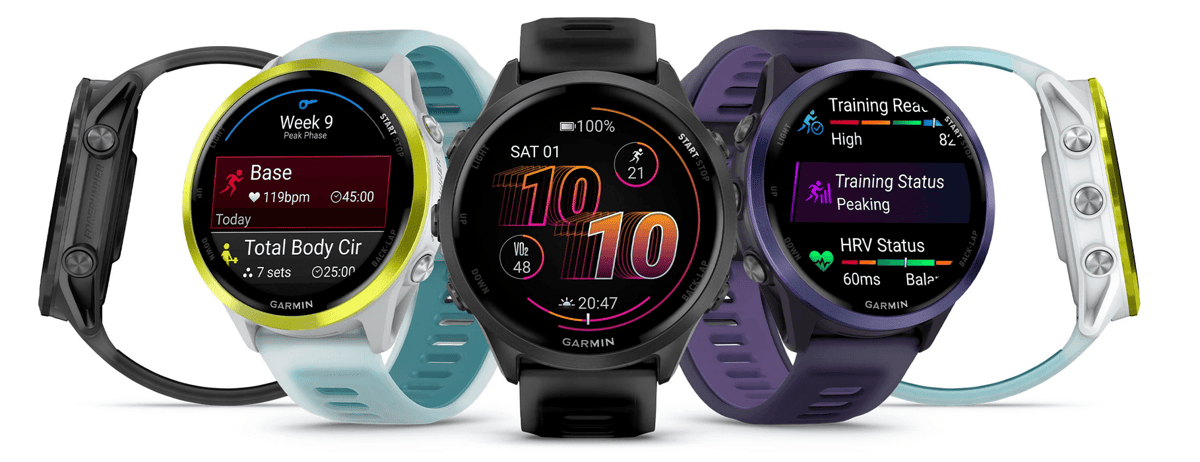
This suggests that in the coming years, we may see “feature unlocking” where users can pay a one-time fee to enable maps or advanced training metrics on a mid-range device, further decoupling the software’s value from the physical watch.
Frequently Asked Questions
Q: Does my Garmin watch need a new sensor to get new features?
A: Not always. As seen with the Forerunner 170, features like Sleep Coach and Training Readiness are software-based and can run on older sensors like the Elevate Gen 4.
Q: Why did my Fenix 7 stop getting new features?
A: Garmin typically focuses new feature development on the most recent model in a specific line to encourage users to upgrade to the latest generation, regardless of hardware parity.
Q: Is Garmin Connect+ mandatory for basic tracking?
A: No. Garmin has stated the free app is not going away, but advanced AI insights and specific tools like nutrition tracking are now gated behind the subscription.
What’s your take on Garmin’s software-first approach? Do you feel the subscription model is fair for high-end hardware, or is it a step too far? Let us know in the comments below or share this article with a fellow athlete.