

How Japan’s Strategic Shift From Abe to Takaichi Protects Taiwan
Japan, the Philippines, and Taiwan are moving toward a strategic security alignment to secure the “first island chain,” according to exiled student leader Wu’er Kaixi. This bloc seeks to close the northern and southern “gates” of ingress to prevent a Chinese naval blockade of Taiwan and limit the People’s Liberation Army (PLA) navy’s reach.
Why is the “first island chain” critical for Taiwan’s security?
The first island chain acts as a physical barrier between mainland China and the open Pacific. According to Wu’er Kaixi, this chain has two primary “gates” that control maritime access. Japan holds the northern gate, while the Philippines holds the southern gate via Luzon and the Batanes islands.
Controlling the Bashi Channel is essential for any naval operation in the region. Kaixi notes that the PLA navy must secure these waters to keep American forces at bay from the south. If Japan and the Philippines remain aligned with Taiwan, both gates close, forcing any aggressor to face a committed bloc of democracies rather than a series of reluctant allies.
How has Japan’s defense policy shifted since Shinzo Abe?
Japan’s posture has evolved from rhetorical warnings to concrete policy. Former Prime Minister Shinzo Abe set the stage in a December 2021 speech, asserting that “a Taiwan contingency is a Japanese contingency.” This statement linked the fate of the Japan-US alliance directly to the stability of Taiwan.
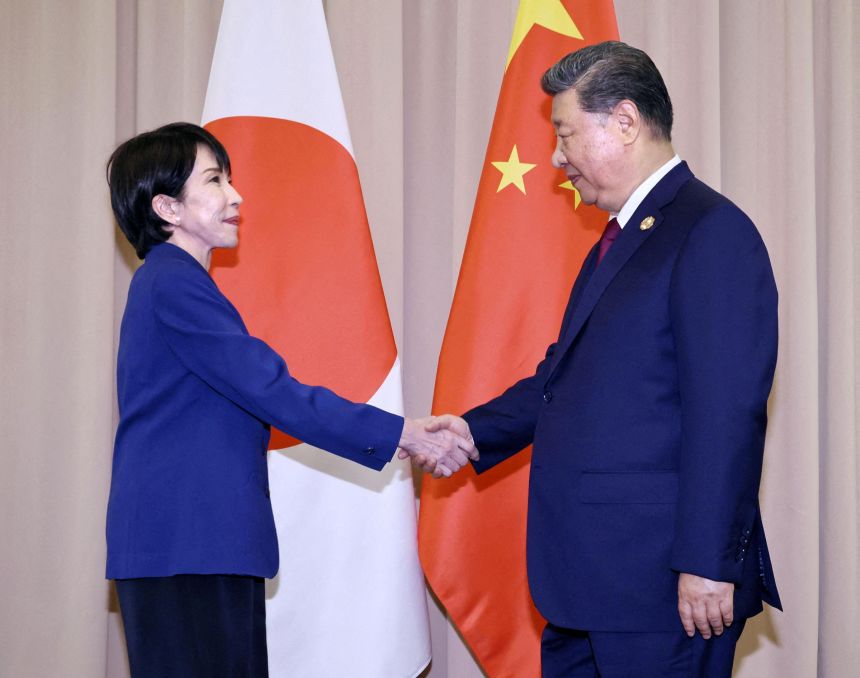
This rhetoric transitioned into policy under the leadership of Prime Minister Sanae Takaichi. On November 7, 2025, Takaichi stated that a Chinese naval blockade of Taiwan backed by military force could constitute a “survival-threatening situation” for Japan. This specific phrasing is not accidental; it is the statutory threshold defined in Japan’s 2015 security legislation.
By using this language, the Takaichi administration provides the legal basis for Japanese forces to exercise collective self-defense. This marks a shift from Abe’s “sayable” warnings to a formalized state policy of intervention.
What happens if Japan and the Philippines align against a blockade?
A unified front between Japan, the Philippines, and Taiwan changes the strategic calculus for Beijing. For decades, China has planned its regional strategy by dealing with one ally at a time. A synchronized defense across the first island chain prevents this “divide and conquer” approach.
Kaixi argues that the “bet” on trade and engagement—the idea that economic wealth would lead China to embrace international rules—has failed. Instead, wealth has provided the CCP with the confidence to dismiss the post-WWII global order. Consequently, the cost of yielding to pressure is now viewed as higher than the cost of standing firm.
The primary risk remains “patient pressure” from Beijing. As these democracies align, China is expected to use economic levers and diplomatic coercion to break the coalition before it fully solidifies.
How does the “trade bet” compare to current security realities?
| The “Trade Bet” (Past) | Security Alignment (Current) |
|---|---|
| Belief that trade would liberalize China. | Belief that strength prevents aggression. |
| Reliance on international rules and engagement. | Reliance on collective self-defense and alliances. |
| China viewed as a future “team player.” | China viewed as a threat to the “first island chain.” |
Frequently Asked Questions
What is the first island chain?
It is a string of islands stretching from Japan through Taiwan and the Philippines. It serves as a strategic maritime boundary that limits China’s direct access to the deep waters of the Pacific Ocean.

Why is the 2015 security legislation important?
This legislation allows Japan to exercise “collective self-defense,” meaning it can use military force to protect an ally even if Japan itself is not under direct attack, provided the situation is “survival-threatening.”
What role does the Philippines play in this alignment?
The Philippines controls the southern gate of the first island chain. Its cooperation is necessary to block the Bashi Channel, preventing the PLA navy from flanking Taiwan from the south.
Join the conversation: Do you believe a “small bloc of committed democracies” is enough to deter a major power? Share your thoughts in the comments below or subscribe to our newsletter for more analysis on Indo-Pacific security.